It Is by Grace That We Are Saved After All We Can Do

Nephi taught his people that reconciliation with God through the Atonement of Jesus Christ was more important than anything else. He understood that no matter how close he (or anyone else) came to living God’s law perfectly, salvation would always depend on Christ’s merciful intervention.

“…We labor diligently to write, to persuade our children, and also our brethren, to believe in Christ, and to be reconciled to God; for we know that it is by grace that we are saved, after all we can do.” (2 Nephi 25:23)

 Questions:

-While establishing faith in Christ that allows us to be reconciled with God is absolutely foundational, how important is what we do to build on that foundation going forward in our lives?

-Once one understands that Heavenly Father will, because of repentance available through Christ’s Atonement, choose the better part of a mortal life by treasuring up and eternally magnifying all the good that person does, is it likely that living by God’s law and doing good works will become more important or less important to that person?

-What can God make of “all we can do” with Christ on our side?

Teachings of Latter-day Prophets, Seers, and Revelators:

“I wonder if sometimes we misinterpret the phrase ‘after all we can do.’ We must understand that ‘after’ does not equal ‘because.’

“We are not saved ‘because’ of all that we can do. Have any of us done all that we can do? Does God wait until we’ve expended every effort before He will intervene in our lives with His saving grace?” (Dieter F. Uchtdorf, “The Gift of Grace,” 110).

“We do not need to achieve some minimum level of capacity or goodness before God will help—divine aid can be ours every hour of every day, no matter where we are in the path of obedience. But I know that beyond desiring His help, we must exert ourselves, repent, and choose God for Him to be able to act in our lives consistent with justice and moral agency” (D. Todd Christofferson, “Free Forever, to Act for Themselves,” Ensign or Liahona, Nov. 2014, 19).

“‘After all we can do’ includes extending our best effort. It includes living his commandments.

“‘After all we can do’ includes loving our fellow men and praying for those who regard us as their adversary. It means clothing the naked, feeding the hungry, visiting the sick, and giving ‘succor [to] those that stand in need of [our] succor’ (Mosiah 4:16)—remembering that what we do unto one of the least of God’s children, we do unto him.

“‘After all we can do’ means leading chaste, clean, pure lives, being scrupulously honest in all our dealings and treating others the way we would want to be treated” (Ezra Taft Benson, “Redemption through Christ after All We Can Do,” Liahona, Dec. 1988, 5).

“As a Church, we are in accord with Nephi, who said, ‘It is by grace that we are saved, after all we can do.’ (2 Nephi 25:23.) …

“By grace, the Savior accomplished his atoning sacrifice so that all mankind will attain immortality.

“By his grace, and by our faith in his atonement and repentance of our sins, we receive the strength to do the works necessary that we otherwise could not do by our own power.

“By his grace we receive an endowment of blessing and spiritual strength that may eventually lead us to eternal life if we endure to the end.

“By his grace we become more like his divine personality” (Ezra Taft Benson, “Redemption through Christ after All We Can Do,” 4–5).
Ye May Liken Them unto You and unto All Men

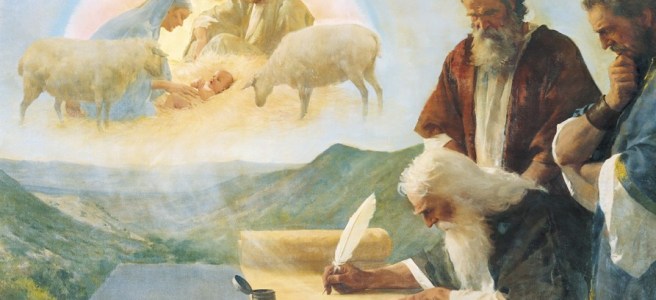
Before recording many of the words of Isaiah onto the Gold Plates (from which the Book of Mormon was translated), Nephi testifies that Isaiah’s teachings and prophecies have such a sweeping spiritual vision that they are applicable to all people.

“And now I write some of the words of Isaiah, that whoso of my people shall see these words may lift up their hearts and rejoice for all men. Now these are the words, and ye may liken them unto you and unto all men.” (2 Nephi 11:8)

Below is a sampling of the writings of Isaiah as recorded by Nephi:

“…Let us go up to the mountain of the Lord, to the house of the God of Jacob; and he will teach us of his ways, and we will walk in his paths.” (2 Nephi 12:3Map of the Temples of the Church of Jesus Christ of Latter-day Saints)

“O ye wicked ones, enter into the rock, and hide thee in the dust, for the fear of the Lord and the glory of his majesty shall smite thee. And it shall come to pass that the lofty looks of man shall be humbled, and the haughtiness of men shall be bowed down, and the Lord alone shall be exalted in that day. For the day of the Lord of Hosts soon cometh upon all nations, yea, upon every one; yea, upon the proud and lofty and upon every one who is lifted up, and he shall be brought low.” (2 Nephi 12:10-12Second Coming)

“…The idols he shall utterly abolish. And they shall go into the holes of the rocks, and into the caves of the earth, for the fear of the Lord shall come upon them and the glory of his majesty shall smite them, when he ariseth to shake terribly the earth. In that day a man shall cast his idols of silver, and his idols of gold, which he hath made for himself to worship, to the moles and to the bats; To go into the clefts of the rocks, and into the tops of the ragged rocks, for the fear of the Lord shall come upon them and the majesty of his glory shall smite them, when he ariseth to shake terribly the earth.” (2 Nephi 12:18-21Second Coming)

“Cease ye from man, whose breath is in his nostrils; for wherein is he to be accounted of?” (2 Nephi 12:22Worldliness)

“Say unto the righteous that is it well with them; for they shall eat the fruit of their doings. Wo unto the wicked for they shall perish; for the reward of their hands shall be upon them!” (2 Nephi 13:10-11All Men Come unto God to Be Judged of Him)

“In that day shall the branch of the Lord be beautiful and glorious; the fruit of the earth excellent and comely to them that are escaped of Israel. And it shall come to pass, they that are left in Zion and remain in Jerusalem shall be called holy, every one that is written among the living in Jerusalem…” (2 Nephi 14:2-3Millennium)

“…They regard not the work of the Lord, neither consider the operation of his hnds. Therefore, my people are gone into captivity, because they have no knowledge…Therefore hell hath enlarged herself, and opened her mouth without measure; and their glory, and their multitude, and their pomp, and he that rejoiceth, shall descend into it” (2 Nephi 15:12-14Cursed is He Who Putteth His Trust in Man)

“Wo unto them that draw iniquity with cords of vanity, and sin as it were with a cart rope.” (2 Nephi 15:18Sin)

“Wo unto them that call evil good, and good evil, that put darkness for light, and light for darkness, that put bitter for sweet, and sweet for bitter!” (2 Nephi 15:20Deception)

“Wo unto the wise in their own eyes and prudent in their own sight!” (2 Nephi 15:21Pride)

“Wo unto the mighty to drink wine, and men of strength to mingle strong drink.” (2 Nephi 15:22Word of Wisdom)

“…As the fire devoureth the stubble, and the flame consumeth the chaff, their root shall be rottenness, and their blossoms shall go up as dust; because they have cast away the law of the Lord of Hosts, and despised the word of the Holy One of Israel.” (2 Nephi 15:24The Wisdom and Praise of the World is Foolishness before God)

“…His hand is stretched out still.” (2 Nephi 15:25Mercy)

“Sanctify the Lord of Hosts himself, and let him be your fear, and let him be your dread.” (2 Nephi 18:13Fear)

“Wo be unto them that decree unrighteous decrees, and that write grievousness which they have prescribed; To turn away the needy from judgment, and to take away the right from the poor of my people, that widows may be their prey, and that they may rob the fatherless.” (2 Nephi 20:1-2 —  Unrighteousness)

“They shall not hurt nor destroy in all my holy mountain, for the earth shall be full of the knowledge of the Lord, as the waters cover the sea.” (2 Nephi 21:9Millennium)

“The Lord shall set his hand again the second time to recover the remnant of his people which shall be left, from Assyria, and from Egypt, and from Pathros, and from Cush, and from Elam, and from Shinar, and from Hamath and from the islands of the sea. And he shall set up an ensign for the nations, and shall assemble the outcasts of Israel, and gather together the dispersed of Judah from the four corners of the earth. The envy of Ephraim also shall depart, and the adversaries of Judah shall be cut off; Ephraim shall not envy Judah, and Judah shall not vex Ephraim.” (2 Nephi 21:11-13Gathering of Israel)

Sing unto the Lord; for he hath done excellent things…” (2 Nephi 22:5Sing)

“…Mine anger is not upon them that rejoice in my highness.” (2 Nephi 23:3Worship)

“And it shall come to pass in that day that the Lord shall give thee rest, from thy sorrow, and from thy fear, and from the hard bondage wherein thou wast made to serve.” (2 Nephi 24:3MillenniumHouse of Israel)

The Descendants of the Lehi Will Become a Righteous Branch of the House of Israel

Jacob reiterates God’s promise, also given to his brother Nephi, that his father’s descendants in the Americas will again receive the peace and strength of the restored Gospel (after a time of apostasy, great trials, and destruction).

“…Behold how great the covenants of the Lord, and how great his condescensions unto the children of men; and because of his greatness and his grace and mercy, he has promised unto us that our seed shall not utterly be destroyed, according to the flesh, but that he would preserve them; and in future generations they shall become a righteous branch unto the house of Israel.” (2 Nephi 9:53)

Questions:

-Do you believe that God cares deeply enough about the righteous desires of his children on earth, that He would promise to fulfill them (as He did in the case of Lehi’s family and others in ancient times regarding their descendants)?

-Can you enter into a covenant relationship with God wherein He promises to care for and bless your posterity (to the degree they will let Him)? What about a covenant relationship related to other righteous desires of your heart?

-How would you know God had accepted the covenant? How would you know what God’s specific promises are and what your specific obligations are?

-Is there a church now in existence through which God makes such covenant relationships and makes the related blessings and obligations clear? If so, how did God give the priesthood of this church the authority to officiate the covenant relationships in His name?

-Are the descendants of Lehi becoming a righteous branch of Israel now? Are they largely awake to the covenant blessings that have been established for them? Or, is the awakening still in its early stages?

Christ’s Atonement Satisfieth the Demands of God’s Justice upon All Those Who Have Not the Law Given to Them

Jacob teaches that, because of Christ’s merciful Atonement, those who do not have God’s law will not be condemned by it.

“…He has given a law; and where there is no law given there is no punishment; and where there is no punishment there is no condemnation; and where there is no condemnation the mercies of the Holy One of Israel have claim upon them, because of the atonement; for they are delivered by the power of him. For the atonement satisfieth the demands of his justice upon all those who have not the law given to them, that they are delivered from that awful monster, death and hell, and the devil, and the lake of fire and brimstone, which is endless torment; and they are restored to that God who gave them breath, which is the Holy One of Israel.” (2 Nephi 9:25-26)

Those who do have God’s law, on the other hand, will be held accountable for their actions in relation to it (unless they continually draw on the power of Christ’s Atonement and repent towards doing better in relation to it):

“But wo unto him that has the law given, yea, that has all the commandments of God…and that transgresseth them, and wasteth the days of his probation, for awful is his state!” (2 Nephi 9:27)

Questions:

-Who on the earth currently is without God’s law? Are there whole nations and people that are largely free from the demands of this law because they have had little or none of it given to them?

-Is the light of Christ that touches the hearts of all living people part of the law? Does this innate sense of conscience and right and wrong bring all to the law to some degree?

-What do these truths Jacob teaches about the law say about the mercy God extends to those that have severe mental disabilities to the point where they cannot comprehend the law clearly?

-What are the benefits of having God’s law if it has the potential to condemn us once we understand it?

-Is the combination of having God’s law, and having an understanding of the redeeming power of Christ’s Atonement for those who repent, a way to obtain greater opportunities to serve others? Through that increased opportunity to serve and bless, are some given the precious opportunity to grow closer to Christ during mortality?

He Suffereth the Pains of All Men, Women, and Children

Jacob testifies that Christ descended below all in His suffering and death so He could then lift all toward Him through the Resurrection and be a perfect judge at the Day of Judgment.

“O how great the holiness of our God! For he knoweth all things and there is not anything save he knows it. And he cometh into the world that he may save all men if they will hearken unto his voice; for behold, he suffereth the pains of all men, yea, the pains of every living creature, both men, women, and children, who belong to the family of Adam. And he suffereth this that the resurrection might pass upon all men, that all might stand before him at the great and judgment day.” (2 Nephi 9:20-22)

Questions:

-How do you feel about this testimony from Jacob that Christ knows your pain and has actually felt your pain?

-What does it say about the depth of God’s love that He was willing to suffer so deeply to bring about the Resurrection for all mankind and be as merciful a judge as possible.

-How can a person hearken to the voice of God? Is God’s voice found in the scriptures? Is God’s voice found in the promptings of the Holy Ghost? Can God’s voice be heard from the mouths of those who have received authority to speak in His name?

Teachings of Latter-day Prophets, Seers, and Revelators:

“Christ’s agony in the garden is unfathomable by the finite mind, both as to intensity and cause. … He struggled and groaned under a burden such as no other being who has lived on earth might even conceive as possible. It was not physical pain, nor mental anguish alone, that caused Him to suffer such torture as to produce an extrusion of blood from every pore; but a spiritual agony of soul such as only God was capable of experiencing. No other man, however great his powers of physical or mental endurance, could have suffered so” (James E. Talmage, Jesus the Christ, 3rd ed. [1916], 613).

“By His Atonement and Resurrection, Jesus Christ has overcome all aspects of the Fall. Physical death will be temporary, and even spiritual death has an end, in that all come back into the presence of God, at least temporarily, to be judged” (D. Todd Christofferson, “The Resurrection of Jesus Christ,” Ensign or Liahona, May 2014, 112).

Their Joy Shall Be Full Forever

After teaching about the power of Christ’s Atonement to bring about the Resurrection and a Last Judgment that will be both merciful and just (see They Must be Judged According to the Holy Judgment of God, O How Great the Plan of Our God!, and It Must Needs Be an Infinite Atonement), Jacob describes those who will inherit the kingdom of God.

“But, behold, the righteous, the saints of the Holy One of Israel, they who have believed in the Holy One of Israel, they who have endured the crosses of the world, and despised the shame of it, they shall inherit the kingdom of God, which was prepared for them from the foundation of the world, and their joy shall be full forever.” (2 Nephi 9:18)

Questions:

-Who is the Holy One of Israel? (see Jesus Christ)

-What does it mean to be a saint of the Holy One of Israel?

-How is belief in the Holy One of Israel expressed in everyday life?

-What does it mean to endure the crosses of the world and despise the shame of the world?

-What does it mean to inherit the kingdom of God?

They Must be Judged According to the Holy Judgment of God

Jacob recounts how the Resurrection occurs prior to the Final Judgment and how these two events solidify each soul’s status in relation to God for eternity.

“…When all men shall have passed from this first death unto life, insomuch as they have become immortal, they must appear before the judgment-seat of the Holy One of Israel; and then cometh the judgment, and then must they be judged according to the holy judgment of God. And assuredly, as the Lord liveth, for the Lord God hath spoken it, and it is his eternal word, which cannot pass away, that they who are righteous shall be righteous still, and they who are filthy shall be filthy still; wherefore, they who are filthy are the devil and his angels; and they shall go away into everlasting fire, prepared for them; and their torment is as a lake of fire and brimstone, whose flame ascendeth up forever and ever and has no end. O the greatness and the justice of our God! For he executeth all his words, and they have gone forth out of his mouth, and his law must be fulfilled.” (2 Nephi 9:15-17)

Questions:

-How generous and loving will Christ be as our Eternal Judge? How willing will He be to extend mercy in whatever ways He can based on the choices we made in relation to God’s law? Could those who never had a chance to receive God’s law during their time in mortality be judged by that law?

-How fortunate will we be to have Christ both as our Judge and our Mediator? (See quote by Jeffrey Holland below.)

-Do “the devil and his angels” that Jacob refers to in the passage above include not only those spirits who followed Satan in the premortal life but also those who, after initially following God’s plan by coming to earth to receive a mortal body, then stubbornly reject the mercy He has extended to them—even after receiving a sure witness from the Holy Ghost of what Christ has done for them in appeasing the law of eternal justice (see sons of Perdition)? Will everyone else—those who are not rebellious and receive Christ’s mercy as they come to understand it—receive at least some Degree of Glory?

-Why will those who are eternally filthy experience torment that is like a “lake of fire and brimstone?”

-Is the Final Judgment also a “Final Chance” to receive Christ’s mercy before all who reject Him are sent away eternally? How important is it to seek Christ’s mercy through repentance now rather than denying the power of His grace until the Final Judgment?

Teachings of Latter-day Prophets, Seers, and Revelators:

“As ‘Wonderful Counselor,’ he will be our mediator, our intercessor, defending our cause in the courts of heaven. …

“Of course, as noted by Isaiah, Christ is not only a mediator but also a judge [see Mosiah 3:10; Moroni 10:34; Moses 6:57]. It is in that role of judge that we may find even greater meaning in Abinadi’s repeated expression that ‘God himself’ will come down to redeem his people [Mosiah 13:28; see also Mosiah 13:34; 15:1; Alma 42:15]. It is as if the judge in that great courtroom in heaven, unwilling to ask anyone but himself to bear the burdens of the guilty people standing in the dock, takes off his judicial robes and comes down to earth to bear their stripes personally. Christ as merciful judge is as beautiful and wonderful a concept as that of Christ as counselor, mediator, and advocate.” (Jeffrey R. Holland, Christ and the New Covenant, 80–81)

It Must Needs Be an Infinite Atonement

Jacob teaches his people (at around 559-545 B.C. in the Americas) about the Resurrection being an answer to the Fall.

“…Our flesh must waste away and die; nevertheless, in our bodies we shall see God. Yea, I know that…in the body he shall show himself unto those at Jerusalem, from whence we came; for it is expedient that it should be among them; for it behooveth the great Creator that he suffereth himself to become subject unto man in the flesh, and die for all men, that all men might become subject unto him. For as death hath passed upon all men, to fulfil the merciful plan of the great Creator, there must needs be a power of resurrection, and the resurrection must needs come unto man be reason of the fall; and the fall came by reason of transgression; and because man became fallen they were cut off from the presence of the Lord.” (2 Nephi 9:5-6)

“Wherefore, it must needs be an infinite atonement—save it should be an infinite atonement this corruption could not put on incorruption. Wherefore the first judgment which came upon man must needs have remained to an endless duration. And if so, this flesh must have laid down to rot and crumble to its mother earth to rise no more. O the wisdom of God, his mercy and grace! For behold, if the flesh should rise no more our spirits must become subject to that angel who fell from before the presence of the Eternal God, and became the devil, to rise no more. And our spirits must have become like unto him, and we become devils, angels to a devil, to be shut out from the presence of God, and to remain with the father of lies, in misery, like unto himself…” (2 Nephi 9:7-9)

Questions:

-What does Jacob mean when he says that Jesus Christ’s Atonement had to be infinite? (for an excellent exploration of this topic read The Infinite Atonement by Tad R. Callister)

-How is being Resurrected with a physical immortal body part of saving our souls from the powers of hell?

-Would remaining as spirits for the eternities after death allow us to reach our full potential as God’s children? In this scenario, could we achieve the same power of spiritual and physical perfection that our Father and Jesus Christ currently have?

-Will the resurrection to a perfected body permanently seal off further spiritual influence from those who will spend eternity without bodies (i.e. Satan and those who followed him in the pre-mortal world)?

-What does it mean to be a subject of Jesus Christ?

Teachings of Latter-day Prophets, Seers, and Revelators:

“I wish to speak about the greatest event in all history. That singular event was the incomparable Atonement of our Lord and Savior, Jesus the Christ. This was the most transcendent act that has ever taken place” (James E. Faust, “The Atonement: Our Greatest Hope,” Ensign, Nov. 2001, 18).


“If our separation from God and our physical death were permanent, moral agency would mean nothing. Yes, we would be free to make choices, but what would be the point? The end result would always be the same no matter what our actions: death with no hope of resurrection and no hope of heaven. As good or as bad as we might choose to be, we would all end up ‘angels to a devil’ [2 Nephi 9:9]” (D. Todd Christofferson, “Moral Agency,” Ensign, June 2009, 50).


“His Atonement is infinite—without an end. [See 2 Nephi 9:7; 25:16; Alma 34:10, 12, 14.] It was also infinite in that all humankind would be saved from never-ending death. It was infinite in terms of His immense suffering. It was infinite in time, putting an end to the preceding prototype of animal sacrifice. It was infinite in scope—it was to be done once for all. [See Hebrews 10:10.] And the mercy of the Atonement extends not only to an infinite number of people, but also to an infinite number of worlds created by Him. [See D&C 76:24; Moses 1:33.] It was infinite beyond any human scale of measurement or mortal comprehension.

“Jesus was the only one who could offer such an infinite atonement, since He was born of a mortal mother and an immortal Father. Because of that unique birthright, Jesus was an infinite Being” (Russell M. Nelson, “The Atonement,” Ensign, Nov. 1996, 35).

“According to eternal law, that atonement required a personal sacrifice by an immortal being not subject to death. Yet He must die and take up His own body again. The Savior was the only one who could accomplish this. From His mother He inherited power to die. From His Father He obtained power over death” (Russell M. Nelson, “Constancy amid Change,” Ensign, Nov. 1993, 34).


“Just as death would doom us and render our agency meaningless but for the redemption of Christ, even so, without His grace, our sins and bad choices would leave us forever lost. There would be no way of fully recovering from our mistakes, and being unclean, we could never live again in the presence of [God].

“… We need a Savior, a Mediator who can overcome the effects of our sins and errors so that they are not necessarily fatal. It is because of the Atonement of Christ that we can recover from bad choices and be justified under the law as if we had not sinned” (D. Todd Christofferson, “Moral Agency,” Ensign, June 2009, 50).


“An infinite atonement was required to redeem Adam, Eve, and all of their posterity. … According to eternal law, that atonement required a personal sacrifice by an immortal being not subject to death. Yet He must die and take up His own body again. The Savior was the only one who could accomplish this. From His mother He inherited power to die. From His Father He obtained power over death” (Russel M. Nelson, “Constancy amid Change,” Ensign, Nov. 1993, 34).

The Jewish People Who Still Wait for the Messiah Will be Blessed as Well as All People Who Build up Zion in Preparation for His Second Coming

After quoting Isaiah (chapter 49 versus 22 and 23 as found in the Old Testament), Jacob explains that after a period of trial and dispersion the Jewish people would be blessed by God through Gentile peoples whom He would raise up in the last days. On the other hand, those Gentiles who fight against the Jewish people who still wait for the Messiah and those who fight against the covenant people of the Lord (whether the covenant people are Jewish or not) will not prosper.

The Jewish people “shall be scattered, and smitten, and hated; nevertheless, the Lord will be merciful unto them, that when they shall come to the knowledge of their Redeemer, they shall be gathered together again to the lands of their inheritance. And blessed are the Gentiles, they of whom the prophet has written; for behold, if it so be that they shall repent and fight not against Zion, and do not unite themselves to the great and abominable church, they shall be saved; for the Lord God will fulfil his covenants which he has made unto his children…Wherefore, they that fight against Zion and the covenant people of the Lord shall lick up the dust of their feet; and the people of the Lord shall not be ashamed. For the people of the Lord are they who wait for him; for they still wait for the coming of the Messiah.” (2 Nephi 6:12-13)

Questions:

-Are there still millions of Jews who faithfully wait for the Messiah despite the trials of their people? What does Jacob say about the protection and blessings they will receive for this faithfulness?

-With the Restoration of the fullness of the gospel (including the teachings of the Book of Mormon and modern-day prophets), do the Jewish people have more fertile ground for coming to a knowledge of their Redeemer?

-Are they being gathered in to the land of their inheritance in our time?

For a free copy of the Book of Mormon go to: https://www.mormon.org/beliefs/book-of-mormon

How Great the Importance to Make These Things Known unto the Inhabitants of the Earth

Lehi continues to teach his son, Jacob, about Christ’s Atonement and all of mankind’s need for it:

“…He offereth himself a sacrifice for sin, to answer the ends of the law, unto all those who have a broken heart and a contrite spirit; and unto none else can the ends of the law be answered. Wherefore, how great the importance to make these things known unto the inhabitants of the earth, that they may know that there is no flesh that can dwell in the presence of God, save it be through the merits, and mercy, and grace of the Holy Messiah…” (2 Nephi 2:7-8)

Questions:

-What does Lehi mean when he states that only those with a broken heart and a contrite spirit can receive Christ’s redemption from sin?

-Does “heart” in this passage refer to our personal will versus God’s will? Is it good to break down our will to make way for God’s will in our lives?

-Can one have anything but a “broken heart” when he or she truly keeps in remembrance the price paid by Christ to redeem those who choose to follow and obey Him?

-How is being prideful (which is the opposite of having a broken heart and a contrite spirit) a false state of being?

-Who among the inhabitants of the earth has God’s law? Who, if any, does not have the law?

Teachings of Latter-day Prophets, Seers, and Revelators:

“I believe that none of us can conceive the full import of what Christ did for us in Gethsemane, but I am grateful every day of my life for His atoning sacrifice in our behalf.

“At the last moment, He could have turned back. But He did not. He passed beneath all things that He might save all things. In doing so, He gave us life beyond this mortal existence. He reclaimed us from the Fall of Adam.

“To the depths of my very soul, I am grateful to Him. He taught us how to live. He taught us how to die. He secured our salvation” (Thomas S. Monson, “At Parting,” Ensign or Liahona, May 2011, 114).

Teachings of the Seventy

“What are a broken heart and a contrite spirit? … The Savior’s perfect submission to the Eternal Father is the very essence of a broken heart and a contrite spirit. Christ’s example teaches us that a broken heart is an eternal attribute of godliness. When our hearts are broken, we are completely open to the Spirit of God and recognize our dependence on Him for all that we have and all that we are. The sacrifice so entailed is a sacrifice of pride in all its forms. Like malleable clay in the hands of a skilled potter, the brokenhearted can be molded and shaped in the hands of the Master.

“A broken heart and a contrite spirit are also preconditions to repentance [see 2 Nephi 2:6–7]. … When we sin and desire forgiveness, a broken heart and a contrite spirit mean to experience ‘godly sorrow [that] worketh repentance’ (2 Corinthians 7:10). This comes when our desire to be cleansed from sin is so consuming that our hearts ache with sorrow and we yearn to feel at peace with our Father in Heaven. Those who have a broken heart and a contrite spirit are willing to do anything and everything that God asks of them, without resistance or resentment. We cease doing things our way and learn to do them God’s way instead. In such a condition of submissiveness, the Atonement can take effect and true repentance can occur” (Bruce D. Porter, “A Broken Heart and a Contrite Spirit,” Ensign or Liahona, Nov. 2007, 32).

Video from Book of Mormon Central: