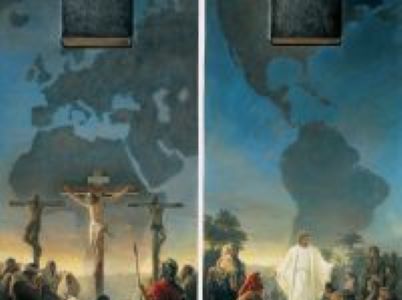
The Things Which Shall Be Written out of the Book Shall Be of Great Worth

The Lord gave the prophet Nephi insight into how the translated record of his people (the Book of Mormon) would bless the world as it came forth:

“…The things which shall be written out of the book shall be of great worth unto the children of men, and especially unto our seed, which is a remnant of the house of Israel.” (2 Nephi 28:2)

In the context of the great worth of the Book of Mormon, Nephi goes on to describe the fallacies, error, and sin that the Book of Mormon will testify against and help remedy in the last days:

  • “Churches…will contend one with another; and their priests shall contend one with another, and they shall teach with their learning and deny the Holy Ghost, which giveth utterance.” (2 Nephi 28:3-4)
  • “…They deny the power of God, the Holy One of Israel; and they say unto the people: Hearken unto us, and hear ye our precept; for behold there is no God today, for the Lord and the Redeemer hath done his work, and he hath given his power unto men. Behold, hearken unto my precept; if they shall say there is a miracle wrought by the hand of the Lord, believe it not; for this day he is not a God of miracles; he hath done his work.” (2 Nephi 28:5-6)
  • “…There shall be many which shall say: Eat, drink, and be merry, for tomorrow we die; and it shall be well with us. And there shall be many which shall say: Eat, drink, and be merry; nevertheless fear God—he will justify in committing a little sin; yea, lie a little, take advantage of one because of his words, dig a pit for thy neighbor; there is no harm in this; and do all these things, for tomorrow we die; and if it so be that we are guilty, God will beat us with a few stripes, and at last we shall be saved in the kingdom of God.” (2 Nephi 28:7-8)
  • “And there shall be many that shall teach after this manner, false and vain and foolish doctrines, and shall be puffed up in their hearts, and shall seek deep to hid their counsels from the Lord; and their works shall be in the dark. And the blood of the saints shall cry from the ground against them.” (2 Nephi 28:9-10)
  • Yea, they have all gone out of the way; they have become corrupted. Because of pride and because of false teachers, and false doctrine, their churches have become corrupted, and their churches are lifted up; because of pride they are puffed up. (2 Nephi 28:11-12)
  • They rob the poor because of their fine sanctuaries; they rob the poor because of their fine clothing; and they persecute the meek and poor in heart, because in their pride they are puffed up.” (2 Nephi 28:13)
  • They wear stiff necks and high heads; yea, and because of pride, and wickedness, and abominations, and whoredoms, they have all gone astray save it be a few, who are humble followers of Christ; nevertheless, they are led, that in many instances they do err because they are taught by the precepts of men.” (2 Nephi 28:14)

Questions:

-What does it mean to teach with one’s learning rather than by the power of the Holy Ghost?

-Is teaching that God no longer intervenes through miracles similar in many ways to teaching that there is no God?

-Do the “eat, drink, and be merry” attitudes Nephi describes lead one to earnestly seek mercy through Jesus Christ? Or, do they breed an attitude of complacency about one’s status before God?

-Is Nephi specifically describing the state of Christianity in North America and Europe that would exist at the time of the Restoration (early 1800s)? Or, is Nephi’s description more generally about the state of most churches (and church-like organizations) that would come into being over the centuries leading up to Christ’s Second Coming?

-Is it possible to be prideful and be a true servant of Jesus Christ?

Latter-day Prophets, Seers, and Revelators

“The Book of Mormon was written for us today. God is the author of the book. It is a record of a fallen people, compiled by inspired men for our blessing. Those people never had the book—it was meant for us. Mormon, the ancient prophet after whom the book is named, abridged centuries of records. God, who knows the end from the beginning, told him what to include in his abridgment that we would need for our day” (Ezra Taft Benson, “The Book of Mormon Is the Word of God,” Ensign, Jan. 1988, 3).

“If they saw our day, and chose those things which would be of greatest worth to us, is not that how we should study the Book of Mormon? We should constantly ask ourselves, ‘Why did the Lord inspire Mormon (or Moroni or Alma) to include that in his record? What lesson can I learn from that to help me live in this day and age?’” (Ezra Taft Benson, “The Book of Mormon—Keystone of Our Religion,” Ensign, Nov. 1986, 6).

The Book of Mormon exposes the enemies of Christ. It confounds false doctrines and lays down contention. (See 2 Ne. 3:12.) It fortifies the humble followers of Christ against the evil designs, strategies, and doctrines of the devil in our day. The type of apostates in the Book of Mormon are similar to the type we have today. God, with his infinite foreknowledge, so molded the Book of Mormon that we might see the error and know how to combat false educational, political, religious, and philosophical concepts of our time” (Teachings of Presidents of the Church: Ezra Taft Benson [2014], 132).

“Why do some of our youth risk engaging in ritual prodigalism, intending to spend a season rebelling and acting out in Babylon and succumbing to that devilishly democratic “everybody does it”? Crowds cannot make right what God has declared to be wrong. Though planning to return later, many such stragglers find that alcohol, drugs, and pornography will not let go easily. Babylon does not give exit permits gladly. It is an ironic implementation of that ancient boast, “One soul shall not be lost.” (Moses 4:1.)

“The philosophy of ritual prodigalism is ‘eat, drink, and be merry, … [and] God will beat us with a few stripes.’ This is a cynical and shallow view of God, of self, and of life. God never can justify us ‘in committing a little sin.’ (2 Ne. 28:8.) He is the God of the universe, not some night-court judge with whom we can haggle and plea bargain!

“Of course God is forgiving! But He knows the intents of our hearts. He also knows what good we might have done while AWOL [absent without leave]. In any case, what others do is no excuse for the disciple from whom much is required. (See Alma 39:4.) Besides, on the straight and narrow path, there are simply no corners to be cut. (See D&C 82:3.)” (Neal A. Maxwell, “Answer Me,” Ensign, Nov. 1988, 33).

“How easy it is for us to say, ‘We believe in being honest, true, chaste, benevolent.’ (A of F 1:13.) But how difficult for so many to resist the temptation to lie a little, cheat a little, steal a little, bear false witness in speaking in gossipy words about others. Rise above it. … Be strong in the simple virtue of honesty” (Gordon B. Hinckley, “Building Your Tabernacle,” Ensign, Nov. 1992, 52).

“[One deception] is what some erroneously call ‘premeditated repentance.’ There is no such doctrine in this Church. This may sound subtly appealing, but it is in fact pernicious and a false concept. Its objective is to persuade us that we can consciously and deliberately transgress with the forethought that quick repentance will permit us to enjoy the full blessings of the gospel, such as temple blessings or a mission. True repentance can be a long, painful process. This foolish doctrine was foreseen by Nephi:

“‘And there shall also be many which shall say: Eat, drink, and be merry; nevertheless, fear God—he will justify in committing a little sin; … there is no harm in this; and do all these things, for tomorrow we die; and if it so be that we are guilty, God will beat us with a few stripes, and at last we shall be saved in the kingdom of God’ [2 Nephi 28:8].

“… All of our covenants must not only be received through ordinances but to be eternal must also be sealed by the Holy Spirit of Promise. This divine stamp of approval is placed upon our ordinances and covenants only through faithfulness. The false idea of so-called premeditated repentance involves an element of deception, but the Holy Spirit of Promise cannot be deceived” (James E. Faust, “The Enemy Within,” Ensign, Nov. 2000, 46).

“We cannot allow ourselves to be confused by popular messages that are easily accepted by the world and that contradict the doctrine and true principles of the gospel of Jesus Christ. Many of these worldly messages represent nothing more than an attempt of our society to justify sin” (Ulisses Soares,“Yes, We Can and Will Win!” Ensign or Liahona, May 2015, 75).

“It is not just that the Book of Mormon teaches us truth, though it indeed does that. It is not just that the Book of Mormon bears testimony of Christ, though it indeed does that, too. But there is something more. There is a power in the book which will begin to flow into your lives the moment you begin a serious study of the book. You will find greater power to resist temptation. You will find the power to avoid deception. You will find the power to stay on the strait and narrow path. The scriptures are called ‘the words of life’ (D&C 84:85), and nowhere is that more true than it is of the Book of Mormon. When you begin to hunger and thirst after those words, you will find life in greater and greater abundance” (Teachings of Presidents of the Church: Ezra Taft Benson [2014], 141).

The Lord Will Deliver the Book and the Words Thereof to Him That is Not Learned

“In February 1828, Martin Harris traveled to New York City with a transcription of some of the characters from the Book of Mormon plates, intending to show them to scholars at some of the most prestigious institutions of higher learning in the United States” (from Martin Harris’s Consultations with Scholars at ChurchofJesusChrist.org). By Harris’s account, one of the scholars visited initially attested to the characters’ authenticity. Though shortly thereafter—when the professor was told about the miraculous elements associated with the plates’ discovery and that a portion of the plates were sealed—he took back the certification he had signed and tore it up.

The ancient prophet, Nephi, appears to have foretold elements of this event (2 Nephi 27:15-18) and knew that in the last days those who considered themselves wise (without being open to receiving an answer from God regarding the matter) would reject his and his descendants’ divinely inspired words after they came forth through the publication of the Book of Mormon as translated by Joseph Smith.

“…The Lord God will deliver again the book and the words thereof to him that is not learned; and the man that is not learned shall say: I am not learned. Then shall the Lord God say unto him: The learned shall not read them, for they have rejected them and I am able to do mine own work; wherefore thou shalt read the words which I shall give unto thee.” (2 Nephi 27:19-21)

Questions:

If the Book of Mormon is the word of God, as it claims to be…

-Is it possible to gain a personal witness of the truthfulness of the Book of Mormon if one reads it with a highly skeptical or mocking attitude?

-How many have the courage to approach studying the Book of Mormon with the kind of humility required to receive an answer from God regarding its divine origins?

-How many who consider themselves well-informed or well-educated will be willing to ask God for guidance and give the Book of Mormon a fair trial in their hearts and minds? What about those who see themselves in a humbler light?

Wo unto Him That Rejecteth the Word of God

Nephi prophesies about the coming forth of the Book of Mormon in the last days.

“…The Lord God hath said that the words of the faithful should speak as it were from the dead. Wherefore, the Lord God will proceed to bring forth the words of the book; and in the mouth of as many witnesses as seemeth him good will he establish his word; and wo be unto him that rejecteth the word of God!” (2 Nephi 27:13-14)

Questions:

-How many witnesses are there of the Book of Mormon?

-Is it important for you to be able to witness, one way or the other, as to whether the Book of Mormon is divinely inspired or not? How can you know? (Moroni 10:3-5)

-What are the consequences of rejecting the word of God? Are the consequences the same if one rejects it after superficial exposure to it versus after a prayerfully fair and lengthy reading?

-Would some reject the word of God even after receiving a witness from the Spirit that it is true? If so, what would lead them to do so?

Ask God, the Eternal Father, in the Name of Christ

Moroni exhorts all who read the Book of Mormon to pray to God about its truthfulness. Those who ask with a sincere heart, with real intent, and with faith in Christ will receive a witness of its truth by the power of the Holy Ghost.

“I seal up these records, after I have spoken a few words by way of exhortation unto you. Behold, I would exhort you that when ye shall read these things, if it be wisdom in God that ye should read them, that ye would remember how merciful the Lord hath been unto the children of men, from the creation of Adam even down until the time that ye shall receive these things, and ponder it in your hearts. And when ye shall receive these things, I would exhort you that ye would ask God, the Eternal Father, in the name of Christ, if these things are not true; and if ye shall ask with a sincere heart, with real intent, having faith in Christ, he will manifest the truth of it unto you, by the power of the Holy Ghost. And by the power of the Holy Ghost ye may know the truth of all things.” (Moroni 10:2-5)

Questions:

-Does Moroni say that the witness from the Holy Ghost will be immediate?

-How can a person get into a proper state of heart and mind to ask with faith, real intent, and a sincere heart?

-How many don’t really want to know if the Book of Mormon is the word of God and, therefore, aren’t prepared to ask God with faith, a sincere heart, and real intent?

Teachings of the Seventy:

“The Lord has made it plain in a number of scriptures how he feels about the Book of Mormon; he and his prophets testify to us that it is true (see, for example, Moro. 10:28–292 Ne. 33:10–11D&C 17:6D&C 18:2–3). Yet he still invites every reader to seek personal confirmation from him of these testimonies.” (Cook, Gene R. “Moroni’s Promise.” Ensign, Apr. 1994, 12-16


Ye Shall Know That It Is I That Speaketh at the Last Day

The Lord, Jesus Christ, testifies of the truth of the Book of Mormon as His word and His voice:

“…He that will contend against the word of the Lord, let him be accursed; and he that shall deny these things, let him be accursed; for unto them will I show no greater things, saith Jesus Christ; for I am he who speaketh. And at my command the heavens are opened and are shut; and at my word the earth shall shake; and at my command the inhabitants thereof shall pass away, even so as by fire. And he that believeth not my words believeth not my disciples; and if it so be that I do not speak, judge ye; for ye shall know that it is I that speaketh, at the last day. But he that believeth these things which I have spoken, him will I visit with the manifestations of my Spirit, and he shall know and bear record. For because of my Spirit he shall know that these things are true, for it persuadeth men to do good. And whatsoever thing persuadeth men to do good is of me; for good cometh of none save it be of me. I am the same that leadeth men to all good; he that will not believe my words will not believe me—that I am; and he that will not believe me will not believe the Father who sent me. For behold, I am the Father, I am the light, and the life, and the truth of the world.” (Ether 4:8-12)

Questions:

-Why is the person described above, to whom God will give no additional revelations, in a cursed state?

-What are your feelings about the Lord’s voice and testimony above?

For a free copy of the Book of Mormon go to https://www.ComeUntoChrist.org/site/book-of-mormon

Whoso Receiveth Not the Words of Jesus and the Words of Those Whom He Hath Sent Receiveth Not Him

Mormon, the Nephite prophet, offers a stark warning about rejecting Christ by rejecting His words.

“…Wo be unto him that will not hearken unto the words of Jesus, and also to them whom he hath chosen and sent among them; for whoso receiveth not the words of Jesus and the words of those whom he hath sent receiveth not him; and therefore he will not receive them at the last day; And it would be better for them if they had not been born. For do you suppose that ye can get rid of the justice of an offended God, who hath been trampled under feet of men that thereby salvation might come?” (3 Nephi 28:34-35)

-How many opportunities does Christ provide a soul to hearken to His words?

-Does the phrase “better for them if they had not been born” only apply to those who do not receive Christ’s words even up to and after the Last Judgment (i.e. does it only apply to those who reject His Atonement even after receiving an undeniable witness of His role as the Savior and His perfect justice and mercy)?

The Lord is Merciful unto All Who Will, in the Sincerity of Their Hearts, Call upon His Holy Name

The historian-prophet, Mormon, teaches of the Lord’s readiness to eternally bless all who will believe in Him and lay hold of His word.

“…The Lord is merciful unto all who will, in the sincerity of their hearts, call upon his holy name. Yea, thus we may see that the gate of heaven is open unto all, even to those who will believe on the name of Jesus Christ, who is the Son of God. Yea, we see that whosoever will may lay hold upon the word of God, which is quick and powerful, which shall divide asunder all the cunning and snares and wiles of the devil, and lead the man of Christ in a strait and narrow course across that everlasting gulf of misery which is prepared to engulf the wicked—And land their souls, yea, their immortal souls, at the right hand of God in the kingdom of heaven, to sit down with Abraham, and Isaac, and with Jacob, and with all our holy fathers, to go no more out.” (Helaman 3:28-30)

Questions:

– How valuable is the strait and narrow course mapped out in God’s scriptures?

-Have the majority of Americans rebelled against this narrow course? Or, do most still have a strong connection with it?

-Is it possible to sincerely call upon the name of Lord without also laying hold upon His word?

The Words of Christ Carry Us Beyond This Vale of Sorrow into a Far Better Land of Promise

Alma teaches his son about the power of scripture and prophetic teaching.

“…The words of Christ, if we follow their course, [will] carry us beyond this vale of sorrow into a far better land of promise.” (Alma 37:45)

Questions:

-Is it possible to understand the culture of Heaven before entering into the eternities?

-Can the words of Christ (as found in the scriptures) prepare one to participate in the culture of Heaven?

-Will anyone who doesn’t understand the culture of Heaven be comfortable staying there?

-Have you ever thought of your promised land as becoming Christ-like so you are prepared to cross through the veil and meet Him?

If Our Hearts Have Been Hardened Against the Word of God, Then Will Our State Be Awful

Alma provides a grave warning about the consequences of hardening one’s heart towards God’s word and Spirit.

“…If our hearts have been hardened, yea, if we have hardened our hearts against the word, insomuch that it has not been found in us, then will our state be awful, for we shall be condemned. For our words will condemn us, yea, all our works will condemn us; we shall not be found spotless; and our thoughts will also condemn us; and in this awful state we shall not dare to look up to our God; and we would fain be glad if we could command the rocks and the mountains to fall upon us to hide us from his presence. But this cannot be; we must come forth and stand before him in his glory, and in his power, and in his might, majesty, and dominion, and acknowledge to our everlasting shame that all his judgments are just; that he is just in all his works, and that he is merciful unto the children of men, and that he has all power to save every man that believeth on his name and bringeth forth fruit meet for repentance.” (Alma 12:13-15)

“And now behold, I say unto you then cometh a death, even a second death, which is a spiritual death; then is a time that whosoever dieth in his sins, as to a temporal death, shall also die as to things pertaining unto righteousness. This is the time when their torments shall be as a lake of fire and brimstone, whose flame ascendeth up forever and ever; and then is the time that they shall be chained down to an everlasting destruction, according to the power and captivity of Satan, he having subjected them according to his will. Then, I say unto you, they shall be as though there had been no redemption made; for they cannot be redeemed according to God’s justice; and they cannot die, seeing there is no more corruption.” (Alma 12:16-18)

Questions:

-Do you believe life is a proving ground and what we sow we will reap in perfect clarity before God at the Last Judgment?

-How does God’s word help one to sow in righteousness?

He That Will Not Harden His Heart, to Him is Given the Greater Portion of the Word

Alma teaches about the potential for spiritual growth versus the consequences of spiritual atrophy.

“It is given unto many to know the mysteries of God; nevertheless they are laid under a strict command that they shall not impart only according to the portion of his word which he doth grant unto the children of men, according to the heed and diligence which they give unto him. And therefore, he that will harden his heart, the same receiveth the lesser portion of the word; and he that will not harden his heart, to him is given the greater portion of the word, until it is given unto him to know the mysteries of God until he know them in full. And they that will harden their hearts, to them is given the lesser portion of the word until they know nothing concerning his mysteries; and then they are taken captive by the devil, and led by his will down to destruction. Now this is what is meant by the chains of hell.” (Alma 12:9-11)

Questions:

-Based on the above verses, how important is it soften one’s heart in relation to God and His Spirit?

-Why do some harden their hearts against God and reject His word and His Spirit?