Let Your Hearts Rejoice

Jacob provides keys to true joy.

“…Remember the words of your God; pray unto him continually by day and give thanks unto his holy name by night. Let your hearts rejoice.” (2 Nephi 9:52)

-Can prayer establish a connection with God and, thereby, help a person live in the joy and peace of His Spirit?

-Does the joy and peace that comes from the Spirit testify of God’s power to lift and save one’s soul?

-Does having that testimony from the Spirit help one to exercise faith in Jesus Christ day by day?

-In light of the above questions, how are prayer and gratitude related to both joy in this life and salvation in the eternities?

-What is keeping your heart from rejoicing?

-Is it freeing to know that according to God’s word we should let our hearts rejoice in the beautiful hope and truth of which the Spirit testifies?

It Must Needs Be an Infinite Atonement

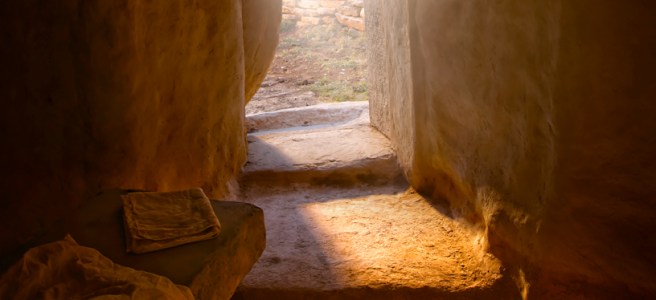
Jacob teaches his people (at around 559-545 B.C. in the Americas) about the Resurrection being an answer to the Fall.

“…Our flesh must waste away and die; nevertheless, in our bodies we shall see God. Yea, I know that…in the body he shall show himself unto those at Jerusalem, from whence we came; for it is expedient that it should be among them; for it behooveth the great Creator that he suffereth himself to become subject unto man in the flesh, and die for all men, that all men might become subject unto him. For as death hath passed upon all men, to fulfil the merciful plan of the great Creator, there must needs be a power of resurrection, and the resurrection must needs come unto man be reason of the fall; and the fall came by reason of transgression; and because man became fallen they were cut off from the presence of the Lord.” (2 Nephi 9:5-6)

“Wherefore, it must needs be an infinite atonement—save it should be an infinite atonement this corruption could not put on incorruption. Wherefore the first judgment which came upon man must needs have remained to an endless duration. And if so, this flesh must have laid down to rot and crumble to its mother earth to rise no more. O the wisdom of God, his mercy and grace! For behold, if the flesh should rise no more our spirits must become subject to that angel who fell from before the presence of the Eternal God, and became the devil, to rise no more. And our spirits must have become like unto him, and we become devils, angels to a devil, to be shut out from the presence of God, and to remain with the father of lies, in misery, like unto himself…” (2 Nephi 9:7-9)

Questions:

-What does Jacob mean when he says that Jesus Christ’s Atonement had to be infinite? (for an excellent exploration of this topic read The Infinite Atonement by Tad R. Callister)

-How is being Resurrected with a physical immortal body part of saving our souls from the powers of hell?

-Would remaining as spirits for the eternities after death allow us to reach our full potential as God’s children? In this scenario, could we achieve the same power of spiritual and physical perfection that our Father and Jesus Christ currently have?

-Will the resurrection to a perfected body permanently seal off further spiritual influence from those who will spend eternity without bodies (i.e. Satan and those who followed him in the pre-mortal world)?

-What does it mean to be a subject of Jesus Christ?

Teachings of Latter-day Prophets, Seers, and Revelators:

“I wish to speak about the greatest event in all history. That singular event was the incomparable Atonement of our Lord and Savior, Jesus the Christ. This was the most transcendent act that has ever taken place” (James E. Faust, “The Atonement: Our Greatest Hope,” Ensign, Nov. 2001, 18).


“If our separation from God and our physical death were permanent, moral agency would mean nothing. Yes, we would be free to make choices, but what would be the point? The end result would always be the same no matter what our actions: death with no hope of resurrection and no hope of heaven. As good or as bad as we might choose to be, we would all end up ‘angels to a devil’ [2 Nephi 9:9]” (D. Todd Christofferson, “Moral Agency,” Ensign, June 2009, 50).


“His Atonement is infinite—without an end. [See 2 Nephi 9:7; 25:16; Alma 34:10, 12, 14.] It was also infinite in that all humankind would be saved from never-ending death. It was infinite in terms of His immense suffering. It was infinite in time, putting an end to the preceding prototype of animal sacrifice. It was infinite in scope—it was to be done once for all. [See Hebrews 10:10.] And the mercy of the Atonement extends not only to an infinite number of people, but also to an infinite number of worlds created by Him. [See D&C 76:24; Moses 1:33.] It was infinite beyond any human scale of measurement or mortal comprehension.

“Jesus was the only one who could offer such an infinite atonement, since He was born of a mortal mother and an immortal Father. Because of that unique birthright, Jesus was an infinite Being” (Russell M. Nelson, “The Atonement,” Ensign, Nov. 1996, 35).

“According to eternal law, that atonement required a personal sacrifice by an immortal being not subject to death. Yet He must die and take up His own body again. The Savior was the only one who could accomplish this. From His mother He inherited power to die. From His Father He obtained power over death” (Russell M. Nelson, “Constancy amid Change,” Ensign, Nov. 1993, 34).


“Just as death would doom us and render our agency meaningless but for the redemption of Christ, even so, without His grace, our sins and bad choices would leave us forever lost. There would be no way of fully recovering from our mistakes, and being unclean, we could never live again in the presence of [God].

“… We need a Savior, a Mediator who can overcome the effects of our sins and errors so that they are not necessarily fatal. It is because of the Atonement of Christ that we can recover from bad choices and be justified under the law as if we had not sinned” (D. Todd Christofferson, “Moral Agency,” Ensign, June 2009, 50).


“An infinite atonement was required to redeem Adam, Eve, and all of their posterity. … According to eternal law, that atonement required a personal sacrifice by an immortal being not subject to death. Yet He must die and take up His own body again. The Savior was the only one who could accomplish this. From His mother He inherited power to die. From His Father He obtained power over death” (Russel M. Nelson, “Constancy amid Change,” Ensign, Nov. 1993, 34).

All People Shall Dwell Safely in the Holy One of Israel If It So Be That They Will Repent

As Nephi continues to expound on the prophesies and messages of Isaiah (chapters 48 and 49), he reemphasizes – despite the turmoil of the last days and all that will befall those who fight against Zion – that there is always safety in Jesus Christ.

“[A]ll nations, kindreds, tongues, and people shall dwell safely in the Holy One of Israel if it so be that they will repent.” (1 Nephi 22:28)

-Does Christ deny anyone or any group who comes to Him?

-Is there any other way to come unto Christ, besides through repentance?

-If the standard we repent to is the Divine Christ, how much emphasis and focus should be placed on repenting daily?

-Does the thought of a Perfect Standard encourage you or discourage you?

-Is encouragement or discouragement, in looking to Christ, a choice we make?

-How important is it to have faith that such a standard is obtainable for the standard to be meaningful?

-Would Christ want us to obtain anything less than the potential He has given us through his example and atoning sacrifice?

-If we allow His power into our lives, are there limits to what Christ can make of us as individuals and as groups?

Teachings of Latter-day Prophets, Seers, and Revelators:

“Why have our Father and His Son commanded us to repent? Because they love us. They know all of us will violate eternal laws. Whether they be small or large, justice requires that every broken law be satisfied to retain the promise of joy in this life and the privilege of returning to Father in Heaven. If not satisfied, in the Day of Judgment justice will cause that we be cast out of the presence of God to be under the control of Satan [see 2 Nephi 9:8–10; 2 Nephi 2:5].

“It is our Master and His redeeming act that make it possible for us to avoid such condemnation. It is done through faith in Jesus Christ, obedience to His commandments, and enduring in righteousness to the end.

“Are you taking full advantage of the redeeming power of repentance in your life so that you can have greater peace and joy? Feelings of turmoil and despondency often signal a need for repentance. Also the lack of the spiritual direction you seek in your life could result from broken laws. If needed, full repentance will put your life together. It will solve all of the complex spiritual pains that come from transgression. But in this life it cannot remedy some of the physical consequences that can occur from serious sin. Be wise and consistently live well within the boundaries of righteousness defined by the Lord” (Richard G. Scott, “The Path to Peace and Joy,” Ensign, Nov. 2000, 25).

The Lord God will Bring the House of Israel Out of Captivity, Obscurity, and Darkness

Nephi continues to teach his brothers about the meaning of a portion of Isaiah’s prophecies found in the Brass Plates (comparable to Isaiah chapters 48 and 49 in the Old Testament). In interpreting the words of Isaiah, he again touches on the work the Lord will do through and for the children of Israel in the last days.

“Wherefore, he will bring [the house of Israel] again out of captivity, and they shall be gathered together to the lands of their inheritance; and they shall be brought out of obscurity and out of darkness; and they shall know that the Lord is their Savior and their Redeemer, the Mighty One of Israel.” (1 Nephi 22:12)

-Why did Jesus Christ focus his earthly ministry on the house of Israel? What is the principle by which He still focuses on, and operates through, the house of Israel to bless others throughout the world? How are the covenants He made to such men as Abraham, Isaac, and Jacob — who sought Him out and found Him thousands of years ago — tied to this principle of blessing the earth through the house of Israel?

-If someone who is of the house of Israel receives greater spiritual opportunities and does not magnify these opportunities to bless others, is his or her standing before God in greater peril compared with someone who never had such opportunities? Are those of the house of Israel held to a higher standard by God, given their calling to bless others though the blessings they have received? Will they either prosper greatly or be deeply confounded based on their decisions to either love God and keep His commandments or to reject Him and His counsel? Is there greater potential for wickedness and evil among those who are part of a covenant people and then fail to live by those covenants?

-Who in the world currently has a covenant relationship with God? How were those covenants established? Were they initiated directly and clearly by God? Or, was the source of the covenants of less distinct origin?  Does it matter, once true covenants are entered into with God, whether the person is a literal descendant of the Israelites or not?

-What kind of captivity, obscurity, and darkness will the Lord bring the house of Israel out of as Isaiah’s prophecies are fulfilled in our time?

Latter-day Prophets, Seers, and Revelators

“The gathering of Israel consists in believing and accepting and living in harmony with all that the Lord once offered his ancient chosen people. … It consists of believing the gospel, joining the Church, and coming into the kingdom. … It may also consist of assembling to an appointed place or land of worship” (Bruce R. McConkie, A New Witness for the Articles of Faith [1985], 515).

If the Children of Men Keep the Commandments of God He Doth Nourish Them and Strengthen Them

In giving an account of his family’s journey through portions of the Saudi Arabian Peninsula, Nephi recognizes the great blessings they had received from God as vulnerable travelers far from their home and comfort zones. Although it was very difficult going, they were never attacked, no one died of starvation, and women in the group bore children and successfully nurtured them despite the harsh conditions. Nephi knew his father had received a commandment to leave Jerusalem and to seek a promised land for his family. As he is writing, Nephi pauses in his narrative to share a general truth about the blessings that come from obedience to God’s commands:

“…If it so be that the children of men keep the commandments of God he doth nourish them, and strengthen them, and provide means whereby they can accomplish the thing which he has commanded them.” (1 Nephi 17:3)

Questions:

-How does the Lord nourish and strengthen those who keep His commandments? Is it often by small and simple means that can be easily overlooked?

-If you care about keeping the commandments, is it more likely that you will care about getting help from God to accomplish what He has asked you to do? Is commandment keeping a key to building a relationship with God?

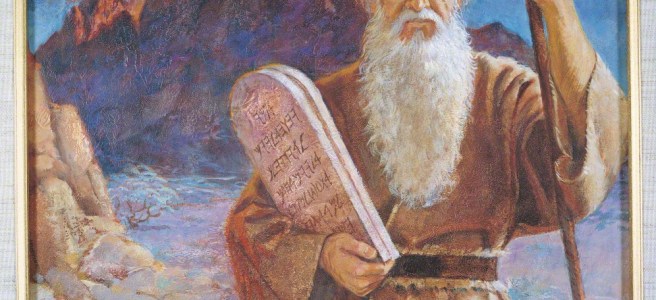
Where can the ten commandments be found? Are there more than the ten commandments found in the book of Exodus? What about receiving personal commandments such as the one Lehi received to leave Jerusalem. Does God still give such commandments, specific to individuals, in our time?

-Which commandments are the most important? Are the two great commandments, affirmed by Jesus Christ in the New Testament, a summary of the ten commandments? Or, do they transcend the ten commandments to some degree?

-Is obedience to God’s commandments a key to bringing His power into your life? How meaningful and empowering would it be to receive nourishment and strength from God himself?

I Will Bring Forth unto Them, in My Own Power, Much of My Gospel

After Nephi is shown that many truths would be taken from the gospel record prior to the Bible coming to the Americas, he is also shown that God would reestablish these lost truths by His own power.

…Because of the many plain and precious things which have been taken out of the book…an exceedingly great many do stumble…insomuch that Satan hath great power over them. Nevertheless…God will not suffer that the Gentiles shall forever remain in that awful state of blindness…they are in because of the plain and most precious parts of the gospel of the Lamb which have been kept back by that abominable church…Behold, saith the Lamb of God, I will bring forth unto them, in my own power, much of my gospel, which shall be plain and precious.” (1 Nephi 13:29-30, 32-34)

Questions:

-Do you believe that the Book of Mormon was brought to us through Jesus Christ’s own power? Can you make a meaningful decision about your belief without carefully reading the book and seeking God’s guidance about its truth?

-If the Book of Mormon contains many plain and precious truths, brought to us through God’s direction and revelation (see Condemn not the Things of God), how important is it to read and understand?

– Was the coming forth of the Book of Mormon the culmination of social thought or the product of the most educated and sophisticated religious minds of its day (i.e., man’s power)? Or, was it by God’s power—through a commandment to ancient American prophets to keep a record and a commandment to a modern-day prophet to translate it by the power of revelation?

-Are there other books — besides the Book of Mormon — that have come to us in modern times, by God’s power, and have helped to restore plain and precious truths?

Latter-day Prophets, Seers, and Revelators

“The Book of Mormon is the keystone in our witness of Jesus Christ, who is Himself the cornerstone of everything we do. It bears witness of His reality with power and clarity. Unlike the Bible, which passed through generations of copyists, translators, and corrupt religionists who tampered with the text, the Book of Mormon came from writer to reader in just one inspired step of translation. Therefore, its testimony of the Master is clear, undiluted, and full of power. But it does even more. Much of the Christian world today rejects the divinity of the Savior. They question His miraculous birth, His perfect life, and the reality of His glorious resurrection. The Book of Mormon teaches in plain and unmistakable terms about the truth of all of those. It also provides the most complete explanation of the doctrine of the Atonement. Truly, this divinely inspired book is a keystone in bearing witness to the world that Jesus is the Christ” (Ezra Taft Benson, “The Book of Mormon—Keystone of Our Religion,” Ensign, Nov. 1986, 5).

“The Lord himself has stated that the Book of Mormon contains the ‘fulness of the gospel of Jesus Christ’ (Doctrine & Covenants 20:9). That does not mean it contains every teaching, every doctrine ever revealed. Rather, it means that in the Book of Mormon we will find the fulness of those doctrines required for our salvation. And they are taught plainly and simply so that even children can learn the ways of salvation and exaltation” (Ezra Taft Benson, “The Book of Mormon—Keystone of Our Religion,” Ensign, Nov. 1986, 6).


“The Book of Mormon is another testament of Christ. It restored precious truths concerning the Fall, the Atonement, the Resurrection, and life after death.

“Prior to the Restoration, the heavens had been closed for centuries. But with prophets and apostles upon the earth once more, the heavens were opened once again with visions and revelations. Many of the revelations that came to the Prophet Joseph Smith were written down in a book that came to be known as the Doctrine and Covenants. This contains further insights about principles and ordinances and is a valuable source concerning the structure of the priesthood. In addition, we have another canon of scripture called the Pearl of Great Price. It contains the book of Moses, which came by revelation to the Prophet Joseph Smith, and the book of Abraham, which he translated from a purchased Egyptian scroll. From these we learn not only a great deal more about Moses, Abraham, Enoch, and other prophets but also many more details about the Creation. We learn that the gospel of Jesus Christ was taught to all of the prophets from the beginning—even from the time of Adam” (James E. Faust, “The Restoration of All Things,” Ensign or Liahona, May 2006, 67–68).


“If…parents will read from the Book of Mormon prayerfully and regularly, both by themselves and with their children, the spirit of that great book will come to permeate our homes and all who dwell therein. The spirit of reverence will increase, mutual respect and consideration for each other will grow. The spirit of contention will depart. Parents will counsel their children in greater love and wisdom. Children will be more responsive and submissive to the counsel of their parents. Righteousness will increase. Faith, hope, and charity—the pure love of Christ—will abound in our homes and lives, bringing in their wake peace, joy, and happiness.” (Marion G. Romney, “The Book of Mormon,” Ensign, May 1980, 65-67)

Most Desirable Above All Things and Most Joyous to the Soul

An angel shows Nephi the future birth of Jesus Christ and a magnificent and beautiful tree, which was a central part of his father’s vision (see 1 Nephi 8). The angel then teaches Nephi about the meaning of the tree.

And the angel said unto me: Behold the Lamb of God, yea, even the Son of the Eternal Father! Knowest thou the meaning of the tree which thy father saw? And I answered him saying: Yea, it is the love of God, which sheddeth itself abroad in the hearts of the children of men; wherefore, it is the most desirable above all things. And he spake unto me, saying: Yea, and the most joyous to the soul.” (1 Nephi 11:21-23)

Questions:

-How is Jesus Christ the perfect example of the love of God?

-Why, as the angel testified to Nephi, is the love of God more desirable than anything else and the source of the greatest possible joy?

-How can you increase the love of God in your heart and experience this greatest of joys?

Latter-day Prophets, Seers, and Revelators…

“The tree of life … is the love of God (see 1 Ne. 11:25). The love of God for His children is most profoundly expressed in His gift of Jesus as our Redeemer: ‘God so loved the world, that he gave his only begotten Son’ (John 3:16). To partake of the love of God is to partake of Jesus’ Atonement and the emancipations and joys which it can bring” (Neal A. Maxwell, “Lessons from Laman and Lemuel,” Ensign, Nov. 1999, 8).

Awake and Arise from the Dust

A final invitation from the prophet Moroni to all, including the remnant of the house of Israel, to turn to God and find healing and cleansing through the Atonement of Jesus Christ.

“…I would exhort you that ye would come unto Christ, and lay hold upon every good gift and touch not the evil gift, nor the unclean thing. And awake, and arise from the dust, O Jerusalem; yea, and put on thy beautiful garments, O daughter of Zion; and strengthen thy stakes and enlarge thy borders forever, that thou mayest no more be confounded, that the covenants of the Eternal Father which he hath made unto thee, O house of Israel, may be fulfilled. Yea, come unto Christ, and be perfected in him, and deny yourselves of all ungodliness; and if ye shall deny yourselves of all ungodliness, and love God with all your might, mind and strength, then is his grace sufficient for you, that by his grace ye may be perfect in Christ; and if by the grace of God ye are perfect in Christ, ye can in nowise deny the power of God. And again, if ye by the grace of God are perfect in Christ, and deny not his power, then are ye sanctified in Christ by the grace of God, through the shedding of the blood of Christ, which is in the covenant of the Father unto the remission of your sins, that ye become holy without spot. And now I bid unto all, farewell. I soon go to rest in the paradise of God, until my spirit and body shall again reunite, and I am brought forth triumphant through the air, to meet you before the pleasing bar of the great Jehovah, the Eternal Judge of both quick and dead. Amen.” (Moroni 10:30-34)

Questions:

-Is there any way to arise from the dust (overcome the carnal aspects of our natures) without the sanctifying power of Christ’s Atonement and Spirit?

-Do you believe God has the power to make a person holy if that person humbly seeks to repent and to love God with his or her whole being?  

If There Be One Among You that Doeth Good, He Shall Work by the Power and Gifts of God

Moroni testifies that good only comes into the world through the power and gifts of God. Those who reject the Spirit and gifts of God in this life will die in their sins.

“…And now I speak unto all the ends of the earth—that if the day cometh that the power and gifts of God shall be done away among you, it shall be because of unbelief. And wo be unto the children of men if this be the case; for there shall be none that doeth good among you, no not one. For if there be one among you that doeth good, he shall work by the power and gifts of God. And wo unto them who shall do these things away and die, for they die in their sins, and they cannot be saved in the kingdom of God; and I speak it according to the words of Christ; and I lie not. And I exhort you to remember these things; for the time speedily cometh that ye shall know that I lie not, for ye shall see me at the bar of God; and the Lord God will say unto you: Did I not declare my words unto you, which were written by this man, like as one crying from the dead, yea even as one speaking out of the dust?” (Moroni 10:24-27)

“I declare these things unto the fulfilling of the prophecies. And behold, they shall proceed forth out of the mouth of the everlasting God; and his word shall hiss forth from generation to generation. And God shall show unto you, that that which I have written is true.” (Moroni 10:28-29)

Questions:

-Do many work by the power and gifts of God without knowing it?

-Are there ordinances and covenants that can endow a person with greater strength to work by the power and gifts of God (if the person is true and faithful to the covenants made with God)?

Except Ye Have Charity Ye Can in Nowise Be Saved in the Kingdom of God

Moroni testifies that charity (born of faith and hope in Christ) is a state of being opposite to despair.

“…There must be faith; and if there must be faith there must also be hope; and if there must be hope there must also be charity. And except ye have charity ye can in nowise be saved in the kingdom God; neither can ye be saved in the kingdom of God if ye have not faith; neither can ye if ye have no hope. And if ye have no hope ye must needs be in despair; and despair cometh because of iniquity.” (Moroni 10:20-22)

Questions

-Often hate would be considered the closest opposite of charity (which is the pure love of Christ). But, how closely tied together are feelings of despair and feelings of hate — directed towards oneself or others?