He Doeth Not Anything Save It Be for the Benefit of the World

After describing the sin and secret combinations that would exist among the Gentiles in the last days (see previous post), Nephi teaches that Satan has promoted such things from the beginning to bring souls down into captivity. In contrast, Nephi gives insight into how and why the Lord does His work.

“The devil…is…the founder of murder, and works of darkness; yea, and he leadeth them by the neck with a flaxen cord, until he blindeth them with his strong cords forever. (2 Nephi 26:22)

For behold, my beloved brethren, I say unto you that the Lord God worketh not in darkness. He doeth not anything save it be for the benefit of the world; for he loveth the world, even that he layeth down his own life that he may draw all men unto him. Wherefore, he commandeth none that they shall not partake of his salvation. (2 Nephi 26:23)

Behold, doth he cry unto any, saying: Depart from me? Behold, I say unto you, Nay; but he saith: Come unto me all ye ends of the earth, buy milk and honey, without money and without price. Behold hath he commanded any that they should depart out of the synagogues, or out of the houses of worship? Behold I say unto you, Nay. Hath he commanded any that they should not partake of his salvation: Behold I say unto you, Nay; but he hath given it free for all men; and he hath commanded his people that they should persuade all men to repentance. Behold, hath the Lord commanded any that they should not partake of his goodness? Behold, I say unto you, Nay; but all men are privileged the one like unto the other, and none are forbidden.” (2 Nephi 26:24-28)

Questions:

-Does the devil have anything good to offer? Is there any limit to his hatred and ill-will towards every living soul on the earth?

-Is it even possible to comprehend the extent of the goodness God has to offer? Is there any limit to His love and generosity toward every living soul on the earth? Are we doing God’s will if we don’t strive to extend the same kind of love towards others?

-How many in the world see repentance as a way to embrace the goodness that God has to offer and reject the destructive aims of Satan?

Teachings of Latter-day Prophets, Seers, and Revelators:

“I hope that we welcome and love all of God’s children, including those who might dress, look, speak, or just do things differently. It is not good to make others feel as though they are deficient. Let us lift those around us. Let us extend a welcoming hand. Let us bestow upon our brothers and sisters in the Church a special measure of humanity, compassion, and charity so that they feel, at long last, they have finally found home. …

“It seems only right and proper that we extend to others that which we so earnestly desire for ourselves.

“I am not suggesting that we accept sin or overlook evil, in our personal life or in the world. Nevertheless, in our zeal, we sometimes confuse sin with sinner, and we condemn too quickly and with too little compassion. …

“… Let our hearts and hands be stretched out in compassion toward others, for everyone is walking his or her own difficult path” (Dieter F. Uchtdorf, “You Are My Hands,” Ensign or Liahona, May 2010, 68–69).
 

Ye May Liken Them unto You and unto All Men

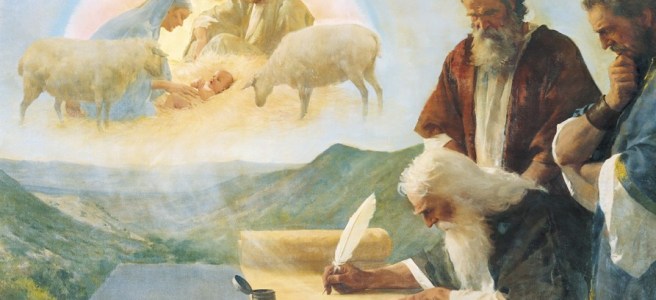
Before recording many of the words of Isaiah onto the Gold Plates (from which the Book of Mormon was translated), Nephi testifies that Isaiah’s teachings and prophecies have such a sweeping spiritual vision that they are applicable to all people.

“And now I write some of the words of Isaiah, that whoso of my people shall see these words may lift up their hearts and rejoice for all men. Now these are the words, and ye may liken them unto you and unto all men.” (2 Nephi 11:8)

Below is a sampling of the writings of Isaiah as recorded by Nephi:

“…Let us go up to the mountain of the Lord, to the house of the God of Jacob; and he will teach us of his ways, and we will walk in his paths.” (2 Nephi 12:3Map of the Temples of the Church of Jesus Christ of Latter-day Saints)

“O ye wicked ones, enter into the rock, and hide thee in the dust, for the fear of the Lord and the glory of his majesty shall smite thee. And it shall come to pass that the lofty looks of man shall be humbled, and the haughtiness of men shall be bowed down, and the Lord alone shall be exalted in that day. For the day of the Lord of Hosts soon cometh upon all nations, yea, upon every one; yea, upon the proud and lofty and upon every one who is lifted up, and he shall be brought low.” (2 Nephi 12:10-12Second Coming)

“…The idols he shall utterly abolish. And they shall go into the holes of the rocks, and into the caves of the earth, for the fear of the Lord shall come upon them and the glory of his majesty shall smite them, when he ariseth to shake terribly the earth. In that day a man shall cast his idols of silver, and his idols of gold, which he hath made for himself to worship, to the moles and to the bats; To go into the clefts of the rocks, and into the tops of the ragged rocks, for the fear of the Lord shall come upon them and the majesty of his glory shall smite them, when he ariseth to shake terribly the earth.” (2 Nephi 12:18-21Second Coming)

“Cease ye from man, whose breath is in his nostrils; for wherein is he to be accounted of?” (2 Nephi 12:22Worldliness)

“Say unto the righteous that is it well with them; for they shall eat the fruit of their doings. Wo unto the wicked for they shall perish; for the reward of their hands shall be upon them!” (2 Nephi 13:10-11All Men Come unto God to Be Judged of Him)

“In that day shall the branch of the Lord be beautiful and glorious; the fruit of the earth excellent and comely to them that are escaped of Israel. And it shall come to pass, they that are left in Zion and remain in Jerusalem shall be called holy, every one that is written among the living in Jerusalem…” (2 Nephi 14:2-3Millennium)

“…They regard not the work of the Lord, neither consider the operation of his hnds. Therefore, my people are gone into captivity, because they have no knowledge…Therefore hell hath enlarged herself, and opened her mouth without measure; and their glory, and their multitude, and their pomp, and he that rejoiceth, shall descend into it” (2 Nephi 15:12-14Cursed is He Who Putteth His Trust in Man)

“Wo unto them that draw iniquity with cords of vanity, and sin as it were with a cart rope.” (2 Nephi 15:18Sin)

“Wo unto them that call evil good, and good evil, that put darkness for light, and light for darkness, that put bitter for sweet, and sweet for bitter!” (2 Nephi 15:20Deception)

“Wo unto the wise in their own eyes and prudent in their own sight!” (2 Nephi 15:21Pride)

“Wo unto the mighty to drink wine, and men of strength to mingle strong drink.” (2 Nephi 15:22Word of Wisdom)

“…As the fire devoureth the stubble, and the flame consumeth the chaff, their root shall be rottenness, and their blossoms shall go up as dust; because they have cast away the law of the Lord of Hosts, and despised the word of the Holy One of Israel.” (2 Nephi 15:24The Wisdom and Praise of the World is Foolishness before God)

“…His hand is stretched out still.” (2 Nephi 15:25Mercy)

“Sanctify the Lord of Hosts himself, and let him be your fear, and let him be your dread.” (2 Nephi 18:13Fear)

“Wo be unto them that decree unrighteous decrees, and that write grievousness which they have prescribed; To turn away the needy from judgment, and to take away the right from the poor of my people, that widows may be their prey, and that they may rob the fatherless.” (2 Nephi 20:1-2 —  Unrighteousness)

“They shall not hurt nor destroy in all my holy mountain, for the earth shall be full of the knowledge of the Lord, as the waters cover the sea.” (2 Nephi 21:9Millennium)

“The Lord shall set his hand again the second time to recover the remnant of his people which shall be left, from Assyria, and from Egypt, and from Pathros, and from Cush, and from Elam, and from Shinar, and from Hamath and from the islands of the sea. And he shall set up an ensign for the nations, and shall assemble the outcasts of Israel, and gather together the dispersed of Judah from the four corners of the earth. The envy of Ephraim also shall depart, and the adversaries of Judah shall be cut off; Ephraim shall not envy Judah, and Judah shall not vex Ephraim.” (2 Nephi 21:11-13Gathering of Israel)

Sing unto the Lord; for he hath done excellent things…” (2 Nephi 22:5Sing)

“…Mine anger is not upon them that rejoice in my highness.” (2 Nephi 23:3Worship)

“And it shall come to pass in that day that the Lord shall give thee rest, from thy sorrow, and from thy fear, and from the hard bondage wherein thou wast made to serve.” (2 Nephi 24:3MillenniumHouse of Israel)

Come unto That God Who Is the Rock of Your Salvation

Knowing his people had a clear knowledge of God’s law, Jacob pleads with them to not be entangled in sin but to turn with a repentant heart toward the true God.

“…Turn away from your sins; shake off the chains of him that would bind you fast; come unto that God who is the rock of your salvation. Prepare your souls for that glorious day when justice shall be administered unto the righteous, even the day of judgment, that ye may not shrink with awful fear; that ye may not remember your awful guilt in perfectness, and be constrained to exclaim: Holy, holy are thy judgments, O Lord God Almighty–but I know my guilt; I have transgressed thy law, and my transgressions are mine; and the devil hath obtained me, that I am prey to his awful misery.” (2 Nephi 9:45-46)

Questions:

-Are you actively preparing your soul for the Day of Judgment?

-Who must you rely on to be prepared?

-To prevent being bound by the chains of sin, does a reliance on Christ need to be a constant daily endeavor? Is participating in this daily endeavor the difference between being spiritually-minded and being carnally-minded?

-Why will any remaining guilt be remembered with perfectness at the Day of Judgment?

-How can all guilt be washed away before the Day of Judgment?

The Righteous Love the Truth and Are Not Shaken

Jacob realizes his teachings about…

…are going to be hard for some to hear.

This being the case, he pleads with those who hear these messages not to rebel against the truth but to reconcile themselves with God through the Atonement of Jesus Christ.

“…Give ear to my words. Remember the greatness of the Holy One of Israel. Do not say that I have spoken hard things against you; for if you do ye will revile against the truth; for I have spoken the words of your Maker. I know the words of truth are hard against all uncleanness; but the righteous fear them not, for they love the truth and are not shaken. O then my beloved [brothers and sisters] come unto the Lord, the Holy One. Remember that his paths are righteous. Behold, the way for man is narrow, but it lieth in a straight course before him, and the keeper of the gate is the Holy One of Israel; and he employeth no servant there; and there is none other way save it be by the gate; for he cannot be deceived, for the Lord God is his name.” (2 Nephi 9:40-41)

Questions:

-How easy is it for most people to perceive and accept the greatness of God, and His righteous standards, in relation to their shortcomings and sins?

-Do many feel it is easier to avoid facing the unclean aspects of their lives in relation to God than it is to square up to the truth of the situation and ask God for help to become clean through His power?

-Are many of the ideas and philosophies of the world popular because they help people avoid facing God and the uncomfortable aspects of seeking forgiveness?

-Is being willing to face one’s uncleanness, and work with God to remedy the situation, one of the main aspects of what Jacob calls righteousness? Would a person who continually strives to recognize their weaknesses, and do this work of repentance, be prone to judge others harshly who have similar mortal frailties? Is it impossible to be righteous and self-righteous at the same time?

-Will anyone be able to hide from the reality of his or her relationship with God at the time of the Resurrection and the Day of Judgment?

Wo unto All Those Who Die in Their Sins

Jacob describes some of the spiritual darkness that can enter the lives of men and women and separate their souls from God for eternity.

“…Wo unto the deaf that will not hear; for they shall perish. Wo unto the blind that will not see; for they shall perish also. Wo unto the uncircumcised of heart, for a knowledge of their iniquities shall smite them at the last day. Wo unto the liar, for he shall be thrust down to hell. Wo unto the murderer who deliberately killeth, for he shall die. Wo unto them who commit whoredoms, for they shall be thrust down to hell. Yea, wo unto those that worship idols, for the devil of all devils delighteth in them. And, in fine, wo unto all those who die in their sins; for they shall return to God, and behold his face, and remain in their sins.” (2 Nephi 9:31-38)

Questions:

-What causes spiritual deafness and spiritual blindness?

-How many people care about their relationship with God? How many believe in God to begin with? Have many been convinced, in our times, that searching for God is a fruitless endeavor? What is the cost of trying to hear God’s voice compared to the cost of having less joy throughout the eternities because the attempt to know and understand God was never made?

-Can you see the messages of the Book of Mormon, the Bible, and other inspired scripture as a call to hear God’s voice?

-How can a person know that his or her heart is right before God?

-What is the difference between a person who lies and then repents of the sin and a person who makes lying a regular part of his or her character and does not repent? Which person do you think Jacob is talking about in the passage above?

-What would be the greater punishment for a person who deliberately commits murder? Being executed physically or the pain of dying spiritually. Will the murderer or the person that was murdered end up experiencing greater pain in the end?

-What are whoredoms? Why does God care deeply about the way each person handles his or her sexuality? How powerful is sexuality spiritually (for good or for evil)?

-Why does the devil delight in idol worship? What kind of idols do most people worship in our times?

All Things Have Been Done in the Wisdom of Him Who Knoweth All Things

Lehi teaches his son, Jacob, that God was not taken off guard or thwarted in any way by Satan’s successful effort to get Adam and Eve to eat the forbidden fruit in the Garden of Eden.

“…If Adam had not transgressed he would not have fallen, but he would have remained in the garden of Eden. And all things which were created must have remained in the same state in which they were after they were created; and they must have remained forever, and had no end. And [Adam and Eve] would have had no children; wherefore they would have remained in a state of innocence, having no joy, for they knew no misery; doing no good, for they knew no sin. But behold, all things have been done in the wisdom of him who knoweth all things. Adam fell that men might be; and men are, that they might have joy.” (2 Nephi 2:22-24)

Questions:

-Why were Adam and Eve unable to have children until after their fall?

-Will the difficulties of mortality help God’s sons and daughters truly appreciate the eternal blessings He has prepared for those who choose the path of joy?

-Can great joy be achieved during mortality as well?

Teachings of Latter-day Prophets, Seers, and Revelators

“Did [Adam and Eve] come out in direct opposition to God and to his government? No. But they transgressed a command of the Lord, and through that transgression sin came into the world. The Lord knew they would do this, and he had designed that they should” (Discourses of Brigham Young, sel. John A. Widtsoe [1954], 103).


“The most important events that ever have or will occur in all eternity … are the Creation, the Fall, and the Atonement.

“Before we can even begin to understand the temporal creation of all things, we must know how and in what manner these three eternal verities—the Creation, the Fall, and the Atonement—are inseparably woven together to form one plan of salvation. No one of them stands alone; each of them ties into the other two; and without a knowledge of all of them, it is not possible to know the truth about any one of them. …

“… Be it remembered, the Atonement came because of the Fall. Christ paid the ransom for Adam’s transgression. If there had been no Fall, there would be no Atonement with its consequent immortality and eternal life. Thus, just as surely as salvation comes because of the Atonement, so also salvation comes because of the Fall” (Bruce R. McConkie, “Christ and the Creation,” Ensign, June 1982, 9).


“Just why the Lord would say to Adam that he forbade him to partake of the fruit of that tree is not made clear in the Bible account [see Genesis 2:17], but in the original as it comes to us in the Book of Moses [see Moses 3:17] it is made definitely clear. It is that the Lord said to Adam that if he wished to remain as he was in the garden, then he was not to eat the fruit, but if he desired to eat it and partake of death he was at liberty to do so” (Joseph Fielding Smith, Answers to Gospel Questions, comp. Joseph Fielding Smith Jr. [1963], 4:81).


“God’s premortal children could not become like him and enjoy his breadth of blessings unless they obtained both a physical body and temporal experience in an arena where both good and evil were present. …

“… We wanted the chance to become like our heavenly parents, to face suffering and overcome it, to endure sorrow and still live rejoicingly, to confront good and evil and be strong enough to choose the good” (Jeffrey R. Holland, Christ and the New Covenant: The Messianic Message of the Book of Mormon [1997], 200, 204).


“[Adam and Eve] transgressed a commandment of God which required that they leave their garden setting but which allowed them to have children before facing physical death. To add further sorrow and complexity to their circumstance, their transgression had spiritual consequences as well, cutting them off from the presence of God forever. Because we were then born into that fallen world and because we too would transgress the laws of God, we also were sentenced to the same penalties that Adam and Eve faced. …

“… From the moment those first parents stepped out of the Garden of Eden, the God and Father of us all, anticipating Adam and Eve’s decision, dispatched the very angels of heaven to declare to them—and down through time to us—that this entire sequence was designed for our eternal happiness. It was part of His divine plan, which provided for a Savior, the very Son of God Himself—another ‘Adam,’ the Apostle Paul would call Him [see 1 Corinthians 15:45]—who would come in the meridian of time to atone for the first Adam’s transgression. That Atonement would achieve complete victory over physical death. … Mercifully it would also provide forgiveness for the personal sins of all, from Adam to the end of the world, conditioned upon repentance and obedience to divine commandments” (Jeffery R. Holland, “Where Justice, Love, and Mercy Meet,” Ensign or Liahona, May 2015, 105–6).

Teachings of the Seventy

“Since the fifth century, Christianity taught that Adam and Eve’s Fall was a tragic mistake. … That view is wrong. … The Fall was not a disaster. It wasn’t a mistake or an accident. It was a deliberate part of the plan of salvation” (Bruce C. Hafen, “The Atonement: All for All,” Ensign or Liahona, May 2004, 97).

The Lord God Gave Commandment that All Men Must Repent

Lehi teaches his son, Jacob, about the meaning of mortal life and the vital importance of repentance:

“…Adam and Eve…brought forth children; yea, even the family of all the earth. And the days of the children of men were prolonged, according to the will of God, that they might repent while in the flesh; wherefore, their state became a state of probation, and their time was lengthened, according to the commandments which the Lord God gave unto the children of men. For he gave commandment that all men must repent.” (2 Nephi 2:19-21)

Questions:

-How do you feel about your life being a time to show who you really are?

-If repentance means turning to God, how can this be accomplished in a person’s life?

-How many people in the world have a sense of the need of repentance? How many know how to turn to God? If they never are taught these things during mortal life, will they have an opportunity to receive this knowledge in the post-mortal spirit world (before the Resurrection and Final Judgment)?

-Is there any way to repent except through the atoning sacrifice of Christ?

-Are there any sins too heinous or evil toward which the healing power of Christ’s Atonement is ineffective?

Teachings of Latter-day Prophets, Seers, and Revelators:

“Repentance means striving to change. It would mock the Savior’s suffering in the Garden of Gethsemane and on the cross for us to expect that He should transform us into angelic beings with no real effort on our part. Rather, we seek His grace to complement and reward our most diligent efforts (see 2 Nephi 25:23). Perhaps as much as praying for mercy, we should pray for time and opportunity to work and strive and overcome. Surely the Lord smiles upon one who desires to come to judgment worthily, who resolutely labors day by day to replace weakness with strength. Real repentance, real change may require repeated attempts, but there is something refining and holy in such striving” (“The Divine Gift of Repentance,” Elder D. Todd Christofferson, Ensign or Liahona, Nov. 2011, 39).

Teachings of the Seventy:

“Since the fifth century, Christianity taught that Adam and Eve’s Fall was a tragic mistake. … That view is wrong. … The Fall was not a disaster. It wasn’t a mistake or an accident. It was a deliberate part of the plan of salvation” (“The Atonement: All for All,” Ensign or Liahona, May 2004, 97).

If There Be No Righteousness There Be No Happiness

Lehi teaches his son, Jacob, about the power of God’s law to create meaning through consequence and how all things witness there is a God.

“…If ye shall say there is no law, ye shall also say there is no sin. If ye say there is no sin, ye shall also say there is no righteousness. And if there be no righteousness there be no happiness. And if there be no righteousness nor happiness there be no punishment nor misery. And if these things are not there is no God. And if there is no God we are not, neither the earth; for there could have been no creation of things, neither to act nor to be acted upon; wherefore, all things must have vanished away.” (2 Nephi 2:13)

-Do you believe sin is real?

How meaningful would life be without consequences?

-Do the most lasting consequences occur in this life? Or, do they occur when each individual is brought back to God’s presence to be judged?

-How is righteousness tied to happiness?

Teachings of Latter-day Prophets, Seers, and Revelators:

“Happiness comes of righteousness. ‘Wickedness never was happiness.’ (Alma 41:10.) Sin never was happiness. Selfishness never was happiness. Greed never was happiness. Happiness lies in living the principles of the gospel of Jesus Christ” (Gordon B. Hinckley, in “Fast-Paced Schedule for the Prophet: Meets with Young Adults, Youth in Three Meetings in Colorado,” Church News, Apr. 20, 1996, 3).

How Great the Importance to Make These Things Known unto the Inhabitants of the Earth

Lehi continues to teach his son, Jacob, about Christ’s Atonement and all of mankind’s need for it:

“…He offereth himself a sacrifice for sin, to answer the ends of the law, unto all those who have a broken heart and a contrite spirit; and unto none else can the ends of the law be answered. Wherefore, how great the importance to make these things known unto the inhabitants of the earth, that they may know that there is no flesh that can dwell in the presence of God, save it be through the merits, and mercy, and grace of the Holy Messiah…” (2 Nephi 2:7-8)

Questions:

-What does Lehi mean when he states that only those with a broken heart and a contrite spirit can receive Christ’s redemption from sin?

-Does “heart” in this passage refer to our personal will versus God’s will? Is it good to break down our will to make way for God’s will in our lives?

-Can one have anything but a “broken heart” when he or she truly keeps in remembrance the price paid by Christ to redeem those who choose to follow and obey Him?

-How is being prideful (which is the opposite of having a broken heart and a contrite spirit) a false state of being?

-Who among the inhabitants of the earth has God’s law? Who, if any, does not have the law?

Teachings of Latter-day Prophets, Seers, and Revelators:

“I believe that none of us can conceive the full import of what Christ did for us in Gethsemane, but I am grateful every day of my life for His atoning sacrifice in our behalf.

“At the last moment, He could have turned back. But He did not. He passed beneath all things that He might save all things. In doing so, He gave us life beyond this mortal existence. He reclaimed us from the Fall of Adam.

“To the depths of my very soul, I am grateful to Him. He taught us how to live. He taught us how to die. He secured our salvation” (Thomas S. Monson, “At Parting,” Ensign or Liahona, May 2011, 114).

Teachings of the Seventy

“What are a broken heart and a contrite spirit? … The Savior’s perfect submission to the Eternal Father is the very essence of a broken heart and a contrite spirit. Christ’s example teaches us that a broken heart is an eternal attribute of godliness. When our hearts are broken, we are completely open to the Spirit of God and recognize our dependence on Him for all that we have and all that we are. The sacrifice so entailed is a sacrifice of pride in all its forms. Like malleable clay in the hands of a skilled potter, the brokenhearted can be molded and shaped in the hands of the Master.

“A broken heart and a contrite spirit are also preconditions to repentance [see 2 Nephi 2:6–7]. … When we sin and desire forgiveness, a broken heart and a contrite spirit mean to experience ‘godly sorrow [that] worketh repentance’ (2 Corinthians 7:10). This comes when our desire to be cleansed from sin is so consuming that our hearts ache with sorrow and we yearn to feel at peace with our Father in Heaven. Those who have a broken heart and a contrite spirit are willing to do anything and everything that God asks of them, without resistance or resentment. We cease doing things our way and learn to do them God’s way instead. In such a condition of submissiveness, the Atonement can take effect and true repentance can occur” (Bruce D. Porter, “A Broken Heart and a Contrite Spirit,” Ensign or Liahona, Nov. 2007, 32).

Video from Book of Mormon Central:

Search Diligently in the Light of Christ

Moroni provides powerful keys to discerning good from evil.

“Wherefore, all things which are good cometh of God; and that which is evil cometh of the devil; for the devil is an enemy unto God, and fighteth against him continually, and inviteth and enticeth to sin, and to do that which is evil continually. But behold, that which is of God inviteth and enticeth to do good continually; wherefore, every thing which inviteth and enticeth to do good, and to love God, and to serve him, is inspired of God. Wherefore, take heed, my beloved brethren, that ye do not judge that which is evil to be of God, or that which is good and of God to be of the devil. For behold, my brethren, it is given unto you to judge, that ye may know good from evil; and the way to judge is as plain, that ye may know with a perfect knowledge, as the daylight is from the dark night. For behold, the Spirit of Christ is given to every man, that he may know good from evil; wherefore, I show unto you the way to judge; for every thing which inviteth to do good, and to persuade to believe in Christ, is sent forth by the power and gift of Christ; wherefore ye may know with a perfect knowledge it is of God. But whatsoever thing persuadeth men to do evil, and believe not in Christ, and deny him, and serve not God, then ye may know with a perfect knowledge it is of the devil; for after this manner doth the devil work, for he persuadeth no man to do good, no, not one; neither do his angels; neither do they who subject themselves unto him. And now, my brethren, seeing that ye know the light by which ye may judge, which light is the light of Christ, see that ye do not judge wrongfully; for with that same judgment which ye judge ye shall also be judged. Wherefore, I beseech of you, brethren, that ye should search diligently in the light of Christ that ye may know good from evil; and if ye will lay hold upon every good thing, and condemn it not, ye certainly will be a child of Christ.” (Moroni 7:12-19)

Questions:

-Do those seeking to follow Christ sometimes have difficulty discerning the difference between being condemnatory of others (on the one hand) and the above commandment to judge righteously between good and evil (on the other hand)?

-Do many struggle with the necessity to hate the sin (unflinchingly recognizing evil for what it is) but still love the sinner (extending love and forgiveness to others regardless of whether the other person’s sins are similar in type or perceived magnitude in comparison to one’s own)?

-Because of the difficulty found in squarely confronting sin in themselves and their loved ones, have many tender-hearted people been lured into making poor judgments about evil in our time?