

Do the Things Which I Have Told You I Have Seen That Your Lord and Your Redeemer Should Do

After teaching about the baptism of Christ and the importance of baptism for all of God’s children, Nephi teaches about how a person should move forward after being baptized.

“Wherefore, do the things which I have told you I have seen that your Lord and your Redeemer should do; for, for this cause have they been shown unto me, that ye might know the gate by which ye should enter. For the gate by which ye should enter is repentance and baptism by water; and then cometh a remission of your sins by fire and by the Holy Ghost. And then are ye in this strait and narrow path which leads to eternal life; yea, ye have done according to the commandments of the Father and the Son; and ye have received the Holy Ghost, which witnesses of the Father and of the Son, unto the fulfilling of the promise which he hath made, that if ye entered in by the way ye should receive.” (2 Nephi 31:17-18)

“And now my beloved brethren, after ye have gotten into this strait and narrow path, I would ask if all is done? Behold, I say unto you, Nay; for ye have not come thus far save it were by the word of Christ with unshaken faith in him, relying wholly upon the merits of him who is mighty to save. Wherefore, ye must press forward with a steadfastness in Christ, having a perfect brightness of hope, and a love of God and of all men. Wherefore, if ye shall press forward, feasting upon the word of Christ, and endure to the end, behold, thus saith the Father: Ye shall have eternal life.” (2 Nephi 31:19-20)

“And now, behold, my beloved brethren, this is the way; and there is none other way nor name given under heaven whereby man can be saved in the kingdom of God. And now, behold, this is the doctrine of Christ, and the only and true doctrine of the Father, and of the Son and of the Holy Ghost, which is one God, without end. Amen.” (2 Nephi 31:21)

Questions:

-How many knew about the necessity of baptism before Christ came to the earth?

-Did others, besides the Nephites, who were of the house of Israel practice baptism before the ministry of John the Baptist?

-Was the idea of baptism completely new to the Jewish people when John the Baptist began his ministry?

-Is there any reason to doubt Christ’s power to save your soul in the kingdom of God if you press forward after baptism as described in the verses above?

Teachings of Latter-day Prophets, Seers, and Revelators:

“Sins are remitted not in the waters of baptism, as we say in speaking figuratively, but when we receive the Holy Ghost. … We become clean when we actually receive the fellowship and companionship of the Holy Ghost. It is then that sin and dross and evil are burned out of our souls as though by fire. The baptism of the Holy Ghost is the baptism of fire” (Bruce R. McConkie, A New Witness for the Articles of Faith [1985], 290).

“The ‘doctrine of Christ’ as taught by Nephi in his grand, summational discourse focuses on faith in the Lord Jesus Christ, repentance, baptism by immersion, receiving the gift of the Holy Ghost, and enduring to the end. It does not, in this declaration, attempt to cover the entire plan of salvation, all the virtues of a Christian life, or the rewards that await us in differing degrees of heavenly glory. It does not, in this declaration, deal with the offices of the priesthood, the ordinances of the temple, or many other true doctrines. All these are important, but as used in the Book of Mormon, ‘the doctrine of Christ’ is simple and direct. It focuses on the first principles of the gospel exclusively, including an expression of encouragement to endure, to persist, to press on. Indeed, it is in the clarity and simplicity of ‘the doctrine of Christ’ that its impact is found. Nephi knew it would be so. He wrote, ‘I shall speak unto you plainly, according to the plainness of my prophesying’ [2 Nephi 31:2]” (Jeffrey R. Holland, Christ and the New Covenant: The Messianic Message of the Book of Mormon [1997], 49–50).

“The Holy Ghost provides personal revelation to help us make major life decisions about such things as education, missions, careers, marriage, children, where we will live with our families, and so on. …

“… As the scriptures attest, the Holy Ghost also testifies of the Savior and God the Father [see John 15:26; Romans 8:16]. He teaches us ‘the peaceable things of the kingdom’ [D&C 39:6] and causes us to ‘abound in hope’ [Romans 15:13]. He ‘leadeth [us] to do good … [and] to judge righteously’ [D&C 11:12]. He gives ‘to every man [and woman] … a [spiritual] gift … that all may be profited thereby’ [D&C 46:11–12; see also Moroni 10:8–17; D&C 13–16]. He ‘giveth [us] knowledge’ [Alma 18:35] and ‘bring[s] all things to [our] remembrance’ [John 14:26]. Through the Holy Ghost, we ‘may be sanctified’ [3 Nephi 27:20] and receive ‘a remission of [our] sins’ [2 Nephi 31:17]. He is the ‘Comforter,’ the same who was ‘promised unto [the Savior’s] disciples’ [D&C 88:3]” (Robert D. Hales, “The Holy Ghost,” Ensign or Liahona, May 2016, 105).

“The only measure of true greatness is how close a man can become like Jesus. The man is greatest who is most like Christ, and those who love him most will be most like him.” (Ezra Taft Benson, “Listen to a Prophet’s Voice,” 57)

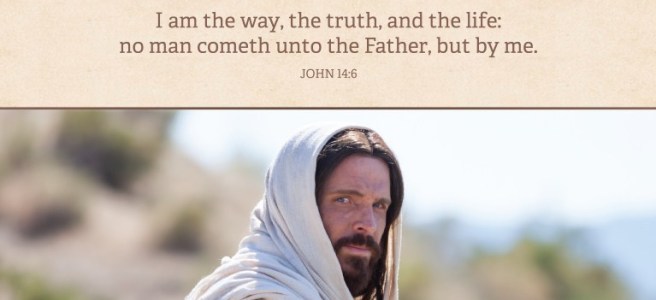
He That Endureth to the End, the Same Shall Be Saved

The prophet Nephi shares the revelation he received regarding the importance of remaining faithful (in thought and deed) in this life after entering the baptismal covenant and receiving the Holy Ghost.

“…Thus came the voice of the Son unto me, saying: After ye have repented of your sins, and witnessed unto the Father that ye are willing to keep my commandments, by the baptism of water, and have received the baptism of fire and of the Holy Ghost, and can speak with a new tongue, ye, even with the tongue of angels, and after this should deny me, it would have been better for you that ye had not known me. And I heard a voice from the Father, saying: Yea, the words of my Beloved are true and faithful. He that endureth to the end, the same shall be saved.” (2 Nephi 31:14-15)

“And now, my beloved brethren, I know by this that unless a man shall endure to the end, in following the example of the Son of the living God, he cannot be saved.” (2 Nephi 31:16)

Questions:

-What does it mean to endure to the end?

-Why do some fail to finish what they started after entering the baptismal covenant and receiving a witness from the Holy Ghost?

-How easy is it to question the witness of the Holy Ghost received early on, when later one does not have the same level of the Spirit’s purifying influence in his or her life?

-What can cause the influence of the Spirit to diminish over time?

-How quickly can one regain the full influence of the Spirit after repenting and recommitting to follow Jesus Christ? Is the amount of time needed to regain the Spirit’s strong influence connected to how far from the Spirit a person has drifted?

-Does any of the above apply to those who are baptized by someone who does not have God’s authority to do so?

Teachings of Latter-day Prophets, Seers, and Revelators:

“Enduring to the end is the doctrine of continuing on the path leading to eternal life after one has entered into the path through faith, repentance, baptism, and receiving the Holy Ghost. Enduring to the end requires our whole heart or, as the Book of Mormon prophet Amaleki teaches, we must ‘come unto him, and offer [our] whole souls as an offering unto him, and continue in fasting and praying, and endure to the end; and as the Lord liveth [we] will be saved’ [Omni 1:26].

“Enduring to the end means that we have planted our lives firmly on gospel soil, staying in the mainstream of the Church, humbly serving our fellow men, living Christlike lives, and keeping our covenants. Those who endure are balanced, consistent, humble, constantly improving, and without guile. Their testimony is not based on worldly reasons—it is based on truth, knowledge, experience, and the Spirit” (Joseph B. Wirthlin, “Press On,” Ensign or Liahona, Nov. 2004, 101).

The Lord Covenanteth with None Save it be with Them That Repent and Believe in His Son

After prophesying about some of the beliefs and misconceptions that would keep many of the Gentiles from accepting the Restored Gospel of Jesus Christ, and also the blessings that would come to the house of Israel in the last days, Nephi warns his people that no one receives salvation by birthright. Covenant blessings can only be made fully alive through repentance, obedience to God’s commandments, and faith in God’s Son, Jesus Christ.

“And now behold, my beloved brethren, I would speak unto you; for I, Nephi, would not suffer that ye should suppose that ye are more righteous than the Gentiles shall be. For behold, except ye shall keep the commandments of God ye shall all likewise perish; and because of the words which have been spoken ye need not suppose that the Gentiles are utterly destroyed. For behold, I say unto you that as many of the Gentiles as will repent are the covenant people of the Lord; and as many of the Jews as will not repent shall be cast off; for the Lord covenanteth with none save it be with them that repent and believe in his Son, who is the Holy One of Israel.” (2 Nephi 30:1-2)

Questions:

-Do the verses above imply that most of the Gentiles will repent and become part of the Lord’s covenant people in the last days? Or, do they imply that it will be a relatively small proportion that will do so? (see The Gentiles Shall Deny Me)

Teachings of Latter-day Prophets, Seers, and Revelators:

“We need a strong faith in Christ to be able to repent” (Dieter F. Uchtdorf,“Point of Safe Return,” Ensign or Liahona, May 2007, 100).

Have Ye Obtained A Bible Save It Were by the Jews?

Through the writings of the prophet Nephi (in about 559-545 B.C.), the Lord addresses those who would fight against the additional scripture He would bring forth in the last days. He addresses the Gentiles hardened view of what He would or wouldn’t do in terms of additional scripture and contrasts their sense of possession towards the Bible against their lack of appreciation towards, and general mistreatment of, the Jewish people whose ancestors brought it to them.

“…My words shall hiss forth unto the ends of the earth, for a standard unto my people, which are of the house of Israel; And, because my words shall hiss forth—many of the Gentiles shall say: A Bible! A Bible! We have got a Bible, and there cannot be any more Bible. But thus saith the Lord God: O fools, they shall have a Bible; and it shall proceed forth from the Jews, mine ancient covenant people. And what thank they the Jews for the Bible which they receive from them? Yea, what do the Gentiles mean? Do they remember the travails, and the labors, and the pains of the Jews, and their diligence unto me in bringing forth salvation unto the Gentiles?” (2 Nephi 29:2-4)

“O ye Gentiles, have ye remembered the Jews, mine ancient covenant people? Nay; but ye have cursed them, and have hated them, and have not sought to recover them. But behold, I will return all these things upon your own heads; for I the Lord have not forgotten my people. Thou fool, that shall say: A Bible, we have got a Bible, and we need no more Bible. Have ye obtained a Bible save it were by the Jews?” (2 Nephi 29:5-6)

Questions:

-Is much of the full meaning and message of the Bible lost if there is not a deep appreciation and love for the people through which the Lord brought the Bible into being and an understanding of the eternal covenants He made with them regarding their descendants?

-Is a religion that does not give proper attention and nourishment to its roots truly living and viable? Is it fully alive if the same power of continuing revelation that created the roots does not animate the branches?

-Do you believe the words above are the Lord’s and that a large portion of Christianity needed a strong wakeup call, through the Book of Mormon and other Restoration scriptures, regarding their relationship with — and actions towards — the Jews and the house of Israel more generally? Is the Lord’s use of the word “fool” indicative of the depth of the folly He was addressing?

-How much of the tragedy that unfolded during the first half of the 20th Century in Europe could have been avoided if the Lord’s voice would have been respected and heard when these verses were published as part of the Book of Mormon in the early part of the 19th Century?

Teachings of Latter-day Prophets, Seers, and Revelators:

“We, the members of the Church, and particularly the missionaries, have to be the ‘hissers,’ or the tellers and testifiers, of the Book of Mormon unto the ends of the earth” (Ezra Taft Benson, “The Book of Mormon Is the Word of God,” Ensign, May 1975, 65).