Wickedness Never Was Happiness

Alma teaches his son that all people will be restored (in the Resurrection) to what they have become based on their desires and actions in this life.  

“Do not suppose, because it has been spoken concerning restoration that ye shall be restored from sin to happiness. Behold, I say unto you, wickedness never was happiness…All men that are in a state of nature, or I would say, in the carnal state, are in the gall of bitterness and in the bonds of iniquity; they are without God in the world, and they have gone contrary to the nature of God; therefore, they are in a state contrary to the nature of happiness. And now behold, is the meaning of the word restoration to take a thing of a natural state and place it in an unnatural state, or to place it in a state opposite to its nature? O, my son, this is not the case; but the meaning of the word restoration is to bring back again evil for evil, or carnal for carnal, or devilish for devilish—good for that which is good; righteous for that which is righteous; just for that which is just; merciful for that which is merciful.” (Alma 41:10-13)

Questions:

-Why will Christ save souls from their sins but will not save them in their sins (see previous post entitled Ye Cannot Be Saved in Your Sins)?

-How can one be helped by Christ to move away from his or her sins through repentance so that his or her nature changes toward what is good, righteous, and just?

Because I Have Spoken One Word Ye Need Not Suppose That I Cannot Speak Another

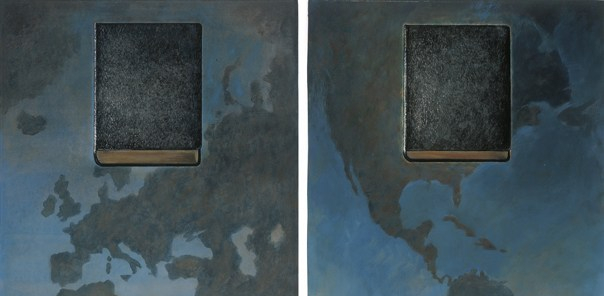
The Lord, through the writings of the prophet Nephi (in about 559-545 B.C.), continues to address those who would reject the Book of Mormon and other Restoration scripture based on the erroneous belief in the end of the Bible being the end of God’s scriptural word.

“Know ye not that there are more nations than one? Know ye not that I, the Lord your God, have created all men, and that I remember those who are upon the isles of the sea; and that I rule in the heavens above and in the earth beneath; and I bring forth my word unto the children of men, yea, even upon all the nations of the earth? Wherefore murmur ye because that ye shall receive more of my word? Know ye not that the testimony of two nations is a witness unto you that I am God, that I remember one nation like unto another. And when the two nations shall run together the testimony of the two nations shall run together also. And I do this that I may prove unto many that I am the same yesterday, today, and forever; and that I speak forth my words according to mine own pleasure. And because that I have spoken one word ye need not suppose that I cannot speak another; for my work is not yet finished; neither shall it be until the end of man, neither from that time henceforth and forever.” (2 Nephi 29:7-9)

Questions:

-Do all good things come from God?

-Does God inspire writers everywhere in the world?

-When does writing rise to the level of being scripture?

-Would it make sense for God to always keep the inspiration and light received by writers below the scriptural level in our complex and troubled times?

-Do you believe the warning in Revelation 22:18-19 (in the New Testament) applies to all scripture written up to the end of Revelation? Or, do you believe it applies only to the book of Revelation itself?

-How important is it to know whether the verses above from the Book of Mormon are from God? How can you know? (see Moroni 10:3-5) 

-If you believe the words above are the Lord’s, who has the authority to write scripture in our time?

I Will Give unto the Children of Men Line upon Line, Precept upon Precept

Nephi dispels the fallacy that God speaks all He has to say to mortals in one age and then falls permanently silent thereafter. Missed opportunity and spiritual misadventure (wo) will come to those who stubbornly adhere to this view because they are likely to reject God’s word when He chooses to speak again:

“…Wo be unto him that hearkenth unto the precepts of men, and denieth the power of God, and the gift of the Holy Ghost! Yea, wo be unto him that saith: We have received, and we need no more! And in fine, wo unto all those who tremble, and are angry because of the truth of God! For behold, he that is built upon the rock receiveth it with gladness; and he that is built upon a sandy foundation trembleth lest he shall fall. Wo be unto him that shall say: We have received the word of God, and we need no more of the word of God, for we have enough!” (2 Nephi 28:25-29)

Nephi then declares God’s truth regarding how He teaches and speaks to His children on earth:

“For behold, thus saith the Lord God: I will give unto the children of men line upon line, precept upon precept, here a little and there a little; and blessed are those who hearken unto my precepts, and lend an ear unto my counsel, for they shall learn wisdom; for unto him that receiveth I will give more; and from them that shall say, We have enough, from them shall be taken away even that which they have.” (2 Nephi 28:30)

Questions:

-Do you believe the Book of Mormon is another testament of Jesus Christ? If so, do you believe the Bible is being taken away from those who have not accepted this second witness? If so, in what ways is it being taken away?

-Has God given additional precepts to mankind (beyond those found in the Book of Mormon) since the time of the Restoration?

-Have many of the truths of the Restoration (which occurred in the early 1800s) influenced Christianity in general over the past two centuries? Have most churches and other organizations been leavened by Restoration truth without recognizing it (or despite their leaders efforts to prevent it)? For instance…

  • How many Christians believed that families could live together in the eternities after mortal life two-hundred year ago? How many believe this to be true now?

I Am a God of Miracles

The Lord inspired Nephi to include messages in his writing on the Gold Plates that He knew would, in turn, help inspire and direct Joseph Smith as the prophet of the Restoration. Speaking in the first person, the Lord states the following:

“For behold, I am God; and I am a God of miracles; and I will show unto the world that I am the same yesterday, today, and forever; and I work not among the children of men save it be according to their faith.” (2 Nephi 27:23)

The Lord then—through the prophet Nephi—directs Joseph Smith to a specific portion of Isaiah’s writings (comparable to the translation of Isaiah 29:13-24 in the King James Version of the Bible) and restates them directly as a message to Joseph. These words undoubtedly helped the prophet Joseph to understand the scope and meaning of the work the Lord was initiating through him.

“…The Lord shall say unto him that shall read the words that shall be delivered him: Forasmuch as this people draw near unto me with their mouth, and with their lips do honor me, but have removed their hearts far from me, and their fear towards me is taught by the precepts of men—Therefore, I will proceed to do a marvelous work among this people, yea, a marvelous work and a wonder, for the wisdom of their wise and learned shall perish, and the understanding of their prudent shall be hid.” (2 Nephi 27:24-26)

“And wo unto them that seek deep to hide their counsel from the Lord! And their works are in the dark; and they say: Who seeth us, and who knoweth us? And they also say: Surely, your turning of things upside down shall be esteemed as the potter’s clay. But behold, I will show unto them, saith the Lord of Hosts, that I know all their works. For shall the work say of him that made it, he made me not? Or shall the thing framed say of him that framed it, he had no understanding?” (2 Nephi 27:27)

“And in that day shall the deaf hear the words of the book, and the eyes of the blind shall see out of obscurity and out of darkness. And the meek also shall increase, and their joy shall be in the Lord, and the poor among men shall rejoice in the Holy One of Israel. For assuredly as the Lord liveth they shall see that the terrible one is brought to naught, and the scorner is consumed, and all that watch for iniquity are cut off; and they that make a man an offender for a word, and lay a snare for him that reproveth in the gate, and turn aside the just for a thing of naught.” (2 Nephi 27:29-32)

“Therefore, thus saith the Lord who redeemed Abraham, concerning the house of Jacob; Jacob shall not now be ashamed, neither shall his face wax pale. But when he seeth his children, the work of my hands, in the midst of him, they shall sanctify my name and sanctify the Holy One of Jacob, and shall fear the God of Israel. They also that erred in spirit shall come to understanding, and they that murmured shall learn doctrine.” (2 Nephi 27:33-35)

Questions:

-How and why will the wisdom and understanding of those who are not aligned with God’s marvelous work fail?

-Will miracles, leading up to the return of Jesus Christ, make it clear that many of mankind’s concepts of truth are deeply flawed (because they did not take into account God’s direct and miraculous interventions in response to true faith among His children on earth).

-How jolting will it be for some as God’s miraculous power begins to be more and more evident for all to see? Will some respond by “working in darkness” to discredit and undermine God’s work?

-Who will be more receptive to God’s miraculous work? Will it be those who are well-established in life through existing systems of wealth and power? Or, will it be the poor who are largely outside of these systems of wealth and power?

-How will the gathering of scattered Israel be part of God’s miraculous work?