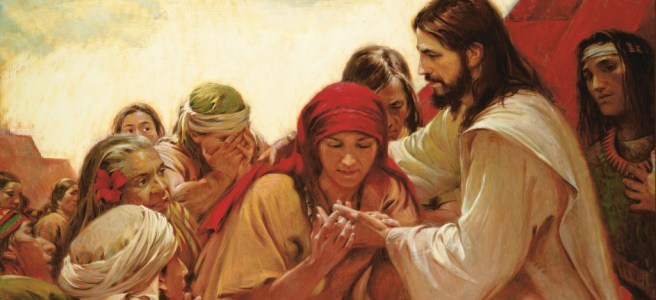
The Knowledge of a Savior Shall Spread throughout Every Nation, Kindred, Tongue, and People

An angel (speaking to King Benjamin who then recounted the vision to his people as recorded in chapter three of Mosiah) prophesies that the time will come when all will be accountable to repent and exercise faith because of their knowledge of the Savior, Jesus Christ.

“…The time shall come when the knowledge of a Savior shall spread throughout every nation, kindred, tongue, and people. And behold, when that time cometh, none shall be found blameless before God, except it be little children, only through repentance and faith on the name of the Lord God Omnipotent.” (Mosiah 3:20-21)

Questions:

-How close is this prophecy to being fulfilled?

-With the advent of the internet, air travel, etc., how long will it be before this prophesy is fulfilled?

O Be Wise: What More Can I Say?

Jacob teaches what it means to be spiritually wise.

“Behold, will ye reject these words? Will ye reject all the words which have been spoken concerning Christ, after so many have spoken concerning him; and deny the good word of Christ, and the power of God, and the gift of the Holy Ghost, and quench the Holy Spirit, and make a mock of the great plan of redemption, which hath been laid for you? Know you not that if you will do these things, that the power the redemption and the resurrection, which is in Christ, will bring you to stand with shame and awful guilt before the bar of God? And according to the power of justice, for justice cannot be denied, ye must go away into that lake of fire and brimstone, whose flames are unquenchable, and whose smoke ascendeth up forever and ever, which lake of fire and brimstone is endless torment. O then, my beloved brethren, repent ye, and enter in at the strait gate, and continue in the way which is narrow, until ye shall obtain eternal life. O be wise: what can I say more?” (Jacob 6:8-12)

Questions:

-Do you believe the Spirit testifies of the reality of Christ’s redemptive power to every person’s heart that hears of Him and His Father’s plan of salvation?

-How serious are the consequences when the testimony of the Spirit is quenched?

-Was Jacob speaking to a group of people who were saturated in opportunities to receive the Spirit (a social environment where the testimony of Christ was a constant presence)?

-Would someone who had far less exposure to the testimony of the Spirit be open to the same depth of consequence as those to whom Jacob was speaking?

-As you read the scriptural message above, what thought processes lead you to quench the Spirit? What thoughts lead you to receive the Spirit? Can you feel the ebb and flow of the Spirit in proportion to your openness to the message versus the thoughts that close your heart to the message?

-Did Jacob believe in a literal lake of fire and brimstone? Or, is he using a metaphor for representing eternal spiritual loss?

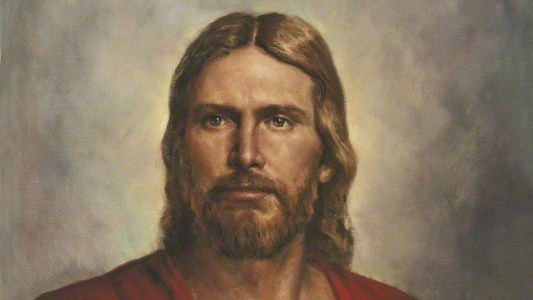
Harden Not Your Hearts

Jacob addresses the urgency of turning to God and embracing His will now, during mortality, rather than letting the precious opportunity pass by and fade away.

“…My beloved brethren, I beseech of you in words of soberness that ye would repent, and come with full purpose of heart, and cleave unto God as he cleaveth unto you. And while his arm of mercy is extended towards you in the light of day, harden not your hearts. Yea, today, if ye will hear his voice, harden not your hearts; for why will ye die?” (Jacob 6:5-6)

Questions:

-Why does Jacob compare our present condition (mortality) to the light of day?

-How is God holding fast, in loyalty and love, to His children on the earth (even when they are not reciprocating)?

-Why do some harden their hearts against God’s outstretched hands?

The One Being Is as Precious in His Sight as the Other

Jacob teaches that those who have treated others poorly—due to a misguided mindset where wealth and achievement are evidence of being superior to others—are acting sinfully in God’s sight. He then provides the reason why this is so.

“…The one being is as precious in his sight as the other. And all flesh is of the dust; and for the selfsame end hath he created them, that they should keep his commandments and glorify him forever.” (Jacob 2:21)

Questions:

-How many treat others in a way that is consistent with the truth that every person is equally precious in God’s sight?

-What kind of spiritual power comes into a person’s life when they consistently repent to the standard of thought and conduct provided by this verse?

-Do you believe that the highest path in life (and the greatest source of joy and peace) is to glorify God?