The Jewish People Who Still Wait for the Messiah Will be Blessed as Well as All People Who Build up Zion in Preparation for His Second Coming

After quoting Isaiah (chapter 49 versus 22 and 23 as found in the Old Testament), Jacob explains that after a period of trial and dispersion the Jewish people would be blessed by God through Gentile peoples whom He would raise up in the last days. On the other hand, those Gentiles who fight against the Jewish people who still wait for the Messiah and those who fight against the covenant people of the Lord (whether the covenant people are Jewish or not) will not prosper.

The Jewish people “shall be scattered, and smitten, and hated; nevertheless, the Lord will be merciful unto them, that when they shall come to the knowledge of their Redeemer, they shall be gathered together again to the lands of their inheritance. And blessed are the Gentiles, they of whom the prophet has written; for behold, if it so be that they shall repent and fight not against Zion, and do not unite themselves to the great and abominable church, they shall be saved; for the Lord God will fulfil his covenants which he has made unto his children…Wherefore, they that fight against Zion and the covenant people of the Lord shall lick up the dust of their feet; and the people of the Lord shall not be ashamed. For the people of the Lord are they who wait for him; for they still wait for the coming of the Messiah.” (2 Nephi 6:12-13)

Questions:

-Are there still millions of Jews who faithfully wait for the Messiah despite the trials of their people? What does Jacob say about the protection and blessings they will receive for this faithfulness?

-With the Restoration of the fullness of the gospel (including the teachings of the Book of Mormon and modern-day prophets), do the Jewish people have more fertile ground for coming to a knowledge of their Redeemer?

-Are they being gathered in to the land of their inheritance in our time?

For a free copy of the Book of Mormon go to: https://www.mormon.org/beliefs/book-of-mormon
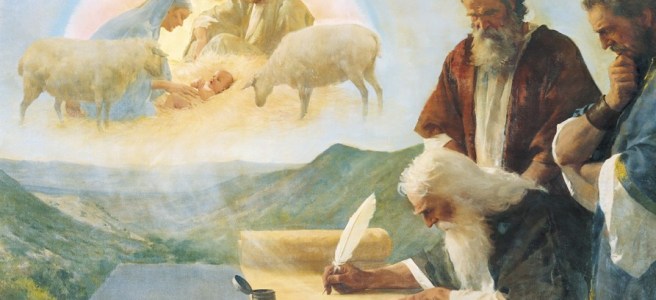
How Great the Importance to Make These Things Known unto the Inhabitants of the Earth

Lehi continues to teach his son, Jacob, about Christ’s Atonement and all of mankind’s need for it:

“…He offereth himself a sacrifice for sin, to answer the ends of the law, unto all those who have a broken heart and a contrite spirit; and unto none else can the ends of the law be answered. Wherefore, how great the importance to make these things known unto the inhabitants of the earth, that they may know that there is no flesh that can dwell in the presence of God, save it be through the merits, and mercy, and grace of the Holy Messiah…” (2 Nephi 2:7-8)

Questions:

-What does Lehi mean when he states that only those with a broken heart and a contrite spirit can receive Christ’s redemption from sin?

-Does “heart” in this passage refer to our personal will versus God’s will? Is it good to break down our will to make way for God’s will in our lives?

-Can one have anything but a “broken heart” when he or she truly keeps in remembrance the price paid by Christ to redeem those who choose to follow and obey Him?

-How is being prideful (which is the opposite of having a broken heart and a contrite spirit) a false state of being?

-Who among the inhabitants of the earth has God’s law? Who, if any, does not have the law?

Teachings of Latter-day Prophets, Seers, and Revelators:

“I believe that none of us can conceive the full import of what Christ did for us in Gethsemane, but I am grateful every day of my life for His atoning sacrifice in our behalf.

“At the last moment, He could have turned back. But He did not. He passed beneath all things that He might save all things. In doing so, He gave us life beyond this mortal existence. He reclaimed us from the Fall of Adam.

“To the depths of my very soul, I am grateful to Him. He taught us how to live. He taught us how to die. He secured our salvation” (Thomas S. Monson, “At Parting,” Ensign or Liahona, May 2011, 114).

Teachings of the Seventy

“What are a broken heart and a contrite spirit? … The Savior’s perfect submission to the Eternal Father is the very essence of a broken heart and a contrite spirit. Christ’s example teaches us that a broken heart is an eternal attribute of godliness. When our hearts are broken, we are completely open to the Spirit of God and recognize our dependence on Him for all that we have and all that we are. The sacrifice so entailed is a sacrifice of pride in all its forms. Like malleable clay in the hands of a skilled potter, the brokenhearted can be molded and shaped in the hands of the Master.

“A broken heart and a contrite spirit are also preconditions to repentance [see 2 Nephi 2:6–7]. … When we sin and desire forgiveness, a broken heart and a contrite spirit mean to experience ‘godly sorrow [that] worketh repentance’ (2 Corinthians 7:10). This comes when our desire to be cleansed from sin is so consuming that our hearts ache with sorrow and we yearn to feel at peace with our Father in Heaven. Those who have a broken heart and a contrite spirit are willing to do anything and everything that God asks of them, without resistance or resentment. We cease doing things our way and learn to do them God’s way instead. In such a condition of submissiveness, the Atonement can take effect and true repentance can occur” (Bruce D. Porter, “A Broken Heart and a Contrite Spirit,” Ensign or Liahona, Nov. 2007, 32).

Video from Book of Mormon Central:

The Spirit Is the Same, Yesterday, Today, and Forever

As he recounts (somewhere around 588-570 B.C.) how his son Jacob had come to know Christ, Lehi focuses on the power and consistency of the Spirit, who is the third member of the Godhead, in testifying of Christ.

“…I know that thou art redeemed, because of the righteousness of thy Redeemer; for thou hast beheld that in the fulness of time he cometh to bring salvation unto men. And thou hast beheld in thy youth his glory; wherefore, thou art blessed even as they unto whom he shall minister in the flesh; for the Spirit is the same, yesterday, today, and forever.” (2 Nephi 2:3-4)

-Did the Spirit have the power to testify of Christ in ancient times, before He came to the earth? Was the Spirit’s testimony in any way vague or indirect? Or, was it a clear manifestation without ambiguity?

-Did the power of the manifestation depend on the faithfulness and spiritual strength of the individual to whom the witness came?

-Is it possible for us, who live after Christ’s coming, to receive a clear manifestation, without ambiguity, that He was (and is) who He said he was?

Lehi’s Descendants Will Come to a Knowledge of Their Forefathers and Their Redeemer

In teaching his brothers about the restoration of Israel in the last days, Nephi provides a specific example related to what, for them, would be future events in the Americas:

“…Then shall the fulness of the gospel of the Messiah come unto the Gentiles, and from the Gentiles unto the remnant of our seed—And at that day shall the remnant of our seed know that they are of the house of Israel, and that they are the covenant people of the Lord; and then shall they know and come to the knowledge of their forefathers, and also to the knowledge of the gospel of their Redeemer, which was ministered unto their fathers by him; wherefore, they shall come to the knowledge of their Redeemer and the very points of his doctrine, that they may know how to come unto him and be saved.” (1 Nephi 15:13-14, 16)

Questions:

-What is the fulness of the gospel? Has it been extended by God to the Gentiles and, through the Gentiles, to Lehi’s descendants?

-Do those with native American ancestry largely identify as being part of the house of Israel today? How is acceptance of the Book of Mormon related to establishing that identity? How quickly has that identity grown since the publication of the Book of Mormon? Is it still growing today?

-Is there cultural or genetic evidence of native American ties to the house of Israel?

Video:
//players.brightcove.net/710874264001/default_default/index.html?videoId=5789331030001

Rely on This Redeemer

As a prophet of God, Lehi had uncommon insight into God’s work and many future events. He shared many of these things with his family including Nephi who recorded some of what he heard, which record became part of the Book of Mormon.

When speaking of the future of Jerusalem, Lehi foresaw the coming of a Messiah and declared that…

“…All mankind were in a lost and fallen state, and ever would be save they…rely on this Redeemer.” (1 Nephi 10:6)

Questions

-What signs do you see around you that the inhabitants of the earth are in a lost and fallen state?

-What does it mean to rely on Jesus Christ who is the Redeemer of which Lehi spoke?

-How do you feel about Lehi’s declaration that there is no other way to overcome the lost and fallen state of humanity except through the Redeemer?

He will Gather in from the Four Quarters of the Earth All the Remnant of the Seed of Jacob

Mormon, a Nephite prophet and historian, prophesies about the literal physical gathering of Jacob’s descendants in the last days.

“As surely as the Lord liveth, will he gather in from the four quarters of the earth all the remnant of the seed of Jacob, who are scattered abroad upon all the face of the earth. And as he hath covenanted with all the house of Jacob, even so shall the covenant wherewith he hath covenanted with the house of Jacob be fulfilled in his own due time, unto the restoring all the house of Jacob unto the knowledge of the covenant that he hath covenanted with them. And then shall they know their Redeemer, who is Jesus Christ, the Son of God; and then shall they be gathered in from the four quarters of the earth unto their own lands, from whence they have been dispersed; yea, as the Lord liveth so shall it be. Amen.” (3 Nephi 5:24-26)

Questions:

-Clearly the Jews have gathered (and continue to gather) to the nation of Israel. Have other descendants of Jacob begun to be gathered to their homelands?

The Promises of the Lord Have Been Extended to the Lamanites

Samuel, a Lamanite prophet, prophesies about the blessings his people will receive in the last days.

“…In the latter times the promises of the Lord have been extended to our brethren, the Lamanites; and notwithstanding the many afflictions which they shall have, and notwithstanding they shall be driven to and fro upon the face of the earth, and be hunted, and shall be smitten and scattered abroad, having no place for refuge, the Lord shall be merciful unto them. And this according to the prophecy, that they shall again be brought to the true knowledge, which is the knowledge of their Redeemer, and their great and true shepherd, and be numbered among his sheep.” (Helaman 15:12-13)

“Therefore, thus saith the Lord: I will not utterly destroy them, but I will cause that in the day of my wisdom they shall return again unto me, saith the Lord.” (Helman 15:16)

Questions:

-Have the descendants of those who were called Lamanites in the Book of Mormon begun to return to the Lord? -Who are they? And, where can they be found on the globe?

Christ is a Foundation Whereon if Men Build They Cannot Fall

The prophet Helaman teaches his sons about the one sure Foundation upon which a person can build.

“…Remember, remember that it is upon the rock of our Redeemer, who is Christ, the Son of God, that ye must build your foundation; that when the devil shall send forth his mighty winds, yea, his shafts in the whirlwind, yea, when all his hail and his mighty storm shall beat upon you, it shall have no power over you to drag you down to the gulf of misery and endless wo, because of the rock upon which ye are built, which is a sure foundation, a foundation whereon if men build they cannot fall.” (Helaman 5:12)

Questions:

-If one builds his or her foundation on anything or anyone besides Christ, are they sure to fall sooner or later?

-How can a person build his or her foundation on Christ?

-Are spiritual foundations the deepest foundations?

Every Knee Shall Bow and Every Tongue Confess

Alma testifies that all will recognize Christ for who He is as our Lord and Redeemer.

“…Every knee shall bow, and every tongue confess before him. Yea, even at the last day, when all men shall stand to be judged of him, then shall they confess that he is God; then shall they confess, who live without God in the world, that the judgment of an everlasting punishment is just upon them; and they shall quake, and tremble, and shrink beneath the glance of his all-searching eye.” (Mosiah 27:31)

Questions:

-What does it mean to live without God?

-It is a choice whether you live with or without Him?

-What choices can you make to draw closer to God?

-Do those who sincerely and diligently seek God, find God?

-Will those who never drew closer to the light of God during this life shake, tremble, and quake (i.e. be overwhelmed spiritually) when His full glory is revealed to them at the Judgment Day?

This is My Church

Alma, the Nephite prophet, was troubled by members of the Lord’s church who were committing sin and not repenting. He was hesitant to take action because he didn’t want to judge them wrongly in the Lord’s eyes, but felt that action needed to be taken. As he prayed, the Lord revealed the following to him:

“…He that will hear my voice shall be my sheep; and him shall ye receive into the church, and him will I also receive. For behold, this is my church; whosoever is baptized shall be baptized unto repentance. And whomever ye receive shall believe in my name; and him will I freely forgive. For it is I that taketh upon me the sins of the world; for it is I that hath created them; and it is I that granteth unto him that believeth unto the end a place at my right hand. For behold, in my name are they called; and if they know me they shall come forth, and shall have a place eternally at my right hand.” (Mosiah 26:21-24)

“And it shall come to pass that when the second trump shall sound then shall they that never knew me come forth and shall stand before me. And then shall they know that I am the Lord their God, that I am their Redeemer; but they would not be redeemed. And then I will confess unto them that I never knew them; and they shall depart into everlasting fire prepared for the devil and his angels. Therefore I say unto you, that he that will not hear my voice, the same shall ye not receive into my church, for him I will not receive at the last day.” (Mosiah 26:25-28)

Questions:

-Is the Book of Mormon the Lord’s voice?

-Is the Bible the Lord’s voice?

-Is it possible to heed some of the Lord’s words but ignore others?

-Does the phrase “never knew me” in the passage above suggest that only those who never listened to the Lord’s voice will “depart into everlasting fire?” How rare is it to find a person who never listened to the voice of the Lord?

-How important is it to strive to listen to all that the Lord speaks versus listening selectively?