There Shall be no Other Name Given nor Any Other Way nor Means Whereby Salvation Can Come unto the Children of Men

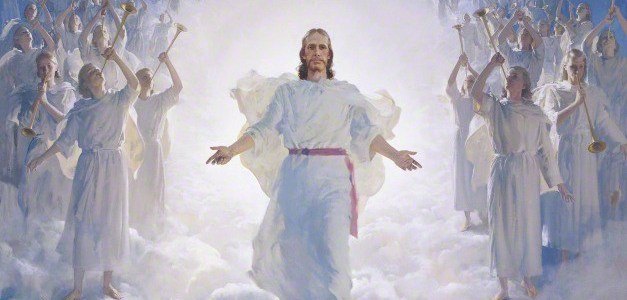
King Benjamin teaches, in no uncertain terms, that Jesus Christ is the only way to salvation.

“…There shall be no other name given nor any other way nor means whereby salvation can come unto the children of men, only in and through the name of Christ, the Lord Omnipotent.” (Mosiah 3:17)

Questions:

-What does it mean for Benjamin to refer to Christ as the Lord Omnipotent?

-Did Christ create the earth (i.e. everything that we have)?

-Is there anything that Christ hasn’t gained power over?

-Has He ever used his power for anything other than good?

He Shall Suffer Temptations, Pain of Body, Hunger, Thirst and Fatigue, Even More Than Man Can Suffer, Except It Be unto Death

King Benjamin retells the words of an angel who visited him in the night in about 124 B.C. The angel foretells the most important life, and related events, that would ever take place on earth:

“…The time cometh, and is not far distant, that with power, the Lord Omnipotent who reigneth, who was, and is from all eternity to all eternity, shall come down from heaven among the children of men, and shall dwell in a tabernacle of clay, and shall go forth amongst men, working mighty miracles, such as healing the sick, raising the dead, causing the lame to walk, and the blind to receive their sight, and the deaf to hear, and curing all manner of diseases.” (Mosiah 3:5)

“And he shall cast out devils, or the evil spirits which dwell in the hearts of the children of men. And lo, he shall suffer temptations, and pain of body, hunger, thirst, and fatigue, even more than man can suffer, except it be unto death; for behold, blood cometh from every pore, so great shall be his anguish for the wickedness and abominations of his people.” (Mosiah 3:6-7)

Questions:

-Do you believe Jesus Christ worked miracles during His lifetime as the angel speaking to King Benjamin testified He would?

-Was there any event more worthy of clear foretelling (in prophetic vision and angelic visitation) than the life and Atonement of Jesus Christ?

-Do you believe Christ suffered more than any human being has, or ever will, suffer (in order to work at the Atonement in each individual’s behalf)?

How Blessed Are They Who Have Labored Diligently in His Vineyard

The Earth is the Lord’s vineyard and souls that have yielded to the enticing of the Holy Spirit and become true followers of His Son, Jesus Christ, are the desired fruit. One last harvest will occur in the last days before Christ’s return.

“…The day that he shall set his hand again the second time to recover his people, is the day, yea, even the last time, that the servants of the Lord shall go forth in his power, to nourish and prune his vineyard; and after that the end soon cometh. And how blessed are they who have labored diligently in his vineyard; and how cursed are they who shall be cast out into their own place! And the world shall be burned with fire.” (Jacob 6:2-3)

Questions:

-Do you see this last harvest occurring in our world today?

-Is the wheat being separated from the tares as described in Christ’s parable? (see Matthew 13:25-30)

-Will the world be burned by literal fire according to this prophecy?

-Is the unveiled presence of God like a burning fire to all that is corrupt?

The Spirit Speaketh of Things as They Really Are, and of Things as They Really Will Be

The Spirit has always testified of Jesus Christ. Before His birth, the Spirit testified of Him as Jehovah and as the coming Messiah and Savior. After His birth the Spirit now testifies of Him as the Savior who has worked out the Atonement in all of mankind’s behalf. Those who earnestly sought and obtained God’s Spirit before Christ’s coming—including the Nephite prophet Jacob—received a clear witness and understanding of who He would be and what He would do.

Writing about Christ sometime around 500 B.C., Jacob recorded the following about the power of the Spirit:

“…Beloved, marvel not that I tell you these things; for why not speak of the atonement of Christ, and attain to a perfect knowledge of him…He that prophesieth, let him prophesy to the understanding of men; for the Spirit speaketh the truth and lieth not. Wherefore, it speaketh of things as they really are, and of things as they really will be; wherefore, these things are manifested unto us plainly, for the salvation of our souls. But behold, we are not witnesses alone in these things; for God also spake them unto prophets of old.” (Jacob 4:12-13)

Questions:

-Do you believe that true prophets (and their followers) who lived centuries before Christ had a clear understanding of who He would be and what He would do?

-Do you believe that you can have a clear understanding of who Christ is and what He has done through the Spirit?

No Man Will Be Angry at The Words Which I Have Written Save He Shall Be of the Spirit of the Devil

Nephi affirms that his words will be especially powerful to his and his father’s descendants. He also recognizes the possibility that some will be angered by his writings but testifies that those who are angry have been lulled, to one degree or another, into a spiritual state that is antithetical to God.

“…I know that the Lord God will consecrate my prayers for the gain of my people. And the words which I have written in weakness will be made strong unto them; for it persuadeth them to do good; it maketh known unto them of their fathers; and it speaketh of Jesus, and persuadeth them to believe in him, and to endure to the end which is eternal life. And it speaketh harshly against sin, according to the plainness of the truth; wherefore, no man will be angry at the words which I have written save he shall be of the spirit of the devil.” (2 Nephi 33:4-5)

Questions:

-Can the Lord make the good things you strive to do—in your weakness—strong?

-When your will is in line with God’s, what is the limit of the strength He will provide to you to move forward?

-How difficult is it to align your will with God’s will?

-Why is the truth harsh to some and consoling to others?

Teachings of the Seventy

“[We] must choose to open our hearts to the divine reality of the Savior. … God does not force us to believe. Instead He invites us to believe by sending living prophets and apostles to teach us, by providing scriptures, and by beckoning to us through His Spirit. … The decision to believe is the most important choice we ever make. It shapes all our other decisions” (“Choose to Believe,” Ensign or Liahona, May 2015, 38).

Ye Must Pray Always

Nephi teaches about the sacred power of prayer to consecrate action taken with a sincere desire to serve God.

“…If ye would hearken unto the Spirit which teacheth a man to pray, ye would know that ye must pray; for the evil spirit teacheth not a man to pray, but teacheth him that he must not pray. But behold, I say unto you that ye must pray always, and not faint; that ye must not perform any thing unto the Lord save in the first place ye shall pray unto the Father in the name of Christ, that he will consecrate thy performance unto thee, that thy performance may be for the welfare of thy soul.” (2 Nephi 32:8-9)

Questions:

-Is it easy to see prayer as being ineffectual if you are measuring outcomes by whether God is doing what you want Him to?

-How often is your will different than God’s will?

-Have you ever thought of prayer as a way to ask God’s blessing on the actions you take with a sincere desire to serve Him? How often would this kind of prayer be ineffectual?

-When it comes to the welfare of our souls, would God ever dismiss our best efforts to do His will when coupled with a prayer that the efforts will be in line with His will and consecrated in His eyes?

-How does the Atonement of Jesus Christ allow the good we do (in our imperfect efforts) to be treasured up in heaven by the Father?

-Can you see why evil spirits strive to diminish the importance of prayer in our hearts and minds (so that the precious connection with God and His will is also diminished)?

-Unless we are willfully doing things that we know are wrong, is there anything we do that shouldn’t be performed “unto the Lord?”

Teachings of Latter-day Prophets, Seers, and Revelators:

We should pray frequently. We should be alone with our Heavenly Father at least two or three times each day—‘morning, mid-day, and evening,’ as the scripture indicates. (Alma 34:21.) In addition, we are told to pray always. (See 2 Ne. 32:9; D&C 88:126.) This means that our hearts should be full, drawn out in prayer unto our Heavenly Father continually. (See Alma 34:27.)” (Teachings of Presidents of the Church: Ezra Taft Benson [2014], 52).

“No earthly authority can separate us from direct access to our Creator. There can never be a mechanical or electronic failure when we pray. There is no limit on the number of times or how long we can pray each day. There is no quota of how many needs we wish to pray for in each prayer. We do not need to go through secretaries or make an appointment to reach the throne of grace. He is reachable at any time and any place” (James E. Faust, “The Lifeline of Prayer,” Ensign, May 2002, 59).

“His answers will seldom come while you are on your knees praying, even when you may plead for an immediate response. Rather, He will prompt you in quiet moments when the Spirit can most effectively touch your mind and heart. Hence, you should find periods of quiet time to recognize when you are being instructed and strengthened” (Richard G. Scott, “Using the Supernal Gift of Prayer,” Ensign or Liahona, May 2007, 9).

“If any of us has been slow to hearken to the counsel to pray always, there is no finer hour to begin than now. William Cowper declared, ‘Satan trembles when he sees the weakest saint upon his knees’ [‘Exhortation to Prayer,’ in Olney Hymns]” (Thomas S. Monson, “A Royal Priesthood,” Ensign or Liahona, Nov. 2007, 61).

Teachings of the Seventy:

“It is as tragic to think we are too sinful to pray as it is for a very sick person to believe he is too sick to go to the doctor!” (J. Devn Cornish, “The Privilege of Prayer,” Ensign or Liahona, Nov. 2011, 103).

He That Endureth to the End, the Same Shall Be Saved

The prophet Nephi shares the revelation he received regarding the importance of remaining faithful (in thought and deed) in this life after entering the baptismal covenant and receiving the Holy Ghost.

“…Thus came the voice of the Son unto me, saying: After ye have repented of your sins, and witnessed unto the Father that ye are willing to keep my commandments, by the baptism of water, and have received the baptism of fire and of the Holy Ghost, and can speak with a new tongue, ye, even with the tongue of angels, and after this should deny me, it would have been better for you that ye had not known me. And I heard a voice from the Father, saying: Yea, the words of my Beloved are true and faithful. He that endureth to the end, the same shall be saved.” (2 Nephi 31:14-15)

“And now, my beloved brethren, I know by this that unless a man shall endure to the end, in following the example of the Son of the living God, he cannot be saved.” (2 Nephi 31:16)

Questions:

-What does it mean to endure to the end?

-Why do some fail to finish what they started after entering the baptismal covenant and receiving a witness from the Holy Ghost?

-How easy is it to question the witness of the Holy Ghost received early on, when later one does not have the same level of the Spirit’s purifying influence in his or her life?

-What can cause the influence of the Spirit to diminish over time?

-How quickly can one regain the full influence of the Spirit after repenting and recommitting to follow Jesus Christ? Is the amount of time needed to regain the Spirit’s strong influence connected to how far from the Spirit a person has drifted?

-Does any of the above apply to those who are baptized by someone who does not have God’s authority to do so?

Teachings of Latter-day Prophets, Seers, and Revelators:

“Enduring to the end is the doctrine of continuing on the path leading to eternal life after one has entered into the path through faith, repentance, baptism, and receiving the Holy Ghost. Enduring to the end requires our whole heart or, as the Book of Mormon prophet Amaleki teaches, we must ‘come unto him, and offer [our] whole souls as an offering unto him, and continue in fasting and praying, and endure to the end; and as the Lord liveth [we] will be saved’ [Omni 1:26].

“Enduring to the end means that we have planted our lives firmly on gospel soil, staying in the mainstream of the Church, humbly serving our fellow men, living Christlike lives, and keeping our covenants. Those who endure are balanced, consistent, humble, constantly improving, and without guile. Their testimony is not based on worldly reasons—it is based on truth, knowledge, experience, and the Spirit” (Joseph B. Wirthlin, “Press On,” Ensign or Liahona, Nov. 2004, 101).

The Lord God Shall Cause a Great Division among the People

Nephi prophesies about the great division that will occur among the inhabitants of the earth as the Lord gathers the house of Israel out of all lands and peoples during the last days.

“…It shall come to pass that the Lord God shall commence his work among all nations, kindreds, tongues, and people, to bring about the restoration of his people upon the earth. And with righteousness shall the Lord God judge the poor, and reprove with equity for the meek of the earth. And he shall smite the earth with the rod of his mouth; and with the breath of his lips shall he slay the wicked. For the time speedily cometh that the Lord God shall cause a great division among the people, and the wicked will he destroy; and he will spare his people, yea, even if it so be that he must destroy the wicked by fire.”  (2 Nephi 30:8-10)

Questions:

-Who are the Lord’s people?

-According to these versus, what kind of person will the Lord help and protect as wickedness grows around the world?

-Will the kind of people the Lord will protect and gather during the last days take joy in seeing the wicked suffer? Are those who are humble and meek likely to have ill will towards others and have a vengeful spirit?

-Would God destroy the wicked other than to spare His people?

-Does God reprove anyone who is willing to repent and come to his Son, Jesus Christ (regardless of whether they are of the house of Israel or not)?

Teachings of Latter-day Prophets, Seers, and Revelators:

“I testify that as the forces of evil increase under Lucifer’s leadership and as the forces of good increase under the leadership of Jesus Christ, there will be growing battles between the two until the final confrontation. As the issues become clearer and more obvious, all mankind will eventually be required to align themselves either for the kingdom of God or for the kingdom of the devil. As these conflicts rage, either secretly or openly, the righteous will be tested. God’s wrath will soon shake the nations of the earth and will be poured out on the wicked without measure. (See JS—H 1:45; D&C 1:9.)” (Ezra Taft Benson, “I Testify,” Ensign, Nov. 1988, 87).

The Lord Covenanteth with None Save it be with Them That Repent and Believe in His Son

After prophesying about some of the beliefs and misconceptions that would keep many of the Gentiles from accepting the Restored Gospel of Jesus Christ, and also the blessings that would come to the house of Israel in the last days, Nephi warns his people that no one receives salvation by birthright. Covenant blessings can only be made fully alive through repentance, obedience to God’s commandments, and faith in God’s Son, Jesus Christ.

“And now behold, my beloved brethren, I would speak unto you; for I, Nephi, would not suffer that ye should suppose that ye are more righteous than the Gentiles shall be. For behold, except ye shall keep the commandments of God ye shall all likewise perish; and because of the words which have been spoken ye need not suppose that the Gentiles are utterly destroyed. For behold, I say unto you that as many of the Gentiles as will repent are the covenant people of the Lord; and as many of the Jews as will not repent shall be cast off; for the Lord covenanteth with none save it be with them that repent and believe in his Son, who is the Holy One of Israel.” (2 Nephi 30:1-2)

Questions:

-Do the verses above imply that most of the Gentiles will repent and become part of the Lord’s covenant people in the last days? Or, do they imply that it will be a relatively small proportion that will do so? (see The Gentiles Shall Deny Me)

Teachings of Latter-day Prophets, Seers, and Revelators:

“We need a strong faith in Christ to be able to repent” (Dieter F. Uchtdorf,“Point of Safe Return,” Ensign or Liahona, May 2007, 100).

I Am a God of Miracles

The Lord inspired Nephi to include messages in his writing on the Gold Plates that He knew would, in turn, help inspire and direct Joseph Smith as the prophet of the Restoration. Speaking in the first person, the Lord states the following:

“For behold, I am God; and I am a God of miracles; and I will show unto the world that I am the same yesterday, today, and forever; and I work not among the children of men save it be according to their faith.” (2 Nephi 27:23)

The Lord then—through the prophet Nephi—directs Joseph Smith to a specific portion of Isaiah’s writings (comparable to the translation of Isaiah 29:13-24 in the King James Version of the Bible) and restates them directly as a message to Joseph. These words undoubtedly helped the prophet Joseph to understand the scope and meaning of the work the Lord was initiating through him.

“…The Lord shall say unto him that shall read the words that shall be delivered him: Forasmuch as this people draw near unto me with their mouth, and with their lips do honor me, but have removed their hearts far from me, and their fear towards me is taught by the precepts of men—Therefore, I will proceed to do a marvelous work among this people, yea, a marvelous work and a wonder, for the wisdom of their wise and learned shall perish, and the understanding of their prudent shall be hid.” (2 Nephi 27:24-26)

“And wo unto them that seek deep to hide their counsel from the Lord! And their works are in the dark; and they say: Who seeth us, and who knoweth us? And they also say: Surely, your turning of things upside down shall be esteemed as the potter’s clay. But behold, I will show unto them, saith the Lord of Hosts, that I know all their works. For shall the work say of him that made it, he made me not? Or shall the thing framed say of him that framed it, he had no understanding?” (2 Nephi 27:27)

“And in that day shall the deaf hear the words of the book, and the eyes of the blind shall see out of obscurity and out of darkness. And the meek also shall increase, and their joy shall be in the Lord, and the poor among men shall rejoice in the Holy One of Israel. For assuredly as the Lord liveth they shall see that the terrible one is brought to naught, and the scorner is consumed, and all that watch for iniquity are cut off; and they that make a man an offender for a word, and lay a snare for him that reproveth in the gate, and turn aside the just for a thing of naught.” (2 Nephi 27:29-32)

“Therefore, thus saith the Lord who redeemed Abraham, concerning the house of Jacob; Jacob shall not now be ashamed, neither shall his face wax pale. But when he seeth his children, the work of my hands, in the midst of him, they shall sanctify my name and sanctify the Holy One of Jacob, and shall fear the God of Israel. They also that erred in spirit shall come to understanding, and they that murmured shall learn doctrine.” (2 Nephi 27:33-35)

Questions:

-How and why will the wisdom and understanding of those who are not aligned with God’s marvelous work fail?

-Will miracles, leading up to the return of Jesus Christ, make it clear that many of mankind’s concepts of truth are deeply flawed (because they did not take into account God’s direct and miraculous interventions in response to true faith among His children on earth).

-How jolting will it be for some as God’s miraculous power begins to be more and more evident for all to see? Will some respond by “working in darkness” to discredit and undermine God’s work?

-Who will be more receptive to God’s miraculous work? Will it be those who are well-established in life through existing systems of wealth and power? Or, will it be the poor who are largely outside of these systems of wealth and power?

-How will the gathering of scattered Israel be part of God’s miraculous work?