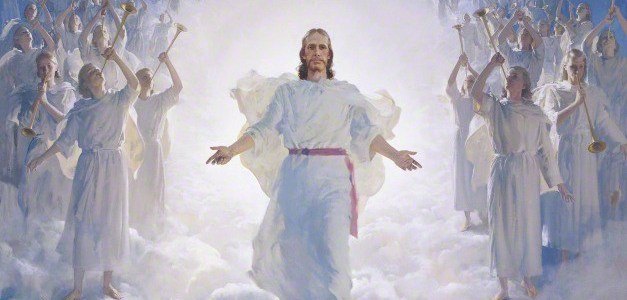
They Are Free to Choose Liberty and Eternal Life or Captivity and Death

Lehi teaches his son, Jacob, that the Savior’s redeeming power offers a path of freedom, hope, and eternal life (which otherwise would have been unavailable because of the effects of Adam and Eve’s Fall).

“…The Messiah cometh in the fulness of time, that he may redeem the children of men from the fall. And because that they are redeemed from the fall they have become free forever, knowing good from evil; to act for themselves and not to be acted upon, save it be by the punishment of the law at the great and last day, according to the commandments which God hath given. Wherefore, men are free according to the flesh; and all things are given them which are expedient unto man. And they are free to choose liberty and eternal life, through the great Mediator of all men, or to choose captivity and death, according to the captivity and power of the devil…” (2 Nephi 2:26-27)

-Has every child inherited inevitable physical death, and separation from God, from their parents (going all the way back to Adam and Eve)?

-Will physical death and physical separation from God be permanent for anyone now that Christ has come and redeemed all from these effects of the Fall?

-Will everyone who is resurrected and brought back to God’s presence be comfortable staying there?

-Will Christ save all from spiritual death? Or, does He protect every soul’s freedom to choose whether to accept and follow Him?

Teachings of Latter-day Prophets, Seers, and Revelators:

“The Atonement of Jesus Christ, an act of pure love, overcame the effects of the Fall and provided the way for all mankind to return to the presence of God. As part of the Atonement, the Savior overcame physical death and provided immortality for every one of God’s children through the Resurrection. He also overcame spiritual death and provided the possibility of eternal life, the life that God lives and the greatest of all the gifts of God” (Joseph B. Wirthlin, “Christians in Belief and Action,” Ensign, Nov. 1996, 71).

“God has provided a way to live in this world and not be contaminated by the degrading pressures evil agents spread throughout it. You can live a virtuous, productive, righteous life by following the plan of protection created by your Father in Heaven: His plan of happiness. It is contained in the scriptures and in the inspired declarations of His prophets. …

“Avoid worldly wickedness. Know that God is in control. In time, Satan will completely fail and be punished for his perverse evil. God has a specific plan for your life. He will reveal parts of that plan to you as you look for it with faith and consistent obedience. His Son has made you free—not from the consequences of your acts, but free to make choices. God’s eternal purpose is for you to be successful in this mortal life. No matter how wicked the world becomes, you can earn that blessing. Seek and be attentive to the personal guidance given to you through the Holy Spirit. Continue to be worthy to receive it. Reach out to others who stumble and are perplexed, not certain of what path to follow” (Richard G. Scott, “How to Live Well amid Increasing Evil,” Ensign or Liahona, May 2004, 100, 102).

“When we choose to do the will of our Heavenly Father, our agency is preserved, our opportunities increase, and we progress. … The opposite is also true: when we don’t keep the commandments or follow the promptings of the Holy Ghost, our opportunities are reduced; our abilities to act and progress are diminished. … Obedience to the commandments ultimately protects our agency” (Robert D. Hales, “Agency: Essential to the Plan of Life,” Ensign or Liahona, Nov. 2010, 25–26).

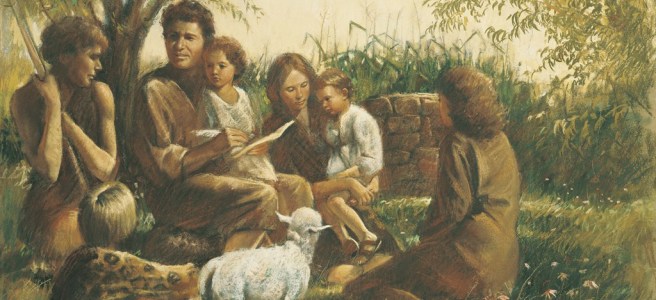
All Things Have Been Done in the Wisdom of Him Who Knoweth All Things

Lehi teaches his son, Jacob, that God was not taken off guard or thwarted in any way by Satan’s successful effort to get Adam and Eve to eat the forbidden fruit in the Garden of Eden.

“…If Adam had not transgressed he would not have fallen, but he would have remained in the garden of Eden. And all things which were created must have remained in the same state in which they were after they were created; and they must have remained forever, and had no end. And [Adam and Eve] would have had no children; wherefore they would have remained in a state of innocence, having no joy, for they knew no misery; doing no good, for they knew no sin. But behold, all things have been done in the wisdom of him who knoweth all things. Adam fell that men might be; and men are, that they might have joy.” (2 Nephi 2:22-24)

Questions:

-Why were Adam and Eve unable to have children until after their fall?

-Will the difficulties of mortality help God’s sons and daughters truly appreciate the eternal blessings He has prepared for those who choose the path of joy?

-Can great joy be achieved during mortality as well?

Teachings of Latter-day Prophets, Seers, and Revelators

“Did [Adam and Eve] come out in direct opposition to God and to his government? No. But they transgressed a command of the Lord, and through that transgression sin came into the world. The Lord knew they would do this, and he had designed that they should” (Discourses of Brigham Young, sel. John A. Widtsoe [1954], 103).


“The most important events that ever have or will occur in all eternity … are the Creation, the Fall, and the Atonement.

“Before we can even begin to understand the temporal creation of all things, we must know how and in what manner these three eternal verities—the Creation, the Fall, and the Atonement—are inseparably woven together to form one plan of salvation. No one of them stands alone; each of them ties into the other two; and without a knowledge of all of them, it is not possible to know the truth about any one of them. …

“… Be it remembered, the Atonement came because of the Fall. Christ paid the ransom for Adam’s transgression. If there had been no Fall, there would be no Atonement with its consequent immortality and eternal life. Thus, just as surely as salvation comes because of the Atonement, so also salvation comes because of the Fall” (Bruce R. McConkie, “Christ and the Creation,” Ensign, June 1982, 9).


“Just why the Lord would say to Adam that he forbade him to partake of the fruit of that tree is not made clear in the Bible account [see Genesis 2:17], but in the original as it comes to us in the Book of Moses [see Moses 3:17] it is made definitely clear. It is that the Lord said to Adam that if he wished to remain as he was in the garden, then he was not to eat the fruit, but if he desired to eat it and partake of death he was at liberty to do so” (Joseph Fielding Smith, Answers to Gospel Questions, comp. Joseph Fielding Smith Jr. [1963], 4:81).


“God’s premortal children could not become like him and enjoy his breadth of blessings unless they obtained both a physical body and temporal experience in an arena where both good and evil were present. …

“… We wanted the chance to become like our heavenly parents, to face suffering and overcome it, to endure sorrow and still live rejoicingly, to confront good and evil and be strong enough to choose the good” (Jeffrey R. Holland, Christ and the New Covenant: The Messianic Message of the Book of Mormon [1997], 200, 204).


“[Adam and Eve] transgressed a commandment of God which required that they leave their garden setting but which allowed them to have children before facing physical death. To add further sorrow and complexity to their circumstance, their transgression had spiritual consequences as well, cutting them off from the presence of God forever. Because we were then born into that fallen world and because we too would transgress the laws of God, we also were sentenced to the same penalties that Adam and Eve faced. …

“… From the moment those first parents stepped out of the Garden of Eden, the God and Father of us all, anticipating Adam and Eve’s decision, dispatched the very angels of heaven to declare to them—and down through time to us—that this entire sequence was designed for our eternal happiness. It was part of His divine plan, which provided for a Savior, the very Son of God Himself—another ‘Adam,’ the Apostle Paul would call Him [see 1 Corinthians 15:45]—who would come in the meridian of time to atone for the first Adam’s transgression. That Atonement would achieve complete victory over physical death. … Mercifully it would also provide forgiveness for the personal sins of all, from Adam to the end of the world, conditioned upon repentance and obedience to divine commandments” (Jeffery R. Holland, “Where Justice, Love, and Mercy Meet,” Ensign or Liahona, May 2015, 105–6).

Teachings of the Seventy

“Since the fifth century, Christianity taught that Adam and Eve’s Fall was a tragic mistake. … That view is wrong. … The Fall was not a disaster. It wasn’t a mistake or an accident. It was a deliberate part of the plan of salvation” (Bruce C. Hafen, “The Atonement: All for All,” Ensign or Liahona, May 2004, 97).

The Lord God Gave Commandment that All Men Must Repent

Lehi teaches his son, Jacob, about the meaning of mortal life and the vital importance of repentance:

“…Adam and Eve…brought forth children; yea, even the family of all the earth. And the days of the children of men were prolonged, according to the will of God, that they might repent while in the flesh; wherefore, their state became a state of probation, and their time was lengthened, according to the commandments which the Lord God gave unto the children of men. For he gave commandment that all men must repent.” (2 Nephi 2:19-21)

Questions:

-How do you feel about your life being a time to show who you really are?

-If repentance means turning to God, how can this be accomplished in a person’s life?

-How many people in the world have a sense of the need of repentance? How many know how to turn to God? If they never are taught these things during mortal life, will they have an opportunity to receive this knowledge in the post-mortal spirit world (before the Resurrection and Final Judgment)?

-Is there any way to repent except through the atoning sacrifice of Christ?

-Are there any sins too heinous or evil toward which the healing power of Christ’s Atonement is ineffective?

Teachings of Latter-day Prophets, Seers, and Revelators:

“Repentance means striving to change. It would mock the Savior’s suffering in the Garden of Gethsemane and on the cross for us to expect that He should transform us into angelic beings with no real effort on our part. Rather, we seek His grace to complement and reward our most diligent efforts (see 2 Nephi 25:23). Perhaps as much as praying for mercy, we should pray for time and opportunity to work and strive and overcome. Surely the Lord smiles upon one who desires to come to judgment worthily, who resolutely labors day by day to replace weakness with strength. Real repentance, real change may require repeated attempts, but there is something refining and holy in such striving” (“The Divine Gift of Repentance,” Elder D. Todd Christofferson, Ensign or Liahona, Nov. 2011, 39).

Teachings of the Seventy:

“Since the fifth century, Christianity taught that Adam and Eve’s Fall was a tragic mistake. … That view is wrong. … The Fall was not a disaster. It wasn’t a mistake or an accident. It was a deliberate part of the plan of salvation” (“The Atonement: All for All,” Ensign or Liahona, May 2004, 97).

Being Miserable Forever He Sought Also the Misery of All Mankind

Lehi teaches his son, Jacob, about the origins and motivations of the devil:

“…An angel of God…had fallen from heaven; wherefore, he became a devil, having sought that which was evil before God. And because he had fallen from heaven, and had become miserable forever, he sought also the misery of all mankind.” (2 Nephi 2:17-18)

-How much of the misery in the world has been promoted and sustained by Satan’s influence?

-Is physical misery or spiritual misery more potent and long lasting?

-How can misery by relieved by turning to, and choosing to follow, Jesus Christ?

-Who will triumph in the end? He who is seeking mankind’s bondage and misery? Or, the Savior, who is seeking mankind’s growth and joy?

God Gave unto Man that He Should Act for Himself

Lehi teaches his son, Jacob, about how God structured mortal life so we would be free to choose between the good and the evil.

“…There is a God, and he hath created all things, both the heavens and the earth, and all things that in them are, both things to act and things to be acted upon. And to bring about his eternal purposes in the end of man, after he had created our first parents, and the beasts of the field and the fowls of the air, and in fine, all things which are created, it must needs be that there was an opposition; even the forbidden fruit in opposition to the tree of life; the one being sweet and the other bitter. Wherefore, the Lord God gave unto man that he should act for himself. Wherefore, man could not act for himself save it should be that he was enticed by the one or the other.” (2 Nephi 2:14-16)

Questions:

-Do you believe there is a God? If so, why?

-Is there is a Spirit that testifies to the heart and soul that God exists? If so, when and how does this occur?

-Do you have a worldview that allows for good and evil? If so, are those categories of good and evil defined by you or by God?

-Do books such as the Bible and the Book of Mormon help define God’s standards of right and wrong through the commandments and teachings found in them?

-If God has defined good and evil, what happens if men and women create their own separate definitions of what belongs in these categories?

Teachings of Latter-day Prophets, Seers, and Revelators

“The simple truth is that we cannot fully comprehend the Atonement and Resurrection of Christ and we will not adequately appreciate the unique purpose of His birth or His death … without understanding that there was an actual Adam and Eve who fell from an actual Eden, with all the consequences that fall carried with it” (Jeffrey R. Holland, “Where Justice, Love, and Mercy Meet,” Ensign or Liahona, May 2015, 105).

“Four great principles must be in force if there is to be agency: 1. Laws must exist … which can be obeyed or disobeyed; 2. Opposites must exist—good and evil, virtue and vice, right and wrong—that is, there must be an opposition, one force pulling one way and another pulling the other; 3. A knowledge of good and evil must be had by those who are to enjoy the agency, that is, they must know the differences between the opposites; and 4. An unfettered power of choice must prevail” (Bruce R. McConkie, Mormon Doctrine, 2nd ed. [1966], 26).

“Without the existence of choices, without our freedom to choose and without opposition, there would be no real existence. … It is a fact that we can neither grow spiritually nor thereby be truly happy unless and until we make wise use of our moral agency” (Neal A. Maxwell, One More Strain of Praise [1999], 80).

“Adam and Eve [through the Fall] became mortal. Happily for us, they could also beget children and fulfill the purposes for which the world was created. … Other blessings came to us through the Fall. It activated two closely coupled additional gifts from God, nearly as precious as life itself—agency and accountability” (Russell M. Nelson, “Constancy amid Change,” Ensign, Nov. 1993, 34, italics added).

“The old saying ‘The Lord is voting for me, and Lucifer is voting against me, but it is my vote that counts’ describes a doctrinal certainty that our agency is more powerful than the adversary’s will. Agency is precious. We can foolishly, blindly give it away, but it cannot be forcibly taken from us.

“There is also an age-old excuse: ‘The devil made me do it.’ Not so! He can deceive you and mislead you, but he does not have the power to force you or anyone else to transgress” (Boyd K. Packer, “Cleansing the Inner Vessel,” Ensign or Liahona, Nov. 2010, 74).

If There Be No Righteousness There Be No Happiness

Lehi teaches his son, Jacob, about the power of God’s law to create meaning through consequence and how all things witness there is a God.

“…If ye shall say there is no law, ye shall also say there is no sin. If ye say there is no sin, ye shall also say there is no righteousness. And if there be no righteousness there be no happiness. And if there be no righteousness nor happiness there be no punishment nor misery. And if these things are not there is no God. And if there is no God we are not, neither the earth; for there could have been no creation of things, neither to act nor to be acted upon; wherefore, all things must have vanished away.” (2 Nephi 2:13)

-Do you believe sin is real?

How meaningful would life be without consequences?

-Do the most lasting consequences occur in this life? Or, do they occur when each individual is brought back to God’s presence to be judged?

-How is righteousness tied to happiness?

Teachings of Latter-day Prophets, Seers, and Revelators:

“Happiness comes of righteousness. ‘Wickedness never was happiness.’ (Alma 41:10.) Sin never was happiness. Selfishness never was happiness. Greed never was happiness. Happiness lies in living the principles of the gospel of Jesus Christ” (Gordon B. Hinckley, in “Fast-Paced Schedule for the Prophet: Meets with Young Adults, Youth in Three Meetings in Colorado,” Church News, Apr. 20, 1996, 3).

There Must Be Opposition in All Things

Lehi teaches his son, Jacob, about how life’s difficulties signify and create meaning in human choice:

“…It must be, that there is an opposition in all things. If not so…righteousness could not be brought to pass, neither wickedness, neither holiness nor misery, neither good nor bad. Wherefore, all things must needs be a compound in one; wherefore, if it should be one body it must needs remain dead, having no life neither death, nor corruption nor incorruption, happiness nor misery, neither sense nor insensibility.” (2 Nephi 2:11)

-Is it accurate to say that life can be deeply difficult and deeply rewarding?

-Do you believe God has given us a deeply meaningful challenge in giving us mortal life?

-Is it possible to view earthly trials as a means to greater refinement, rather than as arbitrary setbacks?

All Men Come unto God to be Judged of Him

While teaching his son, Jacob, Lehi addresses an important connection between the Atonement and the Final Judgment.

“…Because of the [Holy Messiah’s] intercession for all, all men come unto God; wherefore, they stand in the presence of him, to be judged of him according to the truth and holiness which is in him.” (2 Nephi 2:10)

Questions:

-How much more meaningful is a belief in a Day of Judgment if it is coupled with the concept that we lived with God before our mortal lives and, in that premortal realm, agreed to come to earth to be tested?

-Would it be possible for anyone to return to God’s presence without Christ’s intercession?

He is the Firstfruits unto God

Lehi teaches his son, Jacob, about the power of Christ to bring about the resurrection for all mankind and salvation for those who believe in Him:

“…The Holy Messiah…layeth down his life according to the flesh, and taketh it again by the power of the Spirit, that he may bring to pass the resurrection of the dead, being the first that should rise. Wherefore, he is the firstfruits unto God, inasmuch as he shall make intercession for all the children of men; and they that believe in him shall be saved.” (2 Nephi 2:8-9)

Questions:

-Does the word “Spirit” in this passage have any reference to the Holy Ghost or God the Father’s spiritual strength? Or, is it only a reference to the power of Christ’s individual spirit?

-Do the members of the Godhead do anything without mutual support and approbation for one another?

-Has any spirit, besides Christ, had the power to resurrect his or her earthly body after death? How did Christ’s resurrection ensure that all of God’s children will be resurrected?

-What does it mean to believe in Christ?

-Is it sufficient only to believe? Or, it is more meaningful and pleasing to God if a person is valiant in his or her testimony of Christ?

-Is there a difference between salvation and exaltation?

How Great the Importance to Make These Things Known unto the Inhabitants of the Earth

Lehi continues to teach his son, Jacob, about Christ’s Atonement and all of mankind’s need for it:

“…He offereth himself a sacrifice for sin, to answer the ends of the law, unto all those who have a broken heart and a contrite spirit; and unto none else can the ends of the law be answered. Wherefore, how great the importance to make these things known unto the inhabitants of the earth, that they may know that there is no flesh that can dwell in the presence of God, save it be through the merits, and mercy, and grace of the Holy Messiah…” (2 Nephi 2:7-8)

Questions:

-What does Lehi mean when he states that only those with a broken heart and a contrite spirit can receive Christ’s redemption from sin?

-Does “heart” in this passage refer to our personal will versus God’s will? Is it good to break down our will to make way for God’s will in our lives?

-Can one have anything but a “broken heart” when he or she truly keeps in remembrance the price paid by Christ to redeem those who choose to follow and obey Him?

-How is being prideful (which is the opposite of having a broken heart and a contrite spirit) a false state of being?

-Who among the inhabitants of the earth has God’s law? Who, if any, does not have the law?

Teachings of Latter-day Prophets, Seers, and Revelators:

“I believe that none of us can conceive the full import of what Christ did for us in Gethsemane, but I am grateful every day of my life for His atoning sacrifice in our behalf.

“At the last moment, He could have turned back. But He did not. He passed beneath all things that He might save all things. In doing so, He gave us life beyond this mortal existence. He reclaimed us from the Fall of Adam.

“To the depths of my very soul, I am grateful to Him. He taught us how to live. He taught us how to die. He secured our salvation” (Thomas S. Monson, “At Parting,” Ensign or Liahona, May 2011, 114).

Teachings of the Seventy

“What are a broken heart and a contrite spirit? … The Savior’s perfect submission to the Eternal Father is the very essence of a broken heart and a contrite spirit. Christ’s example teaches us that a broken heart is an eternal attribute of godliness. When our hearts are broken, we are completely open to the Spirit of God and recognize our dependence on Him for all that we have and all that we are. The sacrifice so entailed is a sacrifice of pride in all its forms. Like malleable clay in the hands of a skilled potter, the brokenhearted can be molded and shaped in the hands of the Master.

“A broken heart and a contrite spirit are also preconditions to repentance [see 2 Nephi 2:6–7]. … When we sin and desire forgiveness, a broken heart and a contrite spirit mean to experience ‘godly sorrow [that] worketh repentance’ (2 Corinthians 7:10). This comes when our desire to be cleansed from sin is so consuming that our hearts ache with sorrow and we yearn to feel at peace with our Father in Heaven. Those who have a broken heart and a contrite spirit are willing to do anything and everything that God asks of them, without resistance or resentment. We cease doing things our way and learn to do them God’s way instead. In such a condition of submissiveness, the Atonement can take effect and true repentance can occur” (Bruce D. Porter, “A Broken Heart and a Contrite Spirit,” Ensign or Liahona, Nov. 2007, 32).

Video from Book of Mormon Central: