
Ye May Liken Them unto You and unto All Men

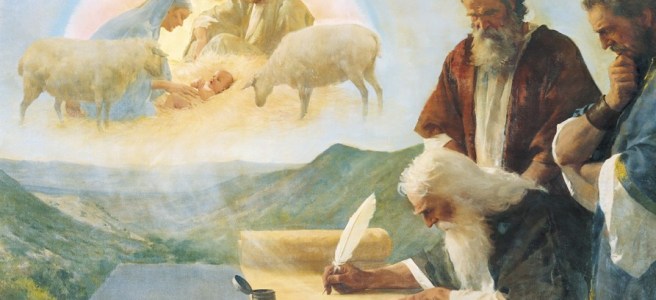
Before recording many of the words of Isaiah onto the Gold Plates (from which the Book of Mormon was translated), Nephi testifies that Isaiah’s teachings and prophecies have such a sweeping spiritual vision that they are applicable to all people.

“And now I write some of the words of Isaiah, that whoso of my people shall see these words may lift up their hearts and rejoice for all men. Now these are the words, and ye may liken them unto you and unto all men.” (2 Nephi 11:8)

Below is a sampling of the writings of Isaiah as recorded by Nephi:

“…Let us go up to the mountain of the Lord, to the house of the God of Jacob; and he will teach us of his ways, and we will walk in his paths.” (2 Nephi 12:3Map of the Temples of the Church of Jesus Christ of Latter-day Saints)

“O ye wicked ones, enter into the rock, and hide thee in the dust, for the fear of the Lord and the glory of his majesty shall smite thee. And it shall come to pass that the lofty looks of man shall be humbled, and the haughtiness of men shall be bowed down, and the Lord alone shall be exalted in that day. For the day of the Lord of Hosts soon cometh upon all nations, yea, upon every one; yea, upon the proud and lofty and upon every one who is lifted up, and he shall be brought low.” (2 Nephi 12:10-12Second Coming)

“…The idols he shall utterly abolish. And they shall go into the holes of the rocks, and into the caves of the earth, for the fear of the Lord shall come upon them and the glory of his majesty shall smite them, when he ariseth to shake terribly the earth. In that day a man shall cast his idols of silver, and his idols of gold, which he hath made for himself to worship, to the moles and to the bats; To go into the clefts of the rocks, and into the tops of the ragged rocks, for the fear of the Lord shall come upon them and the majesty of his glory shall smite them, when he ariseth to shake terribly the earth.” (2 Nephi 12:18-21Second Coming)

“Cease ye from man, whose breath is in his nostrils; for wherein is he to be accounted of?” (2 Nephi 12:22Worldliness)

“Say unto the righteous that is it well with them; for they shall eat the fruit of their doings. Wo unto the wicked for they shall perish; for the reward of their hands shall be upon them!” (2 Nephi 13:10-11All Men Come unto God to Be Judged of Him)

“In that day shall the branch of the Lord be beautiful and glorious; the fruit of the earth excellent and comely to them that are escaped of Israel. And it shall come to pass, they that are left in Zion and remain in Jerusalem shall be called holy, every one that is written among the living in Jerusalem…” (2 Nephi 14:2-3Millennium)

“…They regard not the work of the Lord, neither consider the operation of his hnds. Therefore, my people are gone into captivity, because they have no knowledge…Therefore hell hath enlarged herself, and opened her mouth without measure; and their glory, and their multitude, and their pomp, and he that rejoiceth, shall descend into it” (2 Nephi 15:12-14Cursed is He Who Putteth His Trust in Man)

“Wo unto them that draw iniquity with cords of vanity, and sin as it were with a cart rope.” (2 Nephi 15:18Sin)

“Wo unto them that call evil good, and good evil, that put darkness for light, and light for darkness, that put bitter for sweet, and sweet for bitter!” (2 Nephi 15:20Deception)

“Wo unto the wise in their own eyes and prudent in their own sight!” (2 Nephi 15:21Pride)

“Wo unto the mighty to drink wine, and men of strength to mingle strong drink.” (2 Nephi 15:22Word of Wisdom)

“…As the fire devoureth the stubble, and the flame consumeth the chaff, their root shall be rottenness, and their blossoms shall go up as dust; because they have cast away the law of the Lord of Hosts, and despised the word of the Holy One of Israel.” (2 Nephi 15:24The Wisdom and Praise of the World is Foolishness before God)

“…His hand is stretched out still.” (2 Nephi 15:25Mercy)

“Sanctify the Lord of Hosts himself, and let him be your fear, and let him be your dread.” (2 Nephi 18:13Fear)

“Wo be unto them that decree unrighteous decrees, and that write grievousness which they have prescribed; To turn away the needy from judgment, and to take away the right from the poor of my people, that widows may be their prey, and that they may rob the fatherless.” (2 Nephi 20:1-2 —  Unrighteousness)

“They shall not hurt nor destroy in all my holy mountain, for the earth shall be full of the knowledge of the Lord, as the waters cover the sea.” (2 Nephi 21:9Millennium)

“The Lord shall set his hand again the second time to recover the remnant of his people which shall be left, from Assyria, and from Egypt, and from Pathros, and from Cush, and from Elam, and from Shinar, and from Hamath and from the islands of the sea. And he shall set up an ensign for the nations, and shall assemble the outcasts of Israel, and gather together the dispersed of Judah from the four corners of the earth. The envy of Ephraim also shall depart, and the adversaries of Judah shall be cut off; Ephraim shall not envy Judah, and Judah shall not vex Ephraim.” (2 Nephi 21:11-13Gathering of Israel)

Sing unto the Lord; for he hath done excellent things…” (2 Nephi 22:5Sing)

“…Mine anger is not upon them that rejoice in my highness.” (2 Nephi 23:3Worship)

“And it shall come to pass in that day that the Lord shall give thee rest, from thy sorrow, and from thy fear, and from the hard bondage wherein thou wast made to serve.” (2 Nephi 24:3MillenniumHouse of Israel)

The Wisdom and Praise of the World is Foolishness before God

Jacob testifies that those who humbly seek God’s influence and saving power in their lives will receive it, while those who embrace the wisdom and praise of the world will shut themselves off from God.

“…Whoso knocketh, to him will the [Lord God] open; and the wise and the learned, and they that are rich, who are puffed up because of their learning, and their wisdom, and their riches—yea, they are they whom he despiseth; and save they shall cast these things away, and consider themselves fools before God, and come down in the depths of humility, he will not open unto them. But the things of the wise and the prudent shall be hid from them forever—yea, that happiness which is prepared for the saints.” (2 Nephi 9:42-43)

Questions:

-How can the fact that God loves all his children be reconciled with Jacob’s message that He despises those who are “puffed up” in the wisdom and praise of the world? Is it a case of God hating the sin but still loving the sinner? It is that He despises what they are doing to themselves and others by treating mankind’s wisdom and praise as being the most important?

-Have you experienced the Lord opening the doors of his love and wisdom to you?

-How does one go about knocking in order to seek these blessings from the Lord?

-Will seeking the Lord’s light and wisdom fail if one does not do so in the depths of humility?

When They are Learned They Think They Are Wise

Jacob teaches that “wisdom” separated from the counsel of God is, in fact, foolishness.

“O that cunning plan of the evil one! O the vainness, and the frailties, and the foolishness of men! When they are learned they think they are wise, and they hearken not unto the counsel of God, for they set it aside, supposing they know of themselves, wherefore, their wisdom is foolishness and it profiteth them not. And they shall perish. But to be learned is good if they hearken unto the counsels of God.” (2 Nephi 9:28-29)

-How does the devil use pride to tempt well-educated people into relying on their own knowledge rather than seeking greater knowledge and wisdom from God?

-How does learning (spiritual and secular) give one greater capacity to serve God if he or she remains humble and teachable?

Teachings of Latter-day Prophets, Seers, and Revelators:

“If members of the Church would place more confidence in the word of the Lord, and less confidence in the theories of men, they would be better off. I will give you a key for your guidance. Any doctrine, whether it comes in the name of religion, science, philosophy, or whatever it may be, that is in conflict with the revelations of the Lord that have been accepted by the Church as coming from the Lord will fail. It may appear to be very plausible; it may be put before you in such a way that you cannot answer it, it may appear to be established by evidence that cannot be controverted, but all you need do is bide your time. Time will level all things” (Joseph Fielding Smith, The Utah Genealogical and Historical Magazine, Oct. 1930, 155-156).


“The central feature of pride is enmity—enmity toward God and enmity toward our fellowmen. Enmity means ‘hatred toward, hostility to, or a state of opposition.’ It is the power by which Satan wishes to reign over us.

Pride is essentially competitive in nature. We pit our will against God’s. When we direct our pride toward God, it is in the spirit of “my will and not thine be done.” As Paul said, they “seek their own, not the things which are Jesus Christ’s.” (Philip. 2:21.)

Our will in competition to God’s will allows desires, appetites, and passions to go unbridled. (See Alma 38:123 Ne. 12:30.)

The proud cannot accept the authority of God giving direction to their lives. (See Hel. 12:6.) They pit their perceptions of truth against God’s great knowledge, their abilities versus God’s priesthood power, their accomplishments against His mighty works.

Our enmity toward God takes on many labels, such as rebellion, hard-heartedness, stiff-neckedness, unrepentant, puffed up, easily offended, and sign seekers. The proud wish God would agree with them. They aren’t interested in changing their opinions to agree with God’s.” (Ezra Taft Benson, “Beware of Pride,” 4)

It is Solemn Mockery before God to Baptize Little Children

The Nephite prophet, Mormon, testifies to his son Moroni that the baptism of little children is a sign of an apostate church that does not understand who God is. Baptism is unquestionably a commandment of God for those who are old enough to discern good from evil, and are committing to repent and follow Jesus Christ, but to believe God would require an innocent child (who does not know good from evil) to be baptized is a mockery of the true meaning of baptism and a gross affront to God’s character and holiness.   

“Listen to the words of Christ, your Redeemer, your Lord and your God. Behold, I came into the world not to call the righteous but sinners to repentance; the whole need no physician, but they that are sick; wherefore, little children are whole, for they are not capable of committing sin; wherefore the curse of Adam is taken from them in me, that it hath no power over them…And after this manner did the Holy Ghost manifest the word of God unto me; wherefore, my beloved son, I know that it is solemn mockery before God, that ye should baptize little children. Behold I say unto you that this thing shall ye teach—repentance and baptism unto those who are accountable and capable of committing sin; yea, teach parents that they must repent and be baptized, and humble themselves as their little children, and they shall all be saved with their little children. And their little children need no repentance, neither baptism. Behold, baptism is unto repentance to the fulfilling the commandments unto the remission of sins. But little children are alive in Christ, even from the foundation of the world; if not so, God is a partial God and also a changeable God, and a respecter to persons; for how many little children have died without baptism!” (Moroni 8:8-12)

Wherefore, if little children could not be saved without baptism, these must have gone to an endless hell. Behold I say unto you, that he that supposeth that little children need baptism is in the gall of bitterness and in the bonds of iniquity; for he hath neither faith, hope, nor charity, wherefore, should he be cut off while in the thought, he must go down to hell. For awful is the wickedness to suppose that God saveth one child because of baptism, and the other must perish because he hath no baptism. Wo be unto them that shall pervert the ways of the Lord after this manner, for they shall perish except they repent. Behold I speak with boldness having authority from God…For I know that God is not a partial God, neither a changeable being; but he is unchangeable from all eternity to all eternity.  (Moroni 8:13-16,18)

Little children cannot repent; wherefore, it is awful wickedness to deny the pure mercies of God unto them, for they are all alive in him because of his mercy. And he that saith that little children need baptism denieth the mercies of Christ, and setteth at naught the atonement of him and power of his redemption. Wo unto such, for they are in danger of death, hell, and an endless torment. I speak it boldly; God hath commanded me. Listen unto them and give heed, or they shall stand against you at the judgment-seat of Christ. For behold that all little children are alive in Christ, and also all they that are without the law. For the power of redemption cometh on all them that have no law; wherefore, he that is not condemned, or he that is under no condemnation, cannot repent; and unto such baptism availeth nothing. But it is mockery before God, denying the mercies of Christ, and the power of his Holy Spirit, and putting trust in dead works. Behold, my son, this thing ought not to be; for repentance is unto them that are under condemnation and under the curse of a broken law.” (Moroni 8:19-24)

Questions:

-How many churches and denominations, who claim to be Christian, baptize innocent infants and small children who are not yet accountable before God?

-How many of today’s churches and denominations, who claim to be Christian, are descended from a church that engaged in this evil practice? Could there have been any of Christ’s true priesthood authority passed down to these churches?

None is Acceptable before God, Save the Meek and Lowly in Heart

Moroni testifies of the interconnected gospel principles of faith, hope, meekness, and charity.

“…If ye have not faith in [Christ] then ye are not fit to be numbered among the people of his church. And again, my beloved brethren, I would speak unto you concerning hope. How is it that ye can attain unto faith, save ye shall have hope? And what is it that ye shall hope for? Behold I say unto you that ye shall have hope through the atonement of Christ and the power of his resurrection, to be raised unto life eternal, and this because of your faith in him according to the promise. Wherefore, if a man have faith he must needs have hope; for without faith there cannot be any hope. And again, behold I say unto you that he cannot have faith and hope, save he shall be meek, and lowly of heart. If so, his faith and hope is vain, for none is acceptable before God, save the meek and the lowly in heart; and if a man be meek and lowly in heart, and confesses by the power of the Holy Ghost that Jesus is the Christ, he must needs have charity; for if he have not charity he is nothing; wherefore he must needs have charity.” (Moroni 7:39-44)

Questions:

-How many understand that the baseline for spiritual growth and spiritual health is deep humility toward — and willingness to obey – God?

Fools Mock, But They Shall Mourn

The Nephite prophet, Moroni, speaks to the Lord about the record he and the earlier Nephite prophets had made (that would later be translated as the Book of Mormon).

“…Lord…when we write we behold our weakness and stumble because of the placing of our words; and I fear lest the Gentiles shall mock at our words. And when I had said this, the Lord spake unto me, saying: Fools mock, but they shall mourn; and my grace is sufficient for the meek, that they shall take no advantage of your weakness; And if men come unto me I will show unto them their weakness. I give unto men weakness that they be humble; and my grace is sufficient for all men that humble themselves before me; for if they humble themselves before me, and have faith in me, then will I make weak things become strong unto them.” (Ether 12:23,25-27)

Questions:

-Will anyone who does not humbly seek an answer from God about the truth of the Book of Mormon ever now the truth regarding the matter?

After Ye Are Baptized with Water, I Will Baptize You with Fire and with the Holy Ghost

Below are some of the words spoken by the resurrected Savior to a group of Lehi’s descendants. They had congregated at one of their temples, after a massive natural upheaval, when the Lord descended from heaven to bless and teach them.

“…Blessed are ye if ye shall give heed unto the words of these twelve whom I have chosen from among you to minister unto you, and to be your servants; and unto them I have given power that they may baptize you with water; and after that ye are baptized with water, behold, I will baptize you with fire and with the Holy Ghost; therefore blessed are ye if ye shall believe in me and be baptized, after that ye have seen me and know that I am. And again, more blessed are they who shall believe in your words because that ye shall testify that ye have seen me, and that ye know that I am. Yea, blessed are they who shall believe in your words, and come down in the depths of humility and be baptized, for they shall be visited with fire and with the Holy Ghost, and shall receive a remission of their sins.” (3 Nephi 12:1-2)

Questions:

-Are there twelve who have been chosen to minister to the world in our time?

-Did they receive their authority from a line of priesthood directly instituted by Jesus Christ himself?

-Why does Christ speak of those who did not see him in person, but believed the words of those who did see Him in person, as being more blessed? -What are the depths of humility?

Because of the Pride of Their Hearts They Were Left in Their Own Strength and Were Afflicted and Smitten

The prophet Mormon defines the attitudes and actions that lead a people to destruction. The list below pulls directly from some of Mormon’s words and translates others, describing the kind of wickedness that leads to destruction, into more contemporary terms.

“…This great loss of the Nephites, and the great slaughter which was among them, would not have happened had it not been for their wickedness and their abomination which was among them; yea, and it was among those also who professed to belong to the church of God. And it was because of the pride of their hearts, because of their exceeding riches, yea, it was because of their oppression of the poor, withholding their food from the hungry, withholding their clothing from the naked, and smiting their humble brethren upon the cheek, making a mock of that which was sacred, denying the spirit of prophecy and of revelation, murdering, plundering, lying, stealing, committing adultery, rising up in great contentions…And because of this their great wickedness, and their boastings in their own strength, they were left in their own strength; therefore they did not prosper, but were afflicted and smitten and driven before the Lamanites…” (Helaman 4:11-13)

Questions:

-How many of the above items are engaged in, on a wide scale, in the United States (and in other countries)?  

-How many who profess to belong to the church of God engage in these wicked actions and attitudes?

Sanctification Comes from Yielding One’s Heart to God

The prophet historian, Mormon, tells of a time in Nephite history where true followers of Christ drew closer to Him despite being mistreated by their fellow church members.

“…In the fifty and first year of the reign of the judges there was peace also, save it were the pride which began to enter into the church—not into the church of God, but into the hearts of the people who professed to belong to the church of God—And they were lifted up in pride, even to the persecution of many of their brethren. Now this was a great evil, which did cause the more humble part of the people to suffer great persecutions, and to wade through much affliction. Nevertheless they did fast and pray oft, and did wax stronger and stronger in their humility, and firmer and firmer in the faith of Christ, unto the filling of their souls with joy and consolation, yea, even to the purifying and the sanctification of their hearts, which sanctification cometh because of their yielding their hearts unto God.” (Helaman 3:33-36)

Questions:

-How can one be filled with joy even while passing through great difficulties in life?

-Would this group of people have obtained deep purification and sanctification of their hearts without the persecution they experienced?

-Are there worldly powers (including political forces) today that are tempting some in the Church to become prideful and despise others in the Church? -How vital is humility in ensuring one does not end up on the wrong side (i.e. prideful side) of inter-Church divisions?

Let Your Sins Trouble You with That Trouble Which Shall Bring You Down unto Repentance

Alma teaches that one should view his or her sins as God sees them—with no degree of excuse or allowance. Only then is one brought to the level of deep humility that makes sincere repentance possible.

“…Let your sins trouble you, with that trouble which shall bring you down unto repentance…Do not endeavor to excuse yourself in the least point because of your sins, by denying the justice of God; but do you let the justice of God, and his mercy, and his longsuffering have full sway in your heart; and let it bring you down to the dust in humility.” (Alma 42:29-30)

Questions:

-In how many ways do people avoid looking their sins directly in the face?

-How does doing so cripple one spiritually and block the saving grace of Christ’s Atonement (the power of which He predicated upon repentance)?