Ye May Liken Them unto You and unto All Men

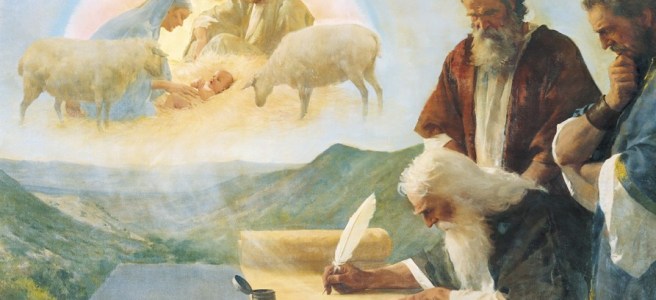
Before recording many of the words of Isaiah onto the Gold Plates (from which the Book of Mormon was translated), Nephi testifies that Isaiah’s teachings and prophecies have such a sweeping spiritual vision that they are applicable to all people.

“And now I write some of the words of Isaiah, that whoso of my people shall see these words may lift up their hearts and rejoice for all men. Now these are the words, and ye may liken them unto you and unto all men.” (2 Nephi 11:8)

Below is a sampling of the writings of Isaiah as recorded by Nephi:

“…Let us go up to the mountain of the Lord, to the house of the God of Jacob; and he will teach us of his ways, and we will walk in his paths.” (2 Nephi 12:3Map of the Temples of the Church of Jesus Christ of Latter-day Saints)

“O ye wicked ones, enter into the rock, and hide thee in the dust, for the fear of the Lord and the glory of his majesty shall smite thee. And it shall come to pass that the lofty looks of man shall be humbled, and the haughtiness of men shall be bowed down, and the Lord alone shall be exalted in that day. For the day of the Lord of Hosts soon cometh upon all nations, yea, upon every one; yea, upon the proud and lofty and upon every one who is lifted up, and he shall be brought low.” (2 Nephi 12:10-12Second Coming)

“…The idols he shall utterly abolish. And they shall go into the holes of the rocks, and into the caves of the earth, for the fear of the Lord shall come upon them and the glory of his majesty shall smite them, when he ariseth to shake terribly the earth. In that day a man shall cast his idols of silver, and his idols of gold, which he hath made for himself to worship, to the moles and to the bats; To go into the clefts of the rocks, and into the tops of the ragged rocks, for the fear of the Lord shall come upon them and the majesty of his glory shall smite them, when he ariseth to shake terribly the earth.” (2 Nephi 12:18-21Second Coming)

“Cease ye from man, whose breath is in his nostrils; for wherein is he to be accounted of?” (2 Nephi 12:22Worldliness)

“Say unto the righteous that is it well with them; for they shall eat the fruit of their doings. Wo unto the wicked for they shall perish; for the reward of their hands shall be upon them!” (2 Nephi 13:10-11All Men Come unto God to Be Judged of Him)

“In that day shall the branch of the Lord be beautiful and glorious; the fruit of the earth excellent and comely to them that are escaped of Israel. And it shall come to pass, they that are left in Zion and remain in Jerusalem shall be called holy, every one that is written among the living in Jerusalem…” (2 Nephi 14:2-3Millennium)

“…They regard not the work of the Lord, neither consider the operation of his hnds. Therefore, my people are gone into captivity, because they have no knowledge…Therefore hell hath enlarged herself, and opened her mouth without measure; and their glory, and their multitude, and their pomp, and he that rejoiceth, shall descend into it” (2 Nephi 15:12-14Cursed is He Who Putteth His Trust in Man)

“Wo unto them that draw iniquity with cords of vanity, and sin as it were with a cart rope.” (2 Nephi 15:18Sin)

“Wo unto them that call evil good, and good evil, that put darkness for light, and light for darkness, that put bitter for sweet, and sweet for bitter!” (2 Nephi 15:20Deception)

“Wo unto the wise in their own eyes and prudent in their own sight!” (2 Nephi 15:21Pride)

“Wo unto the mighty to drink wine, and men of strength to mingle strong drink.” (2 Nephi 15:22Word of Wisdom)

“…As the fire devoureth the stubble, and the flame consumeth the chaff, their root shall be rottenness, and their blossoms shall go up as dust; because they have cast away the law of the Lord of Hosts, and despised the word of the Holy One of Israel.” (2 Nephi 15:24The Wisdom and Praise of the World is Foolishness before God)

“…His hand is stretched out still.” (2 Nephi 15:25Mercy)

“Sanctify the Lord of Hosts himself, and let him be your fear, and let him be your dread.” (2 Nephi 18:13Fear)

“Wo be unto them that decree unrighteous decrees, and that write grievousness which they have prescribed; To turn away the needy from judgment, and to take away the right from the poor of my people, that widows may be their prey, and that they may rob the fatherless.” (2 Nephi 20:1-2 —  Unrighteousness)

“They shall not hurt nor destroy in all my holy mountain, for the earth shall be full of the knowledge of the Lord, as the waters cover the sea.” (2 Nephi 21:9Millennium)

“The Lord shall set his hand again the second time to recover the remnant of his people which shall be left, from Assyria, and from Egypt, and from Pathros, and from Cush, and from Elam, and from Shinar, and from Hamath and from the islands of the sea. And he shall set up an ensign for the nations, and shall assemble the outcasts of Israel, and gather together the dispersed of Judah from the four corners of the earth. The envy of Ephraim also shall depart, and the adversaries of Judah shall be cut off; Ephraim shall not envy Judah, and Judah shall not vex Ephraim.” (2 Nephi 21:11-13Gathering of Israel)

Sing unto the Lord; for he hath done excellent things…” (2 Nephi 22:5Sing)

“…Mine anger is not upon them that rejoice in my highness.” (2 Nephi 23:3Worship)

“And it shall come to pass in that day that the Lord shall give thee rest, from thy sorrow, and from thy fear, and from the hard bondage wherein thou wast made to serve.” (2 Nephi 24:3MillenniumHouse of Israel)

Feast upon That Which Perisheth Not

Continuing with the theme of how important it is to turn to the true and living God, Jacob quotes Isaiah chapter 55 verse 1 before stating the following:

“…Remember the words which I have spoken; and come unto the Holy One of Israel, and feast upon that which perisheth not, neither can be corrupted, and let your soul delight in fatness.” (2 Nephi 9:51)

-Are the most important things eternal or temporal?

-How important is it to decide what you are going to “invest” in with your time and efforts during mortality? Will laying up treasure in heaven or pursuing worldly attainments be the priority for you?

-Where will the deepest joy come from (even in mortality)?

-Do you believe Jacob’s message that making the eternal and spiritual the priority is the best investment?

-Is remembering Jesus Christ’s perfect love and His saving power a primary source of spiritual strength and delight?

The Righteous Love the Truth and Are Not Shaken

Jacob realizes his teachings about…

…are going to be hard for some to hear.

This being the case, he pleads with those who hear these messages not to rebel against the truth but to reconcile themselves with God through the Atonement of Jesus Christ.

“…Give ear to my words. Remember the greatness of the Holy One of Israel. Do not say that I have spoken hard things against you; for if you do ye will revile against the truth; for I have spoken the words of your Maker. I know the words of truth are hard against all uncleanness; but the righteous fear them not, for they love the truth and are not shaken. O then my beloved [brothers and sisters] come unto the Lord, the Holy One. Remember that his paths are righteous. Behold, the way for man is narrow, but it lieth in a straight course before him, and the keeper of the gate is the Holy One of Israel; and he employeth no servant there; and there is none other way save it be by the gate; for he cannot be deceived, for the Lord God is his name.” (2 Nephi 9:40-41)

Questions:

-How easy is it for most people to perceive and accept the greatness of God, and His righteous standards, in relation to their shortcomings and sins?

-Do many feel it is easier to avoid facing the unclean aspects of their lives in relation to God than it is to square up to the truth of the situation and ask God for help to become clean through His power?

-Are many of the ideas and philosophies of the world popular because they help people avoid facing God and the uncomfortable aspects of seeking forgiveness?

-Is being willing to face one’s uncleanness, and work with God to remedy the situation, one of the main aspects of what Jacob calls righteousness? Would a person who continually strives to recognize their weaknesses, and do this work of repentance, be prone to judge others harshly who have similar mortal frailties? Is it impossible to be righteous and self-righteous at the same time?

-Will anyone be able to hide from the reality of his or her relationship with God at the time of the Resurrection and the Day of Judgment?

Christ’s Atonement Satisfieth the Demands of God’s Justice upon All Those Who Have Not the Law Given to Them

Jacob teaches that, because of Christ’s merciful Atonement, those who do not have God’s law will not be condemned by it.

“…He has given a law; and where there is no law given there is no punishment; and where there is no punishment there is no condemnation; and where there is no condemnation the mercies of the Holy One of Israel have claim upon them, because of the atonement; for they are delivered by the power of him. For the atonement satisfieth the demands of his justice upon all those who have not the law given to them, that they are delivered from that awful monster, death and hell, and the devil, and the lake of fire and brimstone, which is endless torment; and they are restored to that God who gave them breath, which is the Holy One of Israel.” (2 Nephi 9:25-26)

Those who do have God’s law, on the other hand, will be held accountable for their actions in relation to it (unless they continually draw on the power of Christ’s Atonement and repent towards doing better in relation to it):

“But wo unto him that has the law given, yea, that has all the commandments of God…and that transgresseth them, and wasteth the days of his probation, for awful is his state!” (2 Nephi 9:27)

Questions:

-Who on the earth currently is without God’s law? Are there whole nations and people that are largely free from the demands of this law because they have had little or none of it given to them?

-Is the light of Christ that touches the hearts of all living people part of the law? Does this innate sense of conscience and right and wrong bring all to the law to some degree?

-What do these truths Jacob teaches about the law say about the mercy God extends to those that have severe mental disabilities to the point where they cannot comprehend the law clearly?

-What are the benefits of having God’s law if it has the potential to condemn us once we understand it?

-Is the combination of having God’s law, and having an understanding of the redeeming power of Christ’s Atonement for those who repent, a way to obtain greater opportunities to serve others? Through that increased opportunity to serve and bless, are some given the precious opportunity to grow closer to Christ during mortality?

He Commandeth All Men That They Must Repent and Be Baptized in His Name

Jacob teaches about God’s law concerning faith, repentance, baptism, and staying true to the end.

“…He commandeth all men that they must repent, and be baptized in his name, having perfect faith in the Holy One of Israel, or they cannot be saved in the kingdom of God. And if they will not repent and believe in his name, and be baptized in his name, and endure to the end, they must be damned; for the Lord God, the Holy One of Israel, has spoken it.” (2 Nephi 9:23-24)

Questions:

-What does it mean to be damned? (See link above.)

-Why does God require outward signs (such as baptism by water) that, when undertaken, don’t necessarily mean a person is truly committed inwardly?

-How popular is the idea of repentance?

-Who is the righteous and perfect Exemplar that we can repent towards and in whose name we are baptized?

-Is it possible to have perfect faith without the help of the Holy Ghost (who gives a perfect witness of Christ’s divinity and God the Father’s divinity)? Is it necessary to renew the power of the Spirit in our lives from time to time in order to obtain or regain that perfect faith?

-Is it possible to obtain an eternal realm of glory in the life to come but still be damned (i.e. be limited in one’s eternal progression)?

-Do some Christian faiths emphasize the initial witness of Christ’s power to save without emphasizing the importance of staying true to that witness—through continual repentance towards Christ’s example—during all the remainder of one’s life?

Teachings of Latter-day Prophets, Seers, and Revelators:

“[Adam and Eve] transgressed a commandment of God which required that they leave their garden setting but which allowed them to have children before facing physical death. To add further sorrow and complexity to their circumstance, their transgression had spiritual consequences as well, cutting them off from the presence of God forever. Because we were then born into that fallen world and because we too would transgress the laws of God, we also were sentenced to the same penalties that Adam and Eve faced. …

“From the moment those first parents stepped out of the Garden of Eden, the God and Father of us all, anticipating Adam and Eve’s decision, dispatched the very angels of heaven to declare to them—and down through time to us—that this entire sequence was designed for our eternal happiness. It was part of His divine plan, which provided for a Savior, the very Son of God Himself—another ‘Adam,’ the Apostle Paul would call Him [see 1 Corinthians 15:45]—who would come in the meridian of time to atone for the first Adam’s transgression. That Atonement would achieve complete victory over physical death, unconditionally granting resurrection to every person who has been born or ever will be born into this world. Mercifully it would also provide forgiveness for the personal sins of all, from Adam to the end of the world, conditioned upon repentance and obedience to divine commandments” (Jeffrey R. Holland, “Where Justice, Love, and Mercy Meet,” Ensign or Liahona, May 2015, 105–6).

Their Joy Shall Be Full Forever

After teaching about the power of Christ’s Atonement to bring about the Resurrection and a Last Judgment that will be both merciful and just (see They Must be Judged According to the Holy Judgment of God, O How Great the Plan of Our God!, and It Must Needs Be an Infinite Atonement), Jacob describes those who will inherit the kingdom of God.

“But, behold, the righteous, the saints of the Holy One of Israel, they who have believed in the Holy One of Israel, they who have endured the crosses of the world, and despised the shame of it, they shall inherit the kingdom of God, which was prepared for them from the foundation of the world, and their joy shall be full forever.” (2 Nephi 9:18)

Questions:

-Who is the Holy One of Israel? (see Jesus Christ)

-What does it mean to be a saint of the Holy One of Israel?

-How is belief in the Holy One of Israel expressed in everyday life?

-What does it mean to endure the crosses of the world and despise the shame of the world?

-What does it mean to inherit the kingdom of God?

They Must be Judged According to the Holy Judgment of God

Jacob recounts how the Resurrection occurs prior to the Final Judgment and how these two events solidify each soul’s status in relation to God for eternity.

“…When all men shall have passed from this first death unto life, insomuch as they have become immortal, they must appear before the judgment-seat of the Holy One of Israel; and then cometh the judgment, and then must they be judged according to the holy judgment of God. And assuredly, as the Lord liveth, for the Lord God hath spoken it, and it is his eternal word, which cannot pass away, that they who are righteous shall be righteous still, and they who are filthy shall be filthy still; wherefore, they who are filthy are the devil and his angels; and they shall go away into everlasting fire, prepared for them; and their torment is as a lake of fire and brimstone, whose flame ascendeth up forever and ever and has no end. O the greatness and the justice of our God! For he executeth all his words, and they have gone forth out of his mouth, and his law must be fulfilled.” (2 Nephi 9:15-17)

Questions:

-How generous and loving will Christ be as our Eternal Judge? How willing will He be to extend mercy in whatever ways He can based on the choices we made in relation to God’s law? Could those who never had a chance to receive God’s law during their time in mortality be judged by that law?

-How fortunate will we be to have Christ both as our Judge and our Mediator? (See quote by Jeffrey Holland below.)

-Do “the devil and his angels” that Jacob refers to in the passage above include not only those spirits who followed Satan in the premortal life but also those who, after initially following God’s plan by coming to earth to receive a mortal body, then stubbornly reject the mercy He has extended to them—even after receiving a sure witness from the Holy Ghost of what Christ has done for them in appeasing the law of eternal justice (see sons of Perdition)? Will everyone else—those who are not rebellious and receive Christ’s mercy as they come to understand it—receive at least some Degree of Glory?

-Why will those who are eternally filthy experience torment that is like a “lake of fire and brimstone?”

-Is the Final Judgment also a “Final Chance” to receive Christ’s mercy before all who reject Him are sent away eternally? How important is it to seek Christ’s mercy through repentance now rather than denying the power of His grace until the Final Judgment?

Teachings of Latter-day Prophets, Seers, and Revelators:

“As ‘Wonderful Counselor,’ he will be our mediator, our intercessor, defending our cause in the courts of heaven. …

“Of course, as noted by Isaiah, Christ is not only a mediator but also a judge [see Mosiah 3:10; Moroni 10:34; Moses 6:57]. It is in that role of judge that we may find even greater meaning in Abinadi’s repeated expression that ‘God himself’ will come down to redeem his people [Mosiah 13:28; see also Mosiah 13:34; 15:1; Alma 42:15]. It is as if the judge in that great courtroom in heaven, unwilling to ask anyone but himself to bear the burdens of the guilty people standing in the dock, takes off his judicial robes and comes down to earth to bear their stripes personally. Christ as merciful judge is as beautiful and wonderful a concept as that of Christ as counselor, mediator, and advocate.” (Jeffrey R. Holland, Christ and the New Covenant, 80–81)

O How Great the Plan of Our God!

Jacob continues to teach about the power of Christ’s Atonement. Even the terrible grip on those who experience the combination of physical death (the grave) and spiritual death (hell) will be loosened by Christ’s power of resurrection

O how great the goodness of our God, who prepareth a way for our escape from the grasp of this awful monster; yea, that monster, death and hell, which I call the death of the body, and also the death of the spirit. And because of the way of deliverance of our God, the Holy One of Israel, this death, of which I have spoken, which is the temporal, shall deliver up its dead; which death is the grave. And this death of which I have spoken, which is the spiritual death shall deliver up its dead; which spiritual death is hell; wherefore death and hell must deliver up their dead, and hell must deliver up its captive spirits, and the grave must deliver up its captive bodies, and the bodies and the spirits of men will be restored one to the other; and it is by the power of the resurrection of the Holy One of Israel.” (2 Nephi 9:10-12)

…And those who have experienced physical death in the hope of Christ, who have overcome spiritual death through the power of His righteousness, will rise from the grave with immeasurable joy.

“O how great the plan of our God! For on the other hand, the paradise of God must deliver up the spirits of the righteous, and the grave deliver up the body of the righteous; and the spirit and the body is restored to itself again, and all men become incorruptible, and immortal, and they are living souls, having a perfect knowledge like unto us in the flesh, save it be that our knowledge shall be perfect. Wherefore, we shall have a perfect knowledge of all our guilt, and our uncleanness, and our nakedness; and the righteous shall have a perfect knowledge of their enjoyment, and their righteousness, being clothed with purity, yea even with the robe of righteousness.” (2 Nephi 9:13-14)

Questions:

-Why does Jacob refer to the combination of the death of the body and the death of the spirit as being monstrous?

-What is the paradise of God that Jacob is referring to when describing what the righteous will experience prior to the Resurrection?

-Can anyone be clothed with purity and wear the robe of righteousness except through the power of Jesus Christ’s Atonement?

-Is anyone truly alive without their physical body? How much more alive will we be when blessed with an incorruptible and immortal body? How much more will we be alive to who we are spiritually?

Teachings of Latter-day Prophets, Seers, and Revelators:

“Thanks be to God for the wonder and the majesty of His eternal plan. Thank and glorify His Beloved Son, who, with indescribable suffering, gave His life on Calvary’s cross to pay the debt of mortal sin. He it was who, through His atoning sacrifice, broke the bonds of death and with godly power rose triumphant from the tomb. He is our Redeemer, the Redeemer of all mankind. He is the Savior of the world. He is the Son of God, the Author of our salvation” (Gordon B. Hinckley, “The Victory over Death,” Ensign, May 1985, 51).

“Just as a man does not really desire food until he is hungry, so he does not desire the salvation of Christ until he knows why he needs Christ.

“No one adequately and properly knows why he needs Christ until he understands and accepts the doctrine of the Fall and its effect upon all mankind. And no other book in the world explains this vital doctrine nearly as well as the Book of Mormon” (Ezra Taft Benson, “The Book of Mormon and the Doctrine and Covenants,” Ensign, May 1987, 85).

“The Apostle Peter referred to the fact that God the Father, in His abundant mercy, ‘hath begotten us again unto a lively hope by the resurrection of Jesus Christ from the dead’ (1 Pet. 1:3; see also 1 Thes. 4:13–18).

“The ‘lively hope’ we are given by the resurrection is our conviction that death is not the conclusion of our identity but merely a necessary step in the destined transition from mortality to immortality. This hope changes the whole perspective of mortal life. …

“The assurance of resurrection gives us the strength and perspective to endure the mortal challenges faced by each of us and by those we love, such things as the physical, mental, or emotional deficiencies we bring with us at birth or acquire during mortal life. Because of the resurrection, we know that these mortal deficiencies are only temporary!

“The assurance of resurrection also gives us a powerful incentive to keep the commandments of God during our mortal lives. …

“Our sure knowledge of a resurrection to immortality also gives us the courage to face our own death—even a death that we might call premature. …

“The assurance of immortality also helps us bear the mortal separations involved in the death of our loved ones. … We should all praise God for the assured resurrection that makes our mortal separations temporary and gives us the hope and strength to carry on” (Dallin H. Oaks, “Resurrection,” Ensign, May 2000, 15–16).

None Will He Destroy That Believe in Him

Jacob continues to expound on specific prophecies of Isaiah as found in the Old Testament (chapter 49 verses 24-26). The protection God will provide to His covenant people, who believe in Him, will provide a powerful witness to all in the last days that the Holy One of Israel is the Lord of the earth:

…[T]he Messiah will set himself again the second time to recover them; wherefore he will manifest himself unto them in power and great glory, unto the destruction of their enemies, when that day cometh when they shall believe in him; and none will he destroy that believe in him. And they that believe not in him shall be destroyed, both by fire, and by tempest, and by earthquakes, and by bloodsheds, and by pestilence, and by famine. And they shall know that the Lord is God, the Holy One of Israel.” (2 Nephi 6:14-15)

Questions:

-Will it be possible to stay neutral when God’s recovery and protection of his covenant people creates a great division among the people of the earth in these last days?

-Why will those who are not building up Zion feel compelled to fight against it? Why will so many not participating in the establishment of Zion be filled with hatred towards it and, thereby, succumb to evil?

-If the Jews and the rest of the house of Israel are God’s ancient covenant people, has He established His covenants anew among the people of the earth in our day?


All People Shall Dwell Safely in the Holy One of Israel If It So Be That They Will Repent

As Nephi continues to expound on the prophesies and messages of Isaiah (chapters 48 and 49), he reemphasizes – despite the turmoil of the last days and all that will befall those who fight against Zion – that there is always safety in Jesus Christ.

“[A]ll nations, kindreds, tongues, and people shall dwell safely in the Holy One of Israel if it so be that they will repent.” (1 Nephi 22:28)

-Does Christ deny anyone or any group who comes to Him?

-Is there any other way to come unto Christ, besides through repentance?

-If the standard we repent to is the Divine Christ, how much emphasis and focus should be placed on repenting daily?

-Does the thought of a Perfect Standard encourage you or discourage you?

-Is encouragement or discouragement, in looking to Christ, a choice we make?

-How important is it to have faith that such a standard is obtainable for the standard to be meaningful?

-Would Christ want us to obtain anything less than the potential He has given us through his example and atoning sacrifice?

-If we allow His power into our lives, are there limits to what Christ can make of us as individuals and as groups?

Teachings of Latter-day Prophets, Seers, and Revelators:

“Why have our Father and His Son commanded us to repent? Because they love us. They know all of us will violate eternal laws. Whether they be small or large, justice requires that every broken law be satisfied to retain the promise of joy in this life and the privilege of returning to Father in Heaven. If not satisfied, in the Day of Judgment justice will cause that we be cast out of the presence of God to be under the control of Satan [see 2 Nephi 9:8–10; 2 Nephi 2:5].

“It is our Master and His redeeming act that make it possible for us to avoid such condemnation. It is done through faith in Jesus Christ, obedience to His commandments, and enduring in righteousness to the end.

“Are you taking full advantage of the redeeming power of repentance in your life so that you can have greater peace and joy? Feelings of turmoil and despondency often signal a need for repentance. Also the lack of the spiritual direction you seek in your life could result from broken laws. If needed, full repentance will put your life together. It will solve all of the complex spiritual pains that come from transgression. But in this life it cannot remedy some of the physical consequences that can occur from serious sin. Be wise and consistently live well within the boundaries of righteousness defined by the Lord” (Richard G. Scott, “The Path to Peace and Joy,” Ensign, Nov. 2000, 25).