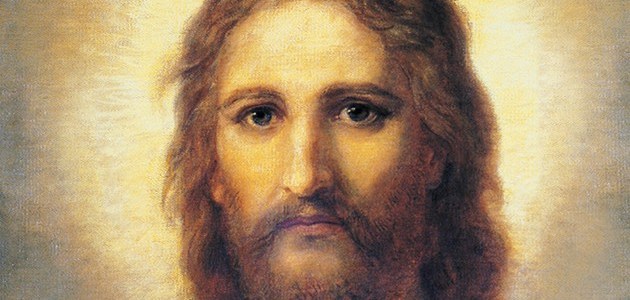
God Gave unto Man that He Should Act for Himself

Lehi teaches his son, Jacob, about how God structured mortal life so we would be free to choose between the good and the evil.

“…There is a God, and he hath created all things, both the heavens and the earth, and all things that in them are, both things to act and things to be acted upon. And to bring about his eternal purposes in the end of man, after he had created our first parents, and the beasts of the field and the fowls of the air, and in fine, all things which are created, it must needs be that there was an opposition; even the forbidden fruit in opposition to the tree of life; the one being sweet and the other bitter. Wherefore, the Lord God gave unto man that he should act for himself. Wherefore, man could not act for himself save it should be that he was enticed by the one or the other.” (2 Nephi 2:14-16)

Questions:

-Do you believe there is a God? If so, why?

-Is there is a Spirit that testifies to the heart and soul that God exists? If so, when and how does this occur?

-Do you have a worldview that allows for good and evil? If so, are those categories of good and evil defined by you or by God?

-Do books such as the Bible and the Book of Mormon help define God’s standards of right and wrong through the commandments and teachings found in them?

-If God has defined good and evil, what happens if men and women create their own separate definitions of what belongs in these categories?

Teachings of Latter-day Prophets, Seers, and Revelators

“The simple truth is that we cannot fully comprehend the Atonement and Resurrection of Christ and we will not adequately appreciate the unique purpose of His birth or His death … without understanding that there was an actual Adam and Eve who fell from an actual Eden, with all the consequences that fall carried with it” (Jeffrey R. Holland, “Where Justice, Love, and Mercy Meet,” Ensign or Liahona, May 2015, 105).

“Four great principles must be in force if there is to be agency: 1. Laws must exist … which can be obeyed or disobeyed; 2. Opposites must exist—good and evil, virtue and vice, right and wrong—that is, there must be an opposition, one force pulling one way and another pulling the other; 3. A knowledge of good and evil must be had by those who are to enjoy the agency, that is, they must know the differences between the opposites; and 4. An unfettered power of choice must prevail” (Bruce R. McConkie, Mormon Doctrine, 2nd ed. [1966], 26).

“Without the existence of choices, without our freedom to choose and without opposition, there would be no real existence. … It is a fact that we can neither grow spiritually nor thereby be truly happy unless and until we make wise use of our moral agency” (Neal A. Maxwell, One More Strain of Praise [1999], 80).

“Adam and Eve [through the Fall] became mortal. Happily for us, they could also beget children and fulfill the purposes for which the world was created. … Other blessings came to us through the Fall. It activated two closely coupled additional gifts from God, nearly as precious as life itself—agency and accountability” (Russell M. Nelson, “Constancy amid Change,” Ensign, Nov. 1993, 34, italics added).

“The old saying ‘The Lord is voting for me, and Lucifer is voting against me, but it is my vote that counts’ describes a doctrinal certainty that our agency is more powerful than the adversary’s will. Agency is precious. We can foolishly, blindly give it away, but it cannot be forcibly taken from us.

“There is also an age-old excuse: ‘The devil made me do it.’ Not so! He can deceive you and mislead you, but he does not have the power to force you or anyone else to transgress” (Boyd K. Packer, “Cleansing the Inner Vessel,” Ensign or Liahona, Nov. 2010, 74).
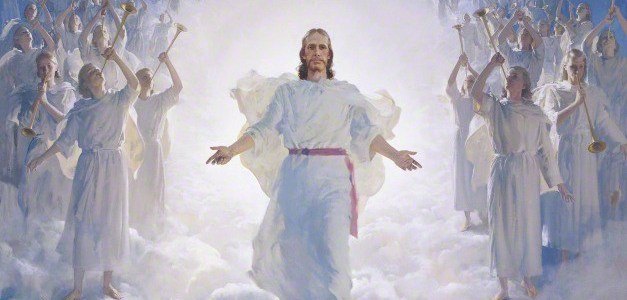
How Great the Importance to Make These Things Known unto the Inhabitants of the Earth

Lehi continues to teach his son, Jacob, about Christ’s Atonement and all of mankind’s need for it:

“…He offereth himself a sacrifice for sin, to answer the ends of the law, unto all those who have a broken heart and a contrite spirit; and unto none else can the ends of the law be answered. Wherefore, how great the importance to make these things known unto the inhabitants of the earth, that they may know that there is no flesh that can dwell in the presence of God, save it be through the merits, and mercy, and grace of the Holy Messiah…” (2 Nephi 2:7-8)

Questions:

-What does Lehi mean when he states that only those with a broken heart and a contrite spirit can receive Christ’s redemption from sin?

-Does “heart” in this passage refer to our personal will versus God’s will? Is it good to break down our will to make way for God’s will in our lives?

-Can one have anything but a “broken heart” when he or she truly keeps in remembrance the price paid by Christ to redeem those who choose to follow and obey Him?

-How is being prideful (which is the opposite of having a broken heart and a contrite spirit) a false state of being?

-Who among the inhabitants of the earth has God’s law? Who, if any, does not have the law?

Teachings of Latter-day Prophets, Seers, and Revelators:

“I believe that none of us can conceive the full import of what Christ did for us in Gethsemane, but I am grateful every day of my life for His atoning sacrifice in our behalf.

“At the last moment, He could have turned back. But He did not. He passed beneath all things that He might save all things. In doing so, He gave us life beyond this mortal existence. He reclaimed us from the Fall of Adam.

“To the depths of my very soul, I am grateful to Him. He taught us how to live. He taught us how to die. He secured our salvation” (Thomas S. Monson, “At Parting,” Ensign or Liahona, May 2011, 114).

Teachings of the Seventy

“What are a broken heart and a contrite spirit? … The Savior’s perfect submission to the Eternal Father is the very essence of a broken heart and a contrite spirit. Christ’s example teaches us that a broken heart is an eternal attribute of godliness. When our hearts are broken, we are completely open to the Spirit of God and recognize our dependence on Him for all that we have and all that we are. The sacrifice so entailed is a sacrifice of pride in all its forms. Like malleable clay in the hands of a skilled potter, the brokenhearted can be molded and shaped in the hands of the Master.

“A broken heart and a contrite spirit are also preconditions to repentance [see 2 Nephi 2:6–7]. … When we sin and desire forgiveness, a broken heart and a contrite spirit mean to experience ‘godly sorrow [that] worketh repentance’ (2 Corinthians 7:10). This comes when our desire to be cleansed from sin is so consuming that our hearts ache with sorrow and we yearn to feel at peace with our Father in Heaven. Those who have a broken heart and a contrite spirit are willing to do anything and everything that God asks of them, without resistance or resentment. We cease doing things our way and learn to do them God’s way instead. In such a condition of submissiveness, the Atonement can take effect and true repentance can occur” (Bruce D. Porter, “A Broken Heart and a Contrite Spirit,” Ensign or Liahona, Nov. 2007, 32).

Video from Book of Mormon Central:

Inasmuch as Ye Shall Keep My Commandments Ye Shall Prosper in the Land

Lehi testifies to his sons that God is eternally consistent and how they will fare (physically and spiritually) depends on their choices in relation to God’s standards:

His ways are righteous forever. And he has said that: Inasmuch as ye shall keep my commandments ye shall prosper in the land; but inasmuch as ye will not keep my commandments ye shall be cut off from my presence.” (2 Nephi 1:20)

Questions:

-What does it mean to prosper in the land? And, how is it the opposite of being cut off from God?

Teachings of Latter-day Prophets, Seers, and Revelators:

“When I say prosperity I am not thinking of it in terms of dollars and cents alone. … But what I count as real prosperity, as the one thing of all others that is of great value to every man and woman living, is the growth in a knowledge of God, and in a testimony, and in the power to live the gospel and to inspire our families to do the same. That is prosperity of the truest kind” (Heber J. Grant, Teachings of Presidents of the Church: Heber J. Grant [2002], 124).

Except Ye Have Charity Ye Can in Nowise Be Saved in the Kingdom of God

Moroni testifies that charity (born of faith and hope in Christ) is a state of being opposite to despair.

“…There must be faith; and if there must be faith there must also be hope; and if there must be hope there must also be charity. And except ye have charity ye can in nowise be saved in the kingdom God; neither can ye be saved in the kingdom of God if ye have not faith; neither can ye if ye have no hope. And if ye have no hope ye must needs be in despair; and despair cometh because of iniquity.” (Moroni 10:20-22)

Questions

-Often hate would be considered the closest opposite of charity (which is the pure love of Christ). But, how closely tied together are feelings of despair and feelings of hate — directed towards oneself or others?

Nothing That is Good Denieth the Christ

Moroni defines the good as that which is just and true. All philosophies, creeds, and actions that deny Christ — who is the embodiment of all that is good – are essentially opposed to goodness. The power of God’s goodness is manifest in the mortal world through the workings of the Holy Spirit in the lives of mortals who exercise faith in the Good Lord.

“…Whatsoever thing is good is just and true; wherefore, nothing that is good denieth the Christ, but acknowledges that he is. And ye may know that he is, by the power of the Holy Ghost; wherefore I would exhort you that ye deny not the power of God; for he worketh by power, according to the faith of the children of men, the same today and tomorrow and forever.” (Moroni 10:6-7)

Questions:

-Are there many things that appear good but, at core, are not based on the above teachings of Moroni?

Ask God, the Eternal Father, in the Name of Christ

Moroni exhorts all who read the Book of Mormon to pray to God about its truthfulness. Those who ask with a sincere heart, with real intent, and with faith in Christ will receive a witness of its truth by the power of the Holy Ghost.

“I seal up these records, after I have spoken a few words by way of exhortation unto you. Behold, I would exhort you that when ye shall read these things, if it be wisdom in God that ye should read them, that ye would remember how merciful the Lord hath been unto the children of men, from the creation of Adam even down until the time that ye shall receive these things, and ponder it in your hearts. And when ye shall receive these things, I would exhort you that ye would ask God, the Eternal Father, in the name of Christ, if these things are not true; and if ye shall ask with a sincere heart, with real intent, having faith in Christ, he will manifest the truth of it unto you, by the power of the Holy Ghost. And by the power of the Holy Ghost ye may know the truth of all things.” (Moroni 10:2-5)

Questions:

-Does Moroni say that the witness from the Holy Ghost will be immediate?

-How can a person get into a proper state of heart and mind to ask with faith, real intent, and a sincere heart?

-How many don’t really want to know if the Book of Mormon is the word of God and, therefore, aren’t prepared to ask God with faith, a sincere heart, and real intent?

Teachings of the Seventy:

“The Lord has made it plain in a number of scriptures how he feels about the Book of Mormon; he and his prophets testify to us that it is true (see, for example, Moro. 10:28–292 Ne. 33:10–11D&C 17:6D&C 18:2–3). Yet he still invites every reader to seek personal confirmation from him of these testimonies.” (Cook, Gene R. “Moroni’s Promise.” Ensign, Apr. 1994, 12-16


The Holy Ghost Filleth with Hope and Perfect Love

Mormon succinctly describes the path to dwelling with God and His saints.

“And the first fruits of repentance is baptism; and baptism cometh by faith unto the fulfilling the commandments; and the fulfilling the commandments bringeth remission of sins; And the remission of sins bringeth meekness, and lowliness of heart; and because of meekness and lowliness of heart cometh the visitation of the Holy Ghost, which Comforter filleth with hope and perfect love, which love endureth by diligence unto prayer, until the end shall come, when all the saints shall dwell with God.” (Moroni 8:25-26)

Questions:

-Are there other commandments, besides baptism, that when kept bring a remission of sins?

-How important is heartfelt prayer when it comes to staying on the path back to God’s eternal presence?

None is Acceptable before God, Save the Meek and Lowly in Heart

Moroni testifies of the interconnected gospel principles of faith, hope, meekness, and charity.

“…If ye have not faith in [Christ] then ye are not fit to be numbered among the people of his church. And again, my beloved brethren, I would speak unto you concerning hope. How is it that ye can attain unto faith, save ye shall have hope? And what is it that ye shall hope for? Behold I say unto you that ye shall have hope through the atonement of Christ and the power of his resurrection, to be raised unto life eternal, and this because of your faith in him according to the promise. Wherefore, if a man have faith he must needs have hope; for without faith there cannot be any hope. And again, behold I say unto you that he cannot have faith and hope, save he shall be meek, and lowly of heart. If so, his faith and hope is vain, for none is acceptable before God, save the meek and the lowly in heart; and if a man be meek and lowly in heart, and confesses by the power of the Holy Ghost that Jesus is the Christ, he must needs have charity; for if he have not charity he is nothing; wherefore he must needs have charity.” (Moroni 7:39-44)

Questions:

-How many understand that the baseline for spiritual growth and spiritual health is deep humility toward — and willingness to obey – God?

If These Things Have Ceased: Wo Be unto the Children of Men

Moroni teaches that true faith in Christ is always accompanied by miracles of all kinds. A people who do not believe in miracles do not have true faith in Christ.

“…Christ hath said: If ye will have faith in me ye shall have power to do whatsoever thing is expedient in me. And he hath said: Repent all ye ends of the earth, and come unto me, and be baptized in my name, and have faith in me, that ye may be saved. And now, my beloved brethren, if this be the case that these things are true which I have spoken unto you, and God will show unto you, with power and great glory at the last day, that they are true, and if they are true has the day of miracles ceased? Or have angels ceased to appear unto the children of men? Or has he withheld the power of the Holy Ghost from them? Or will he, so long as time shall last, or the earth shall stand, or there shall be one man upon the face thereof to be saved? Behold I say unto you, Nay; for it is by faith that miracles are wrought; and it is by faith that angels appear and minister unto men; wherefore, if these things have ceased wo be unto the children of men, for it is because of unbelief, and all is vain. For no man can be saved, according to the words of Christ, save they shall have faith in his name; wherefore, if these things have ceased, then has faith ceased also; and awful is the state of man, for they are as though there had been no redemption made.” (Moroni 7:33-38)

Questions:

-Why does Moroni put such a strong emphasis on the importance of miracles in his writings?

-Are the prevailing philosophies and worldviews of our highly-educated and wealthy classes (who control media) friendly to the idea of a God who intervenes in the affairs of mankind through miracles?  

Angels Minister unto the Chosen Vessels of the Lord

Moroni testifies that the ministry of angels is in an ongoing part of God’s work to call all to repentance and gather Israel (i.e. gather those who will repent and covenant anew to serve God).

“…[Christ] hath answered the ends of the law, and he claimeth all those who have faith in him; and they who have faith in him will cleave unto every good thing; wherefore he advocateth the cause of the children of men; and he dwelleth eternally in the heavens. And because he hath done this, my beloved brethren, have miracles ceased? Behold I say unto you, Nay; neither have angels ceased to minister unto the children of men. For behold, they are subject unto him, to minister according to the word of his command, showing themselves unto them of strong faith and a firm mind in every form of godliness. And the office of their ministry is to call men unto repentance, and to fulfill and to do the work of the covenants of the Father, which he hath made unto the children of men, to prepare the way among the children of men, by declaring the word of Christ unto the chosen vessels of the Lord, that they may bear testimony of him. And by so doing, the Lord God prepareth the way that the residue of men may have faith in Christ, that the Holy Ghost may have place in their hearts, according to the power thereof; and after this manner bringeth to pass the Father, the covenants which he hath made unto the children of men.” (Moroni 7:28-32)

Questions:

-What type of person does the Lord send his heavenly angels to?

-Are they likely to be sent to a person who is not deeply engaged in His latter-day work of gathering Israel in line with the covenants He has made with Abraham, Isaac, and Jacob?