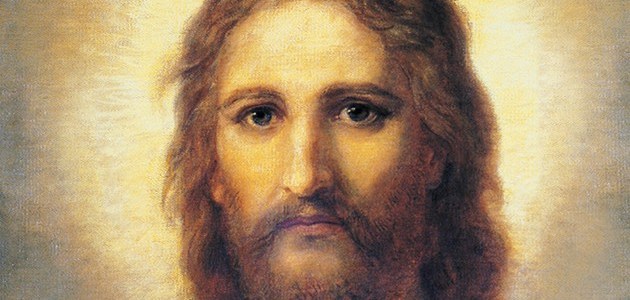
He Commandeth All Men That They Must Repent and Be Baptized in His Name

Jacob teaches about God’s law concerning faith, repentance, baptism, and staying true to the end.

“…He commandeth all men that they must repent, and be baptized in his name, having perfect faith in the Holy One of Israel, or they cannot be saved in the kingdom of God. And if they will not repent and believe in his name, and be baptized in his name, and endure to the end, they must be damned; for the Lord God, the Holy One of Israel, has spoken it.” (2 Nephi 9:23-24)

Questions:

-What does it mean to be damned? (See link above.)

-Why does God require outward signs (such as baptism by water) that, when undertaken, don’t necessarily mean a person is truly committed inwardly?

-How popular is the idea of repentance?

-Who is the righteous and perfect Exemplar that we can repent towards and in whose name we are baptized?

-Is it possible to have perfect faith without the help of the Holy Ghost (who gives a perfect witness of Christ’s divinity and God the Father’s divinity)? Is it necessary to renew the power of the Spirit in our lives from time to time in order to obtain or regain that perfect faith?

-Is it possible to obtain an eternal realm of glory in the life to come but still be damned (i.e. be limited in one’s eternal progression)?

-Do some Christian faiths emphasize the initial witness of Christ’s power to save without emphasizing the importance of staying true to that witness—through continual repentance towards Christ’s example—during all the remainder of one’s life?

Teachings of Latter-day Prophets, Seers, and Revelators:

“[Adam and Eve] transgressed a commandment of God which required that they leave their garden setting but which allowed them to have children before facing physical death. To add further sorrow and complexity to their circumstance, their transgression had spiritual consequences as well, cutting them off from the presence of God forever. Because we were then born into that fallen world and because we too would transgress the laws of God, we also were sentenced to the same penalties that Adam and Eve faced. …

“From the moment those first parents stepped out of the Garden of Eden, the God and Father of us all, anticipating Adam and Eve’s decision, dispatched the very angels of heaven to declare to them—and down through time to us—that this entire sequence was designed for our eternal happiness. It was part of His divine plan, which provided for a Savior, the very Son of God Himself—another ‘Adam,’ the Apostle Paul would call Him [see 1 Corinthians 15:45]—who would come in the meridian of time to atone for the first Adam’s transgression. That Atonement would achieve complete victory over physical death, unconditionally granting resurrection to every person who has been born or ever will be born into this world. Mercifully it would also provide forgiveness for the personal sins of all, from Adam to the end of the world, conditioned upon repentance and obedience to divine commandments” (Jeffrey R. Holland, “Where Justice, Love, and Mercy Meet,” Ensign or Liahona, May 2015, 105–6).

Look to the Great Mediator and Choose Eternal Life According to the Will of His Holy Spirit

Lehi, in counseling his sons to choose Christ, also teaches about the most important choices all must make.

“…I would that ye should look to the great Mediator, and hearken unto his great commandments; and be faithful unto his words, and choose eternal life, according to the will of his Holy Spirit; and not choose eternal death, according to the will of the flesh and the evil which is therein, which giveth the spirit of the devil power to captivate to bring you down to hell, that he may reign over you in his own kingdom.” (2 Nephi 2:28-29)

-How can a person look to Jesus Christ in his or her day to day life?

-What does it mean to be faithful to His words?

-How is keeping God’s commandments a path to greater freedom away from captivity?

-What is the will of the Holy Spirit? Can one’s will become one with the Holy Spirit’s will?

God Shall Consecrate Thine Afflictions for Thy Gain

By the time he and his family reached the Americas, Lehi had grown old. Before passing away, he took the opportunity to instruct his family. While speaking to Jacob (Nephi’s younger brother), Lehi touches on the meaning of adversity when it is endured with faith.

“[I]n thy childhood thou hast suffered afflictions and much sorrow, because of the rudeness of thy brethren. Nevertheless, Jacob, my firstborn in the wilderness, thou knowest the greatness of God; and he shall consecrate thine afflictions for thy gain.” (2 Nephi 2:2)

Questions:

-How precious is faithfulness in distress to God?

-How much easier is it to bear your burdens, knowing that God will consecrate them to your gain (if you endure faithfully)?

Teachings of Latter-day Prophets, Seers, and Revelators:

Most of us experience some measure of what the scriptures call “the furnace of affliction” (Isa. 48:101 Ne. 20:10). Some are submerged in service to a disadvantaged family member. Others suffer the death of a loved one or the loss or postponement of a righteous goal like marriage or childbearing. Still others struggle with personal impairments or with feelings of rejection, inadequacy, or depression. Through the justice and mercy of a loving Father in Heaven, the refinement and sanctification possible through such experiences can help us achieve what God desires us to become (Dallin H. Oaks, “Challenge to Become,” 33-34).

Be Obedient to the Commandments and Endure to the End

Nephi concludes his first book of scripture with a testament to the power of obedience.

“[I]f ye shall be obedient to the commandments, and endure to the end, ye shall be saved at the last day. And thus it is. Amen.” (1 Nephi 22:31)

Below are some of God’s commandments as found in the first 22 chapters of the Book of Mormon  (the portion of the book that has been covered by this blog so far).

Condemn not the things of God.” (from the ancient Introduction)

“Remember, O man, for all thy doings thou shalt be brought into judgment.” (1 Nephi 10:20)

Ask me in faith, believing that ye shall receive.” (1 Nephi 15:11)

Hear ye the words of the prophet.” (1 Nephi 19:24)

“Come near unto me.” (1 Nephi 20:16)

Questions:

-How much more meaningful are our efforts to keep the commandments because of Christ and the Atonement He worked out in our behalf?

-Why is enduring to the end important?

Teachings of Latter-day Prophets, Seers, and Revelators:

“Obedience is powerful spiritual medicine. It comes close to being a cure-all” (Boyd K. Packer, “Balm of Gilead,” Ensign, Nov. 1987, 18).


“The most important of all the commandments of God is that one that you are having the most difficulty keeping today. … Put that aright and then you start on the next one that is most difficult for you to keep. That’s the way to sanctify yourself by keeping the commandments of God” (Teachings of Presidents of the Church: Harold B. Lee [2000], 30).


“Of all the lessons we learn from the life of the Savior, none is more clear and powerful than the lesson of obedience” (“If Ye Love Me, Keep My Commandments,” Ensign or Liahona, May 2014, 35).

All People Shall Dwell Safely in the Holy One of Israel If It So Be That They Will Repent

As Nephi continues to expound on the prophesies and messages of Isaiah (chapters 48 and 49), he reemphasizes – despite the turmoil of the last days and all that will befall those who fight against Zion – that there is always safety in Jesus Christ.

“[A]ll nations, kindreds, tongues, and people shall dwell safely in the Holy One of Israel if it so be that they will repent.” (1 Nephi 22:28)

-Does Christ deny anyone or any group who comes to Him?

-Is there any other way to come unto Christ, besides through repentance?

-If the standard we repent to is the Divine Christ, how much emphasis and focus should be placed on repenting daily?

-Does the thought of a Perfect Standard encourage you or discourage you?

-Is encouragement or discouragement, in looking to Christ, a choice we make?

-How important is it to have faith that such a standard is obtainable for the standard to be meaningful?

-Would Christ want us to obtain anything less than the potential He has given us through his example and atoning sacrifice?

-If we allow His power into our lives, are there limits to what Christ can make of us as individuals and as groups?

Teachings of Latter-day Prophets, Seers, and Revelators:

“Why have our Father and His Son commanded us to repent? Because they love us. They know all of us will violate eternal laws. Whether they be small or large, justice requires that every broken law be satisfied to retain the promise of joy in this life and the privilege of returning to Father in Heaven. If not satisfied, in the Day of Judgment justice will cause that we be cast out of the presence of God to be under the control of Satan [see 2 Nephi 9:8–10; 2 Nephi 2:5].

“It is our Master and His redeeming act that make it possible for us to avoid such condemnation. It is done through faith in Jesus Christ, obedience to His commandments, and enduring in righteousness to the end.

“Are you taking full advantage of the redeeming power of repentance in your life so that you can have greater peace and joy? Feelings of turmoil and despondency often signal a need for repentance. Also the lack of the spiritual direction you seek in your life could result from broken laws. If needed, full repentance will put your life together. It will solve all of the complex spiritual pains that come from transgression. But in this life it cannot remedy some of the physical consequences that can occur from serious sin. Be wise and consistently live well within the boundaries of righteousness defined by the Lord” (Richard G. Scott, “The Path to Peace and Joy,” Ensign, Nov. 2000, 25).

Ask Me in Faith

After receiving revelation regarding his father’s dream and many future events, Nephi returns to his father’s camp and finds his brothers arguing about what their father had taught the family. Another powerful and clear message of the Book of Mormon unfolds as Nephi reminds his brothers that they should seek out the ultimate source of truth and knowledge (rather than simply relying on their own understandings) to obtain clarity about the matters they are disputing about:

Do ye not remember the things which the Lord hath said?—If ye will not harden your hearts, and ask me in faith, believing that ye shall receive, with diligence in keeping my commandments, surely these things shall be made known unto you.” (1 Nephi 15:11)

Questions:

-What are the essential elements of receiving guidance from God as described in the verse above?

-Is it always easy to maintain a soft heart when seeking answers from God?

-Do we sometimes ask in doubt (rather than in faith) and still expect an answer?

-Why is diligent keeping of the commandments an important aspect of receiving revelation from God? Is the strength of the Spirit in our lives tied to our ability to receive divine instruction? And, is the strength of the Spirit in our lives a constant? Or, does it wax and wane depending on a person’s actions in relation to God’s commandments?

-Is it easy to have preconceptions about how God will give us answers and how quickly the answers will come? Does having true faith that you will receive an answer part of having the patience necessary to help overcome these preconceptions?

The Lord is Able to Do All Things According to His Will

After the brothers returned to their father’s camp with the Brass Plates, Lehi, their father, received additional revelation that the young men were to go to Jerusalem once again and bring back the family of a man named Ishmael. The brothers are successful in convincing Ishmael and his family to join the divinely mandated exodus to a new land but on the way back to Lehi’s camp Laman, Lemuel, and some of Ishmael’s family had second thoughts and wanted to return to Jerusalem.

As part of his effort to keep them from doubting and rebelling against specific direction given by God to leave Jerusalem, Nephi asks the following:

“…How is it that ye have forgotten that the Lord is able to do all things according to his will, for the children of men, if it so be that they exercise faith in him?” (1 Nephi 7:12)

Questions:

-How can you know God’s will?

-How do you know when your will and God’s will are aligned?

-Is there any limit to what God can provide by way of help and guidance when your will is aligned with His?

-How important is faith as a catalyst for allowing God’s strength into your life?

Except Ye Have Charity Ye Can in Nowise Be Saved in the Kingdom of God

Moroni testifies that charity (born of faith and hope in Christ) is a state of being opposite to despair.

“…There must be faith; and if there must be faith there must also be hope; and if there must be hope there must also be charity. And except ye have charity ye can in nowise be saved in the kingdom God; neither can ye be saved in the kingdom of God if ye have not faith; neither can ye if ye have no hope. And if ye have no hope ye must needs be in despair; and despair cometh because of iniquity.” (Moroni 10:20-22)

Questions

-Often hate would be considered the closest opposite of charity (which is the pure love of Christ). But, how closely tied together are feelings of despair and feelings of hate — directed towards oneself or others?

Deny Not the Gifts of God

Moroni testifies of the gifts of the Spirit and declares that they are always active among men and women as long as there is faith in Christ and an acceptance of the Holy Spirit.

“…I exhort you, my brethren, that ye deny not the gifts of God, for they are many; and they come from the same God. And there are different ways that these gifts are administered; but it is the same God who worketh all in all; and they are given by the manifestations of the Spirit of God unto men, to profit them. For behold, to one is given by the Spirit of God, that he may teach the word of wisdom; and to another, that he may teach the word of knowledge by the same Spirit; and to another, exceedingly great faith; and to another, the gifts of healing by the same Spirit; and again, to another, that he may work mighty miracles; and again, to another, that he may prophesy concerning all things; and again, to another, the beholding of angels and ministering spirits; and again, to another, all kinds of tongues; and again, to another, the interpretation of languages and of divers kinds of tongues. And all these gifts come by the Spirit of Christ; and they come unto every man severally, according as he will. And I would exhort you, my beloved brethren, that ye remember that every good gift cometh of Christ. And I would exhort you, my beloved brethren, that ye remember that he is the same yesterday, today, and forever, and that all these gifts of which I have spoken, which are spiritual, never will be done away, even as long the world shall stand, only according to the unbelief of the children of men.” (Moroni 10:8-19)

Questions:

-Are these gifts only active in the true Church of Jesus Christ? Or, are they available to anyone who has faith in Christ?

Ask God, the Eternal Father, in the Name of Christ

Moroni exhorts all who read the Book of Mormon to pray to God about its truthfulness. Those who ask with a sincere heart, with real intent, and with faith in Christ will receive a witness of its truth by the power of the Holy Ghost.

“I seal up these records, after I have spoken a few words by way of exhortation unto you. Behold, I would exhort you that when ye shall read these things, if it be wisdom in God that ye should read them, that ye would remember how merciful the Lord hath been unto the children of men, from the creation of Adam even down until the time that ye shall receive these things, and ponder it in your hearts. And when ye shall receive these things, I would exhort you that ye would ask God, the Eternal Father, in the name of Christ, if these things are not true; and if ye shall ask with a sincere heart, with real intent, having faith in Christ, he will manifest the truth of it unto you, by the power of the Holy Ghost. And by the power of the Holy Ghost ye may know the truth of all things.” (Moroni 10:2-5)

Questions:

-Does Moroni say that the witness from the Holy Ghost will be immediate?

-How can a person get into a proper state of heart and mind to ask with faith, real intent, and a sincere heart?

-How many don’t really want to know if the Book of Mormon is the word of God and, therefore, aren’t prepared to ask God with faith, a sincere heart, and real intent?

Teachings of the Seventy:

“The Lord has made it plain in a number of scriptures how he feels about the Book of Mormon; he and his prophets testify to us that it is true (see, for example, Moro. 10:28–292 Ne. 33:10–11D&C 17:6D&C 18:2–3). Yet he still invites every reader to seek personal confirmation from him of these testimonies.” (Cook, Gene R. “Moroni’s Promise.” Ensign, Apr. 1994, 12-16