Jacob proclaims the Lord’s voice and will regarding the gathering of the Jewish people in the last days. Much of the prosperity and strength granted by God to the greatest Gentile nations will be linked to their role in gathering and helping the Lord’s ancient covenant people.
“…Behold, thus saith the Lord God: When the day cometh that they shall believe in me, that I am Christ, then have I covenanted with their fathers that they shall be restored in the flesh, upon the earth, unto the lands of their inheritance. And it shall come to pass that they shall be gathered in from their long dispersion, from the isles of the sea, and from the four parts of the earth; and the nations of the Gentiles shall be great in the eyes of me, saith God, in carrying them forth to the lands of their inheritance. Yea, the kings of the Gentiles shall be nursing fathers unto them, and their queens shall become nursing mothers; wherefore, the promises of the Lord are great unto the Gentiles, for he hath spoken it, and who can dispute?” (2 Nephi 10:7-9)
Questions:
-Based on the above passage, is it likely God’s favor will be upon any nation that fights against the house of Israel or the Jewish people in the last days?
Jacob, around the years 559 to 545 B.C., teaches that Christ would come to earth among the only nation who would kill Him rather than repent.
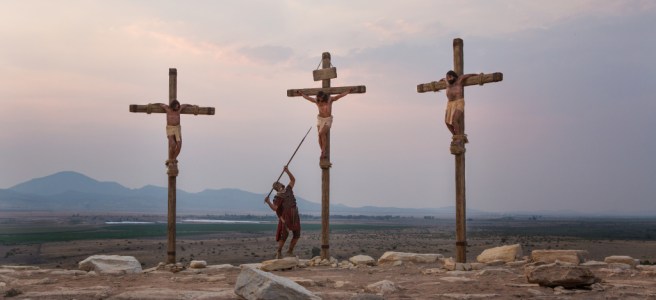
“It must needs be that Christ…should come among the Jews, among those who are the more wicked part of the world; and they shall crucify him—for thus it behooveth our God, and there is none other nation on earth that would crucify their God. For should the mighty miracles be wrought among other nations they would repent, and know that he be their God. But because of priestcrafts and iniquities, they at Jerusalem will stiffen their necks against him, that he be crucified.” (2 Nephi 10:3-5)
Questions:
-Is there a phenomenon where those who have truth and light from God and then do no live according to it fall into deeper spiritual darkness than those who never had such truth and light?
-Were there many in the Jewish nation that Christ was born into that had succumbed to such spiritual darkness?
-Were there also many Jews during that time who, despite the wickedness around them, showed exceptional spiritual strength and stayed close to God and His Spirit?
-What is priestcraft? And, why is its practice such a powerful source of evil?
Jacob testifies that Christ descended below all in His suffering and death so He could then lift all toward Him through the Resurrection and be a perfect judge at the Day of Judgment.
“O how great the holiness of our God! For he knoweth all things and there is not anything save he knows it. And he cometh into the world that he may save all men if they will hearken unto his voice; for behold, he suffereth the pains of all men, yea, the pains of every living creature, both men, women, and children, who belong to the family of Adam. And he suffereth this that the resurrection might pass upon all men, that all might stand before him at the great and judgment day.” (2 Nephi 9:20-22)
Questions:
-How do you feel about this testimony from Jacob that Christ knows your pain and has actually felt your pain?
-What does it say about the depth of God’s love that He was willing to suffer so deeply to bring about the Resurrection for all mankind and be as merciful a judge as possible.
-How can a person hearken to the voice of God? Is God’s voice found in the scriptures? Is God’s voice found in the promptings of the Holy Ghost? Can God’s voice be heard from the mouths of those who have received authority to speak in His name?
Teachings of Latter-day Prophets, Seers, and Revelators:
“Christ’s agony in the garden is unfathomable by the finite mind, both as to intensity and cause. … He struggled and groaned under a burden such as no other being who has lived on earth might even conceive as possible. It was not physical pain, nor mental anguish alone, that caused Him to suffer such torture as to produce an extrusion of blood from every pore; but a spiritual agony of soul such as only God was capable of experiencing. No other man, however great his powers of physical or mental endurance, could have suffered so” (James E. Talmage, Jesus the Christ, 3rd ed. [1916], 613).
—
“By His Atonement and Resurrection, Jesus Christ has overcome all aspects of the Fall. Physical death will be temporary, and even spiritual death has an end, in that all come back into the presence of God, at least temporarily, to be judged” (D. Todd Christofferson, “The Resurrection of Jesus Christ,” Ensign or Liahona, May 2014, 112).
Lehi, in counseling his sons to choose Christ, also teaches about the most important choices all must make.
“…I would that ye should look to the great Mediator, and hearken unto his great commandments; and be faithful unto his words, and choose eternal life, according to the will of his Holy Spirit; and not choose eternal death, according to the will of the flesh and the evil which is therein, which giveth the spirit of the devil power to captivate to bring you down to hell, that he may reign over you in his own kingdom.” (2 Nephi 2:28-29)
-How can a person look to Jesus Christ in his or her day to day life?
-What does it mean to be faithful to His words?
-How is keeping God’s commandments a path to greater freedom away from captivity?
-What is the will of the Holy Spirit? Can one’s will become one with the Holy Spirit’s will?
Lehi teaches his son, Jacob, about the power of Christ to bring about the resurrection for all mankind and salvation for those who believe in Him:
“…The Holy Messiah…layeth down his life according to the flesh, and taketh it again by the power of the Spirit, that he may bring to pass the resurrection of the dead, being the first that should rise. Wherefore, he is the firstfruits unto God, inasmuch as he shall make intercession for all the children of men; and they that believe in him shall be saved.” (2 Nephi 2:8-9)
Questions:
-Does the word “Spirit” in this passage have any reference to the Holy Ghost or God the Father’s spiritual strength? Or, is it only a reference to the power of Christ’s individual spirit?
-Do the members of the Godhead do anything without mutual support and approbation for one another?
-Has any spirit, besides Christ, had the power to resurrect his or her earthly body after death? How did Christ’s resurrection ensure that all of God’s children will be resurrected?
Lehi continues to teach his son, Jacob, about Christ’s Atonement and all of mankind’s need for it:
“…He offereth himself a sacrifice for sin, to answer the ends of the law, unto all those who have a broken heart and a contrite spirit; and unto none else can the ends of the law be answered. Wherefore, how great the importance to make these things known unto the inhabitants of the earth, that they may know that there is no flesh that can dwell in the presence of God, save it be through the merits, and mercy, and grace of the Holy Messiah…” (2 Nephi 2:7-8)
Questions:
-What does Lehi mean when he states that only those with a broken heart and a contrite spirit can receive Christ’s redemption from sin?
-Does “heart” in this passage refer to our personal will versus God’s will? Is it good to break down our will to make way for God’s will in our lives?
-Can one have anything but a “broken heart” when he or she truly keeps in remembrance the price paid by Christ to redeem those who choose to follow and obey Him?
-How is being prideful (which is the opposite of having a broken heart and a contrite spirit) a false state of being?
-Who among the inhabitants of the earth has God’s law? Who, if any, does not have the law?
Teachings of Latter-day Prophets, Seers, and Revelators:
“I believe that none of us can conceive the full import of what Christ did for us in Gethsemane, but I am grateful every day of my life for His atoning sacrifice in our behalf.
“At the last moment, He could have turned back. But He did not. He passed beneath all things that He might save all things. In doing so, He gave us life beyond this mortal existence. He reclaimed us from the Fall of Adam.
“To the depths of my very soul, I am grateful to Him. He taught us how to live. He taught us how to die. He secured our salvation” (Thomas S. Monson, “At Parting,” Ensign or Liahona, May 2011, 114).
Teachings of the Seventy
“What are a broken heart and a contrite spirit? … The Savior’s perfect submission to the Eternal Father is the very essence of a broken heart and a contrite spirit. Christ’s example teaches us that a broken heart is an eternal attribute of godliness. When our hearts are broken, we are completely open to the Spirit of God and recognize our dependence on Him for all that we have and all that we are. The sacrifice so entailed is a sacrifice of pride in all its forms. Like malleable clay in the hands of a skilled potter, the brokenhearted can be molded and shaped in the hands of the Master.
“A broken heart and a contrite spirit are also preconditions to repentance [see 2 Nephi 2:6–7]. … When we sin and desire forgiveness, a broken heart and a contrite spirit mean to experience ‘godly sorrow [that] worketh repentance’ (2 Corinthians 7:10). This comes when our desire to be cleansed from sin is so consuming that our hearts ache with sorrow and we yearn to feel at peace with our Father in Heaven. Those who have a broken heart and a contrite spirit are willing to do anything and everything that God asks of them, without resistance or resentment. We cease doing things our way and learn to do them God’s way instead. In such a condition of submissiveness, the Atonement can take effect and true repentance can occur” (Bruce D. Porter, “A Broken Heart and a Contrite Spirit,” Ensign or Liahona, Nov. 2007, 32).
As he recounts (somewhere around 588-570 B.C.) how his son Jacob had come to know Christ, Lehi focuses on the power and consistency of the Spirit, who is the third member of the Godhead, in testifying of Christ.
“…I know that thou art redeemed, because of the righteousness of thy Redeemer; for thou hast beheld that in the fulness of time he cometh to bring salvation unto men. And thou hast beheld in thy youth his glory; wherefore, thou art blessed even as they unto whom he shall minister in the flesh; for the Spirit is the same, yesterday, today, and forever.” (2 Nephi 2:3-4)
-Did the Spirit have the power to testify of Christ in ancient times, before He came to the earth? Was the Spirit’s testimony in any way vague or indirect? Or, was it a clear manifestation without ambiguity?
-Did the power of the manifestation depend on the faithfulness and spiritual strength of the individual to whom the witness came?
-Is it possible for us, who live after Christ’s coming, to receive a clear manifestation, without ambiguity, that He was (and is) who He said he was?
“And as for those who are at Jerusalem, saith the prophet, they shall be scourged by all people, because they crucify the God of Israel, and turn their hearts aside, rejecting signs and wonders, and the power and glory of the God of Israel. And because they turn their hearts aside, saith the prophet, and have despised the Holy One of Israel, they shall wander in the flesh, and perish, and become a hiss and a byword, and be hated among all nations. Nevertheless, when that day cometh, saith the prophet, that they no more turn aside their hearts against the Holy One of Israel, then will he remember the covenants which he made to their fathers. Yea, then will he remember the isles of the sea; yea, and all the people who are of the house of Israel, will I gather in, saith the Lord, according to the words of the prophet Zenos, from the four quarters of the earth. Yea, and all the earth shall see the salvation of the Lord, saith the prophet; every nation, kindred, tongue and people shall be blessed.” (1 Nephi 19:15-17)
Questions:
-How is the dispersal and eventual gathering of the house of Israel tied to every nation and people being blessed in the last days?
-How is turning to the true Messiah, Jesus Christ, a key to receiving the covenant blessings made to Abraham, Isaac, and Jacob?
-Does it please a loving God to see the trials and hardships of those who reject His Son? Are those who cause tribulations for those who have rejected Christ any less responsible for their actions than anyone else? Would true followers of Jesus Christ ever despise and persecute a people who did not share their beliefs?
-Has the Lord begun to gather Israel in our time? What role does the Book of Mormon play in gathering children of Israel?
Teachings of Latter-day Prophets, Seers, and Revelators:
“Why was Israel scattered? The answer is clear; it is plain; of it there is no doubt. Our Israelite forebears were scattered because they rejected the gospel, defiled the priesthood, forsook the church, and departed from the kingdom. …
“What, then, is involved in the gathering of Israel? The gathering of Israel consists in believing and accepting and living in harmony with all that the Lord once offered his ancient chosen people. … It consists of believing the gospel, joining the Church, and coming into the kingdom. … It may also consist of assembling to an appointed place or land of worship” (McConkie, A New Witness for the Articles of Faith [1985], 515).
The prophet Mormon, writing about 320 A.D. somewhere in the Americas, testifies the following to all the inhabitants of the Earth:
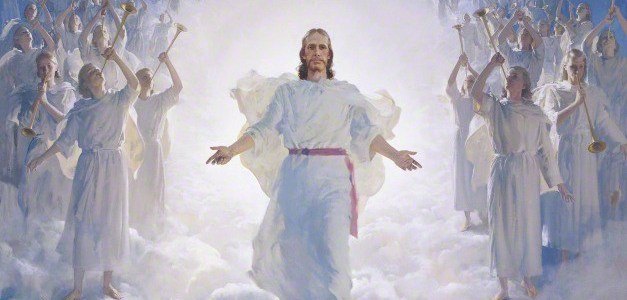
“…I write unto you all. And for this cause I write unto you, that ye may know that ye must all stand before the judgment-seat of Christ, yea, every soul who belongs to the whole human family of Adam; and ye must stand to be judged of your works, whether they be good or evil; And also that ye may believe the gospel of Jesus Christ, which ye shall have among you; and also that the Jews, the covenant people of the Lord, shall have other witness besides him whom they saw and heard, that Jesus, whom they slew, was the very Christ and the very God. And I would that I could persuade all ye ends of the earth to repent and prepare to stand before the judgment-seat of Christ.” (Mormon 3Mormon 3:20-22)
Questions:
-Having perfect love for all, how willing will Christ be to emphasize the positive and reduce the impact of the negative at the time of judgment?
-Will the love and pure light that emanates from the Savior say everything that needs to be said so that each person will see themselves for what they have become in the perfect context of God’s presence?
-What does it mean to repent in preparation for standing before the judgment-seat of Christ?
Below, the prophet Mormon writes the words He was commanded by Christ to speak to those not yet gathered into the house of Israel in our times:
“Hearken, O ye Gentiles, and hear the words of Jesus Christ, the Son of the living God, which he hath commanded me that I should speak concerning you, for, behold he commandeth me that I should write saying: Turn, all ye Gentiles, from your wicked ways; and repent of your evil doings, of your lyings and deceivings, and of your whoredoms, and of your secret abominations, and your idolatries, and of your murders, and your priestcrafts, and your envyings, and your strifes, and from all your wickedness and abominations, and come unto me, and be baptized in my name, that ye may receive a remission of your sins, and be filled with the Holy Ghost, that ye may be numbered with my people who are of the house of Israel.” (3 Nephi 30:1-2)
Questions:
-What must happen, according to these verses, for the Gentiles of the last days to be numbered among the house of Israel?
-Who has authority directly from God to perform the baptism mentioned in the passage above?
-Who is willing to repent away from the negative actions and characteristics listed above (in preparation for a meaningful baptism by one who holds authority)?





 Messages of the Book of Mormon