As Often as My People Repent Will I Forgive Them

Alma, a Nephite prophet, was troubled by members of the Lord’s church who were committing sin and not repenting. He was hesitant to take action because he didn’t want to judge them wrongly in the Lord’s eyes, but felt action needed to be taken. As he prayed, the Lord revealed the principles discussed in the previous post (This Is My Church) as well as the following:

“…Whosoever transgresseth against me, him shall ye judge according to the sins which he has committed; and if he confess his sins before thee and me, and repenteth in the sincerity of his heart, him shall ye forgive and I will forgive him also. Yea, and as often as my people repent will I forgive them their trespasses against me.” (Mosiah 26:29-30)

Questions:

– Does the Lord forgive sin without repentance?

-What does it mean to truly repent?

-Is it possible to repent if a person doesn’t understand who Christ is and why God the Father sent him?

This is My Church

Alma, the Nephite prophet, was troubled by members of the Lord’s church who were committing sin and not repenting. He was hesitant to take action because he didn’t want to judge them wrongly in the Lord’s eyes, but felt that action needed to be taken. As he prayed, the Lord revealed the following to him:

“…He that will hear my voice shall be my sheep; and him shall ye receive into the church, and him will I also receive. For behold, this is my church; whosoever is baptized shall be baptized unto repentance. And whomever ye receive shall believe in my name; and him will I freely forgive. For it is I that taketh upon me the sins of the world; for it is I that hath created them; and it is I that granteth unto him that believeth unto the end a place at my right hand. For behold, in my name are they called; and if they know me they shall come forth, and shall have a place eternally at my right hand.” (Mosiah 26:21-24)

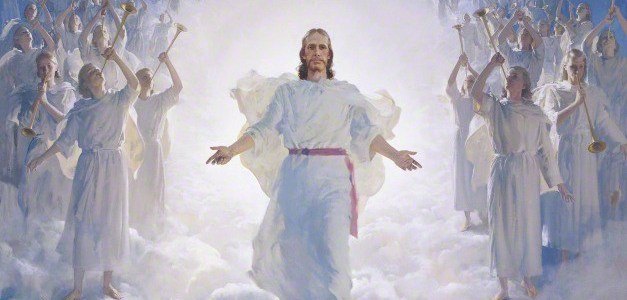
“And it shall come to pass that when the second trump shall sound then shall they that never knew me come forth and shall stand before me. And then shall they know that I am the Lord their God, that I am their Redeemer; but they would not be redeemed. And then I will confess unto them that I never knew them; and they shall depart into everlasting fire prepared for the devil and his angels. Therefore I say unto you, that he that will not hear my voice, the same shall ye not receive into my church, for him I will not receive at the last day.” (Mosiah 26:25-28)

Questions:

-Is the Book of Mormon the Lord’s voice?

-Is the Bible the Lord’s voice?

-Is it possible to heed some of the Lord’s words but ignore others?

-Does the phrase “never knew me” in the passage above suggest that only those who never listened to the Lord’s voice will “depart into everlasting fire?” How rare is it to find a person who never listened to the voice of the Lord?

-How important is it to strive to listen to all that the Lord speaks versus listening selectively?

I, the Lord God, Do Visit My People in Their Afflictions

The Nephites following the prophet Alma were required to endure captivity for a time, but the Lord helped them through their trials and declared the following to them:

“…Ye may know of a surety that I, the Lord God, do visit my people in their afflictions.” (Mosiah 24:14)

Questions:

-Can a person come to know God more from the trials he or she passes through than from times of ease?

-Are greater blessings granted to those who are keeping the commandments and following the voice of the Spirit?

The Lord Seeth Fit to Chasten His People

After finding a new place to settle, a group of Nephites — who were keeping God’s commandments and living peaceably with one another – were taken captive by their enemies the Lamanites. The prophet Mormon (who abridged and made important observations within the text of the Book of Mormon) describes why the Lord allowed this to happen.

“…The Lord seeth fit to chasten his people; yea, he trieth their patience and their faith. Nevertheless—whosoever putteth his trust in him the same shall be lifted up at the last day.” (Mosiah 23:21-22)

Questions:

-Does anyone escape chastening by God? Or, is this life constructed by God to chasten?

-Are the people of God (those who have the true priesthood and are striving to love God and their neighbor as themselves) more likely to be chastened? Or, are they less likely to be chastened?

-Does trust in God, through trial, purify and sanctify the soul?

One Man Shall Not Think Himself Above Another

After the Nephite people request a king, the man who the majority want to be their king (Alma) refuses. He explains why based on a specific commandment received from the Lord.

“Thus saith the Lord: Ye shall not esteem one flesh above another or one man shall not think himself above another.” (Mosiah 23:7)

Questions:

-What causes people to think they are better than others?

-How tempting is it for a person to seek confirmation that he or she is better than others?

-Does any good come from thoughts and actions based on a sense of superiority (or from establishing positions in social structure that signal superiority)?

-Since we are only saved by the grace of God through Christ’s loving Atonement, what position do we put ourselves in when we aren’t careful to extend the same kind of love to others (in our thoughts and actions) as Christ has extended to us?

The Priests Were Not to Depend upon the People for Their Support

Those who led the congregations of Christ’s people among the Nephites were not paid monetarily or with physical goods for their service. Rather, they supported themselves and their own families, and then also labored to serve the Lord and His people. This separation of financial incentive from spiritual service increased the grace and Spirit of God in their lives and they were able to teach with greater power and authority for the benefit of their followers.

“…The priests were not to depend upon the people for their support; but for their labor they were to receive the grace of God, that they might wax strong in the Spirit, having the knowledge of God, that they might teach with power and authority from God.” (Mosiah 18:26)

Questions:

-Can you see how mixing financial incentive and church (or synagogue) service could easily dilute the spiritual power of those who lead congregations?

-How many are willing (or able) to serve for the grace of God and forgo financial reimbursement for their service?

Give Thanks to the Lord

The prophet Alma taught his people the importance of gratitude towards the Lord.

…He commanded them that…every day they should give thanks to the Lord their God.” (Mosiah 18:23)

Questions:

-Is it natural to give thanks when one understands what God has given in Jesus Christ and the Atonement he worked out in the behalf of all?

-Is it natural not to be grateful if this understanding isn’t in place?

-How important is it to understand our relationship to Christ and God the Father in order to maintain a connection with heaven through the Spirit?

-What does it look like, in a day-to-day life, to give thanks to the Lord?

Thus They Became the Children of God

After hearing the teachings of the prophet Abinadi, a man with priesthood authority named Alma, who had been one of the priests of the wicked King Noah, repents and reinstates the true gospel of Jesus Christ among a group of followers. Mormon, the Nephite historian-prophet who abridged these events onto the Gold Plates, is inspired to define for the reader how a group can become the children of God (i.e. God’s people on the earth).

“…[Alma] said unto them: Behold, here are the waters of Mormon (for thus were they called) and now, as ye are desirous to come into the fold of God, and to be called his people, and are willing to bear one another’s burdens, that they may be light; Yea, and are willing to mourn with those that mourn; yea, and comfort those that stand in need of comfort, and to stand as witnesses of God at all times and in all things, and in all places that ye may be in, even until death, that ye may be redeemed of God, and be numbered with those of the first resurrection, that ye may have eternal life—Now I say unto you, if this be the desire of your hearts, what have you against being baptized in the name of the  Lord, as a witness before him that ye have entered into a covenant with him, that ye will serve him and keep his commandments, that he may pour out his Spirit more abundantly upon you?” (Mosiah 18:8-10)

After making the above covenant through baptism by immersion (performed by one who held authority from God), Alma and his people lived in harmony and peace with one another:

“…He commanded them that there should be no contention one with another, but that they should look forward with one eye, having one faith and one baptism, having their hearts knit together in unity and in love one towards another. And thus he commanded them to preach. And thus they became the children of God.” (Mosiah 18:21-22)

Questions:

-Is there a group on the earth who strive to follow Christ’s example and whose priesthood holders have God’s authorization to baptize?

-Where can the children of God be found?

-How important is it to find and associate with the children of God during this lifetime? More to the point, how import is it to become a part of the kingdom of God (whose subjects are the children of God) where it has been established here on the earth?