All Must Perish Except It Be through Christ’s Atonement

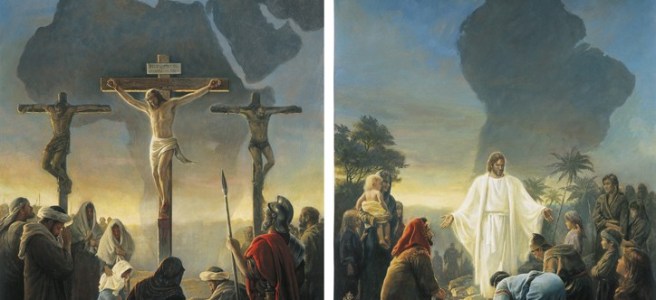
Amulek teaches about the power and necessity of Christ’s Atonement.

“…The word is in Christ unto salvationredemption cometh through the Son of God…Behold I say unto you that I do know that Christ shall come among the children of men, to take upon him the transgressions of his people, and that he shall atone for the sins of the world; for the Lord God hath spoken it. For it is expedient that an atonement should be made; for according to the great plan of the Eternal God there must be an atonement made, or else all mankind must unavoidably perish; yea, all are hardened; yea, all are fallen and are lost, and must perish except it be through the atonement which it is expedient should be made. (Alma 34:6-9)

Questions:

-How does a heart stray from God during a lifetime?

-How can a heart be softened after it has hardened (spiritually speaking)?

Every Seed Bringeth Forth unto Its Own Likeness

Alma continues to teach about the beginnings of faith and how to obtain spiritual knowledge.

“…If ye give place, that a seed may be planted in your heart, behold, if it be a true seed, or a good seed, if ye do not cast it out by your unbelief, that ye will resist the Spirit of the Lord, behold, it will begin to swell within your breasts; and when you feel these swelling motions, ye will begin to say within yourselves—It must needs be that this is a good seed, or that the word is good, for it beginneth to enlighten my understanding, yea, it beginneth to be delicious to me. Now behold, would not this increase your faith? I say unto you, Yea; nevertheless it hath not grown up to a perfect knowledge. But behold, as the seed swelleth, and sprouteth, and beginneth to grow, then you must needs say that the seed is good; for behold it swelleth, and sprouteth, and beginneth to grow. And now, behold, will not this strengthen your faith? Yea, it will strengthen your faith: for ye will say I know that this is a good seed; for behold it sprouteth and beginneth to grow. And now, behold, are ye sure that this is a good seed? I say unto you, Yea; for every seed bringeth forth unto its own likeness.” (Alma 32:28-31)

“Therefore, if a seed groweth it is good, but if it growth not, behold it is not good, therefore it is cast away. And now, behold, because ye have tried the experiment, and planted the seed, and it swelleth and sprouteth, and beginneth to grow, ye must needs know that the seed is good. And now, behold, is your knowledge perfect? Yea, your knowledge is perfect in that thing, and your faith is dormant; and this because you know, for ye know that the word has swelled your souls, and ye also know that it hath sprouted up, that your understanding doeth begin to be enlightened, and your mind doeth begin to expand.” (Alma 32:32-34)

“O then, is not this real? I say unto you, Yea, because it is light; and whatsoever is light, is good, because it is discernible, therefore ye must know that it is good; and now behold, after ye have tasted this light is your knowledge perfect? Behold I say unto you, Nay; neither must ye lay aside your faith, for ye have only exercised your faith to plant the seed that ye might try the experiment to know if the seed was good. And behold, as the tree beginneth to grow, ye will say; Let us nourish it with great care, that it may get root, that it may grow up, and bring forth fruit unto us. And now behold, if ye nourish it with much care it will get root, and grow up, and bring forth fruit. But if ye neglect the tree and take no thought for its nourishment, behold it will not get any root; and when the heat of the sun cometh and scorcheth it, because it hath no root it withers away, and ye pluck it up and cast it out.” (Alma 32:35-38)

“And thus, if ye will not nourish the word, looking forward with an eye of faith to the fruit thereof, ye can never pluck of the fruit of the tree of life. But if ye will nourish the word, yea, nourish the tree as it beginneth to grow, by your faith with great diligence, and with patience, looking forward to the fruit thereof, it shall take root; and behold it shall be a tree springing up unto everlasting life. And because of your diligence and your faith and your patience with the word in nourishing it, that it may take root in you, behold, by and by ye shall pluck the fruit thereof, which is most precious, which is sweet above all that is sweet, and which is white, yea, pure above all that is pure; and ye shall feast upon this fruit even until ye are filled, that ye hunger not, neither shall ye thirst. Then, my brethren, ye shall reap the rewards of your faith, and your diligence, and patience, and long-suffering, waiting for the tree to bring forth fruit unto you.” (Alma 32:40-43)

Questions:

-Will you conduct the experiment Alma describes in the verses above?

God is Merciful unto All Who Believe on His Name

Alma teaches that belief in God and His word, in the initial phases of faith, is a matter of choice. The truths of the gospel can never be meaningfully explored and tested without initial steps of hope and faith into the realm of belief.

“…Faith is not to have a perfect knowledge of things; therefore if ye have faith ye hope for things which are not seen, which are true. And now, behold, I say unto you, and I would that ye should remember, that God is merciful unto all who believe on his name; therefore he desireth, in the first place, that ye should believe, yea, even on his word. And now, he imparteth his word by angels unto men, yea, not only men but women also. Now this is not all; little children do have words given unto them many times, which confound the wise and the learned.” (Alma 32:21-23)

Questions:

-Have you made the choice to believe in God?

-Is there any other way to start down the path of spiritual growth and knowledge?

-What is the hope that leads to redeeming spiritual knowledge (see Moro. 7:40–43)

If a Man Knoweth a Thing He Hath No Cause to Believe

Alma alludes to why God is sparing in showing signs to those who do not exercise faith in Him.

“…There are many that do say: If thou wilt show unto us a sign from heaven, then we shall know of a surety; then we shall believe. Now I ask, is this faith? Behold I say unto you, Nay; for if a man knoweth a thing he hath no cause to believe, for he knoweth it. And now, how much more cursed is he that knoweth the will of God and doeth it not, than he that only believeth, or only hath cause to believe, and falleth into transgression.” (Alma 32:17-19)

Questions:

-How many have developed spiritual character to the point where they would do the will of God no matter the difficulty involved in doing so?

Blessed are They Who Humble Themselves without Being Compelled to be Humble

Alma teaches that humility before God always brings blessings, but the blessings are greatest for those who humble themselves rather than being humbled by outside circumstances and events.

“…He that truly humbleth himself, and repenteth of his sins, and endureth to the end, the same shall be blessed—yea, much more blessed than they who are compelled to be humble…Therefore, blessed are they who humble themselves without being compelled to be humble; or rather, in other words, blessed is he that believeth in the word of God, and is baptized without stubbornness of heart, yea, without being brought to know the word of God, or even compelled to known, before they will believe.” (Alma 32:15-16)

Questions:

-What does it mean to be compelled to be humble?

-If Christ’s Second Coming were to occur tomorrow, how many would be quickly compelled by outside circumstances to face their true standing with God?

-Is intentionally humbling oneself before God day in and day out (e.g. by keeping His commandments, serving others, having meaningful prayers, and studying His gospel) the only way not to be eventually compelled to be humble by circumstances and events?

The Devil Will Not Support His Children

Mormon, the prophet who compiled and abridged the record of the Nephites (which was translated as the Book of Mormon), pauses to teach an important truth about Satan.

“…The devil will not support his children at the last day, but doth speedily drag them down to hell.” (Alma 30:60)

Questions:

-Is it possible to gain power and gratify the lusts of the flesh in this life by being a child of the devil (e.g. rejecting God’s commandments and applying selfish, calloused, and ungodly means to obtain one’s desires)?

*Does Satan goad souls to take this route because he enjoys seeing the selfish pleasure they obtain for a season?

*Or, does he do so because he relishes the awful depths of eternal remorse and pain that they will sink into when, after being brought into God’s presence for judgment, they come to a full and agonizing realization of the consequences of what they have done.

The Lord Doth Counsel in Wisdom

Alma teaches that God gives a portion of His perfect knowledge to each nation and people of the Earth according to His perfect wisdom regarding what they should have.

“…The Lord doth grant unto all nations, of their own nation and tongue, to teach his word, yea, in wisdom, all that he seeth fit that they should have; therefore we see that the Lord doth counsel in wisdom, according to that which is just and true.” (Alma 29:8)

Questions:

-Can you start to better understand who God is when surveying the rich tapestry of the best and most refined aspects of all the different nations, languages, and cultures covering the Earth?

-Can you imagine bringing all that is good, wise, and praiseworthy among all the people of the Earth into your being?

  • Does the potential of doing this (and more) in the eternities begin to give insight to what Christ meant when he told His disciples that His Father’s house has many mansions? (John 14:2)
  • Is the wisdom and truth God has bestowed upon His creations limited to this Earth?  

God Granteth unto Men According to Their Desire

Alma proclaims the truth that God allows the expression of individual will to choose between good and evil. God also decrees the consequences of the choices made: Joy for those who choose good and remorse of conscience for those who choose evil.

“…[God] granteth unto men according to their desire, whether it be unto death or unto life; yea, I know that he allotteth unto men, yea, decreeth unto them decrees which are unalterable, according to their wills, whether they be unto salvation or unto destruction. Yea, and I know that good and evil have come before all men; he that knoweth not good from evil is blameless; but he that knoweth good and evil, to him it is given according to his desires, whether he desireth good or evil, life or death, joy or remorse of conscience.” (Alma 29:4-5)

Questions:

-What is the source of conscience? (See Light of Christ)

-What are the results of ignoring one’s conscience?

-How is remorse of conscience related to spiritual death and evil?

-How does one choose the good and reject evil? -How is joy related to eternal life and goodness?

Teachings of Latter-day Prophets, Seers, and Revelators:

“The Lord is intent on your personal growth and development. That progress is accelerated when you willingly allow Him to lead you through every growth experience you encounter, whether initially it be to your individual liking or not. When you trust in the Lord, when you are willing to let your heart and your mind be centered in His will, when you ask to be led by the Spirit to do His will, you are assured of the greatest happiness along the way and the most fulfilling attainment from this mortal experience. If you question everything you are asked to do, or dig in your heels at every unpleasant challenge, you make it harder for the Lord to bless you. [See 1 Nephi 3:7.]

“Your agency, the right to make choices, is not given so that you can get what you want. This divine gift is provided so that you will choose what your Father in Heaven wants for you. That way He can lead you to become all that He intends you to be. [See D&C 58:26–32.]” (Richard G. Scott, “Finding Joy in Life,” Ensign, May 1996, 25).

How Great the Inequality of Man

During a large war between the Nephites and Lamanites, many souls departed from mortal life. In the context of these events, Mormon (the prophet-historian who abridged the Nephite record that was translated as the Book of Mormon), teaches about the great spiritual variance that exists when souls pass through the veil into the eternities.

“…Many thousand are mourning for the loss of their kindred, because they have reason to fear, according to the promises of the Lord, that they are consigned to a state of endless wo. While many thousands of others truly mourn for the loss of their kindred, yet they rejoice and exult in the hope, and even know, according to the promises of the Lord, that they are raised to dwell at the right hand of God, in a state of never-ending happiness. And thus we see how great the inequality of man is because of sin and transgression, and the power of the devil, which comes by the cunning plans which he hath devised to ensnare the hearts of men.” (Alma 28:11-13)

Questions:

-How important is it to repent and reconcile oneself with God (through the Atonement of Jesus Christ) before passing into the eternities?

-How heavily will the unalterable justice, which God upholds, weigh on those in the afterlife who chose not to be reconciled with God through Christ’s merciful intervention during mortality?

-What is Paradise?

-What is Spirit Prison?

-Will those who never had God’s law in mortality be led to Paradise if they choose to follow Christ in the afterlife?