
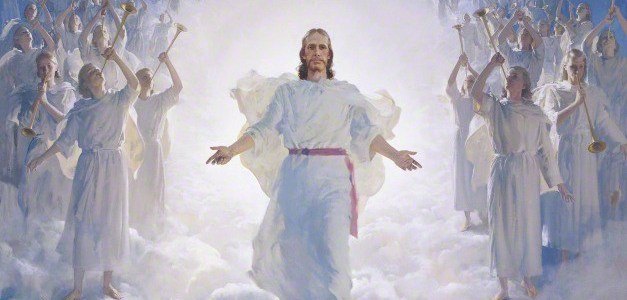
These Things are Done That a Righteous Judgment Might Come upon the Children of Men

In about 124 B.C., King Benjamin relates the words he received from an angel foretelling Christ’s life and mission.

“He shall be called Jesus Christ, the Son of God, the Father of heaven and earth, the Creator of all things from the beginning; and his mother shall be called Mary. And lo, he cometh unto his own, that salvation might come unto the children of men even through faith on his name; and even after all this they shall consider him a man, and say that he hath a devil, and shall scourge him, and shall crucify him. And he shall rise the third day from the dead; and behold, he standeth to judge the world; and behold, all these things are done that a righteous judgment might come upon the children of men.” (Mosiah 3:8-10)

Questions:

-Would it be possible for God the Father to oversee a righteous Judgment if he hadn’t sent His Son, Jesus Christ, to prepare the way for the Judgment to be performed perfectly?

-Do you believe that Christ now stands, with a resurrected body, perfectly prepared to mete a righteous judgment to all who have lived on the Earth?

-Could anyone else stand in perfect judgment of God’s children?

-How is Christ, the Son of God, also the Father of heaven and earth?

There Shall be no Other Name Given nor Any Other Way nor Means Whereby Salvation Can Come unto the Children of Men

King Benjamin teaches, in no uncertain terms, that Jesus Christ is the only way to salvation.

“…There shall be no other name given nor any other way nor means whereby salvation can come unto the children of men, only in and through the name of Christ, the Lord Omnipotent.” (Mosiah 3:17)

Questions:

-What does it mean for Benjamin to refer to Christ as the Lord Omnipotent?

-Did Christ create the earth (i.e. everything that we have)?

-Is there anything that Christ hasn’t gained power over?

-Has He ever used his power for anything other than good?

He Shall Suffer Temptations, Pain of Body, Hunger, Thirst and Fatigue, Even More Than Man Can Suffer, Except It Be unto Death

King Benjamin retells the words of an angel who visited him in the night in about 124 B.C. The angel foretells the most important life, and related events, that would ever take place on earth:

“…The time cometh, and is not far distant, that with power, the Lord Omnipotent who reigneth, who was, and is from all eternity to all eternity, shall come down from heaven among the children of men, and shall dwell in a tabernacle of clay, and shall go forth amongst men, working mighty miracles, such as healing the sick, raising the dead, causing the lame to walk, and the blind to receive their sight, and the deaf to hear, and curing all manner of diseases.” (Mosiah 3:5)

“And he shall cast out devils, or the evil spirits which dwell in the hearts of the children of men. And lo, he shall suffer temptations, and pain of body, hunger, thirst, and fatigue, even more than man can suffer, except it be unto death; for behold, blood cometh from every pore, so great shall be his anguish for the wickedness and abominations of his people.” (Mosiah 3:6-7)

Questions:

-Do you believe Jesus Christ worked miracles during His lifetime as the angel speaking to King Benjamin testified He would?

-Was there any event more worthy of clear foretelling (in prophetic vision and angelic visitation) than the life and Atonement of Jesus Christ?

-Do you believe Christ suffered more than any human being has, or ever will, suffer (in order to work at the Atonement in each individual’s behalf)?

They May Dwell with God in a State of Never-Ending Happiness

After warning of the consequences of rebelling against God and His Spirit (see previous post, Those Who Rebel Against God…), King Benjamin touches on the joy in store for those who whole-heartedly receive God’s commandments and Spirit.

“…I pray that ye should awake to a remembrance of the awful situation of those that have fallen into transgression. And moreover, I would desire that ye should consider on the blessed and happy state of those that keep the commandments of God. For behold, they are blessed in all things, both temporal and spiritual; and if they hold out faithful to the end they are received into heaven, that thereby they may dwell with God in a state of never-ending happiness. O remember, remember these things are true; for the Lord God hath spoken it.” (Mosiah 2:40-41)

Questions:

-How easy is it to be lulled into a false sense of security when it comes to one’s spiritual welfare?

-What does it take to “hold out faithful to the end” in keeping the commandments of God?

-Is a state of never-ending happiness possible without an element of progression?

Those Who Openly Rebel Against God Will Endure a Never-Ending Torment

King Benjamin gives a stark warning to those who have the light of the true gospel yet rebel against the Spirit of the Lord.

“…Our fathers…spake that which was commanded them of the Lord; therefore, they are just and true. And now I say unto you my brethren, that after ye have known and have been taught all these things, if ye should transgress and go contrary to that which has been spoken, that ye do withdraw yourselves from the Spirit of the Lord, that it may have no place in you to guide you in wisdom’s paths, that ye may be blessed, prospered and preserved. I say unto you, that the man that doeth this, the same cometh out in open rebellion against God; therefore he listeth to obey the evil spirit, and becometh an enemy to all righteousness; therefore, the Lord has no place in him, for he dwelleth not in unholy temples.” (Mosiah 2:35-37)

“Therefore if that man repenteth not, and remaineth and dieth an enemy to God, the demands of divine justice do awaken his immortal soul to a lively sense of his own guilt, which doth cause him to shrink from the presence of the Lord, and doth fill his breast with guilt, and pain, and anguish, which is like an unquenchable fire, whose flame ascendeth up forever and ever. And now I say unto you, that mercy hath no claim on that man; therefore his final doom is to endure a never-ending torment.” (Mosiah 2:38-39)

Questions:

-Seeing that Benjamin is addressing those among his people who had been immersed in the gospel from a young age, is this stark warning less applicable to those who weren’t so immersed?

-Is the warning still applicable, to a lesser degree, to those who had lesser light and knowledge in their lifetime and rebelled against it?

-Why can those who rebel against God in mortality stay asleep to their guilt? Why is it impossible for them stay asleep to their guilt at the time of the Resurrection and Judgment?

Ye Are Eternally Indebted to Your Heavenly Father to Render Him All That You Have and Are

A second time, during his sermon to the Nephite people, King Benjamin teaches about each individual’s true standing with God.

“…Ye are eternally indebted to your heavenly Father, to render to him all that you have and are.” (Mosiah 2:34)

Questions:

-Is it easy for you to wrap your mind around what Benjamin is teaching about each individual’s debt to God? Or, is indebtedness to God a foreign concept for you?

-Is it demeaning to be in a position in indebtedness in relation to Deity? Has God given all He has to us grudgingly? Or, is His giving inspired by perfect and eternal love?

-If joy is tied to connecting with the truth, does Benjamin’s teaching give you insight into why those who are grateful find greater joy in life?

-What does it mean to give all that you have and all that you are to God?

Teachings of Latter-day Prophets, Seers, and Revelators:

“How can we ever repay the debt we owe to the Savior? He paid a debt He did not owe to free us from a debt we can never pay. Because of Him, we will live forever. Because of His infinite Atonement, our sins can be swept away, allowing us to experience the greatest of all the gifts of God: eternal life.

“Can such a gift have a price? Can we ever make compensation for such a gift?” (“Earthly Debts, Heavenly Debts,” Ensign or Liahona, May 2004, 43).

There is a Wo Pronounced Upon Him Who Listeth to Obey the Evil Spirit

Benjamin teaches his people about the consequences of following the spirit that destroys.

“…Beware lest there shall arise contentions among you, and ye list to obey the evil spirit…For behold, there is a wo pronounced upon him who listeth to obey that spirit; for if he listeth to obey him, and remaineth and dieth in his sins, the same drinketh damnation to his own soul; for he receiveth for his wages an everlasting punishment, having transgressed the law of God contrary to his own knowledge.” (Mosiah 2:32-33)

Questions:

-Do some peoples and cultures have more knowledge of God than others?

-Does everyone have some sense of right and wrong regardless of what family, society, or culture they are a part of?

-How is contention related to evil?

Ye Are Indebted unto Him

King Benjamin teaches of our reliance on God for everything we have.

“…In the first place he hath created you, and granted unto you your lives, for which ye are indebted unto him. And secondly, he doth require that ye should do as he hath commanded you; for which if ye do, he doth immediately bless you; and therefore he hath paid you. And ye are still indebted unto him, and are, and will be, forever and ever; therefore, of what have ye to boast? And now I ask, can ye say aught of yourselves: I answer you, Nay. Ye cannot say that ye are even as much as the dust of the earth; yet ye were created of the dust of the earth; but behold, it belongeth to him who created you.” (Mosiah 2:23-25)

Questions:

-How does God see our indebtedness to Him? As a perfect Being with perfect love for His children, would he ever use the indebtedness for anything other than a means for good?

-Is it possible to allow God to lift you to your full potential if you don’t recognize your indebtedness to Him?

He Never Doth Vary from That Which He Hath Said

Benjamin testifies that every promise God makes is kept, including his promise to bless those who keep His commandments.

“…All he requires of you is to keep his commandments; and he has promised you that if ye would keep his commandments ye should prosper in the land; and he never doth vary from that which he hath said; therefore, if ye do keep his commandments he doth bless you and prosper you.” (Mosiah 2:22)

Questions:

-Is the typical person’s awareness capable of perceiving all the ways that God blesses him or her?

-Is it typical to look for blessings in a narrow zone of reality and then assume blessings were not realized?

O How You Ought to Thank Your Heavenly King!

King Benjamin seeks to wake those who take God’s blessings for granted. The prophet-king testifies that everything good we have comes from God.

“…O how you ought to thank your heavenly King! I say unto you, my brethren, that if you should render all the thanks and praise which your whole soul has power to possess, to that God who has created you; and has kept and preserved you, and has caused that ye should rejoice, and has granted that ye should live in peace one with another—I say unto you that if ye should serve him who has created you from the beginning, and is preserving you from day to day, by lending you breath, that ye may live and move and do according to your will, and even supporting you from one moment to another—I say, if ye should serve him with all your whole souls yet ye would be unprofitable servants.” (Mosiah 2:19-21)

Questions:

-Do you consider yourself a creation of God? Or, do you believe you are a creation of chance?

-Does the Spirit testify to your heart that God is sustaining you from moment to moment?