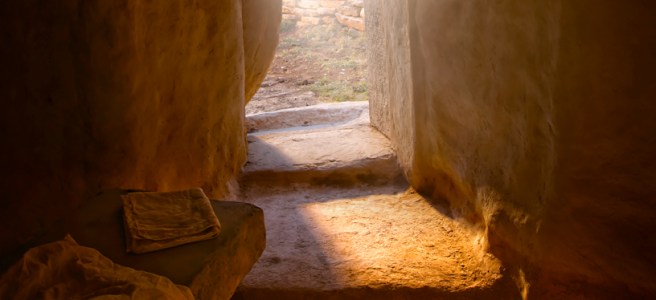
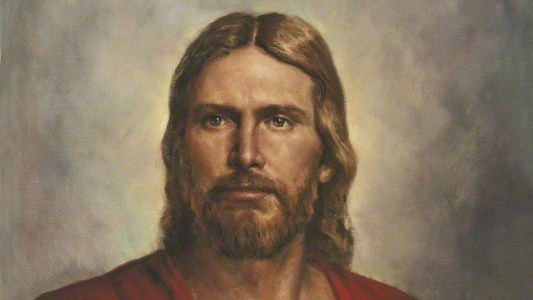
The Grave Shall Have No Victory

Aaron, a Nephite missionary, teaches the Lamanite king about the Atonement of Jesus Christ.

“…Since man had fallen he could not merit anything of himself; but the sufferings and death of Christ atone for their sins, through faith and repentance…and…[Christ] breaketh the bands of death, that the grave shall have no victory, and that the sting of death should be swallowed up in the hopes of glory…” (Alma 22:14)

Questions:

-What can be merited through the Atonement of Jesus Christ?

-Can anything be merited without it?

-Is Christ’s Atonement an invitation to good works, since nothing can be merited without the Atonement, but much can be merited (your good works can be magnified by God) with it?

-Are you willing to accept the victory of the grave? Or, do you choose to believe in the testimony of Aaron that death isn’t the end, but has been conquered by Jesus Christ?

There Could Be No Redemption for Mankind Save it Were Through the Death and Suffering of Christ and the Atonement of His Blood

Aaron, a Nephite missionary, teaches that…

“…There could be no redemption for mankind save it were through the death and suffering of Christ, and the atonement of his blood.” (Alma 21:9)

Questions:

-Does God redeem His children (mankind) outside of the demands of justice?

-Was there any other way to satisfy the demands of justice, while still showing mercy, without God providing an atoning Savior?

Teachings of Latter-day Prophets, Seers, and Revelators:

“Christ’s agony in the garden is unfathomable by the finite mind, both as to intensity and cause. … He struggled and groaned under a burden such as no other being who has lived on earth might even conceive as possible. It was not physical pain, nor mental anguish alone, that caused Him to suffer such torture as to produce an extrusion of blood from every pore; but a spiritual agony of soul such as only God was capable of experiencing. No other man, however great his powers of physical or mental endurance, could have suffered so” (James E. Talmage, Jesus the Christ, 3rd ed. [1916], 613).

Man was Created after the Image of God

Ammon, a Nephite missionary, teaches that God created men and women in His image.

“…Man in the beginning was created after the image of God.” (Alma 18:34)

Questions:

-How can a person make his or her spiritual posture a reflection of being made in the image of God?

-Is it possible to stand as tall, spiritually speaking, as God wants us to if we don’t internalize this gospel truth?

-Do many aspects of physical and mental health emanate from spiritual health?

God Knows All the Thoughts and Intents of the Heart

Ammon, a Nephite missionary, teaches that God sees clearly and deeply into each person’s soul.

“…[God] looketh down upon all the children of men; and he knows all the thoughts and intents of the heart; for by his hand were they all created from the beginning.” (Alma 18:32)

Questions:

-Is it comforting to know that God looks on the heart with perfect clarity?

-How often do mortals, who don’t have the ability to clearly see the thoughts and intents of the heart, misjudge others?

These Things Ought not to Be

The Lord’s servants preach against specific actions that tear at the fabric of society and corrupt the soul.

“…Those priests who did go forth among the people did preach against all lyings, and deceivings, and envyings, and strifes, and malice, and revilings, and stealing, robbing, plundering, murdering, committing adultery, and all manner of lasciviousness, crying that these things ought not so to be…” (Alma 16:18)

Questions:

-How many of the above things does popular culture in the United States take lightly?

-How much damage has been done to our society and culture because some of these things have been treated as though they aren’t the spiritual and societal poison they are?

-Do some businesses, corporations, and media outlets have systems set up that profit from a degree of deception and disingenuousness?

-Do some politicians and practitioners of law benefit from the creation of strife, malice, reviling and envying?

If Thou Believest in the Redemption of Christ Thou Canst Be Healed

After realizing the extent of his guilt before God, (having helped incite violence against a prophet of God and other innocent people) a Nephite named Zeezrom is completely overwhelmed to the point where he becomes physically ill. As he lies sick in bed, wrestling with the horror of what he has done, he requests a visit from the prophet Alma. When Alma and his companion Amulek hear that Zeerom is in need, they come quickly…

“…and when [Zeezrom] saw them he stretched forth his hand, and besought them that they would heal him. And it came to pass that Alma said unto him, taking him by the hand: Believest thou in the power of Christ unto salvation? And he answered and said: Yea I believe all the words that thou hast taught. And Alma said: If thou believest in the redemption of Christ thou canst be healed. And then Alma cried unto the Lord, saying: O Lord our God, have mercy on this man, and heal him according to his faith which is in Christ. And when Alma had said these words, Zeezrom leaped upon his feet, and began to walk…” (Alma 15:5-11)

Questions:

-How many in the world need the kind of healing that Zeezrom received?

-Is it possible that Zeezrom could have found healing from Christ without Alma’s (or another of the Lord’s servant’s) guidance and help?

-How many, figuratively speaking, would leap out of their spiritual and mental doldrums if they were to believe in the redemption of Christ and receive His Holy Spirit?

-In what ways are physical and spiritual illness sometimes linked?

Humble Yourselves before the Lord

How one approaches his or her relationship with God matters if one desires to enter His rest.

“…Humble yourselves before the Lord, and call on his holy name, and watch and pray continually, that ye may not be tempted above that which ye can bear, and thus be led by the Holy Spirit, becoming humble, meek, submissive, patient, full of love and all long-suffering; Having faith on the Lord; having a hope that ye shall receive eternal life; having the love of God always in your hearts, that ye may be lifted up at the last day and enter into his rest.” (Alma 13:28-29)

Questions:

-How is humility towards God tied to overcoming temptation?

-How does the Holy Spirit lead a person to become humble, meek, submissive to God, patient, full of love, and long-suffering?

This Holy Calling Was Prepared for Such as Would Not Harden Their Hearts

True Priesthood leadership comes from those who are called by God and do not harden their hearts against the truth and power of Christ’s Atonement.

“…They have been called to this holy calling on account of their faith, while others would reject the Spirit of God on account of the blindness of their minds…” (Alma 13:4)

“…Thus this holy calling [was] prepared from the foundation of the world for such as would not harden their hearts, being in and through the atonement of the Only Begotten Son, who was prepared.” (Alma 13:5)

Questions:

-How much intelligence, truth, and grace can flow into a heart that is open to God’s Spirit and the power of Christ’s Atonement?

If Ye Will Repent and Harden Not Your Hearts, Then Will I Have Mercy on You, Through My Only Begotten Son

All, who have reached an age of accountability and whose mental facilities haven’t been compromised, know good from evil. And all of us, at times, will choose evil. Doing so causes spiritual death and permanently so if one continues to choose evil leading up to the Last Judgment. Those who make a sincere effort to recognize the evil they have done and turn away from it in the name of Jesus Christ will have mercy extended to them, which will overcome the effects of spiritual death. This is God’s plan to save imperfect people.

“Wherefore, he gave commandments unto men, they having first transgressed the first commandments as to things which were temporal, and becoming as gods, knowing good from evil, placing themselves in a state to act, or being placed in a state to act according to their wills and pleasures, whether to do evil or to do good—Therefore God gave unto them commandments, after having made known unto them the plan of redemption, that they should not do evil, the penalty thereof being a second death, which was an everlasting death as to things pertaining unto righteousness; for on such the plan of redemption could have no power, for the works of justice could not be destroyed, according to the supreme goodness of God.” (Alma 12:31-32)

But God did call on men in the name of his Son, (this being the plan of redemption which was laid) saying: If ye will repent and harden not your hearts, then will I have mercy on you, through my Only Begotten Son. Therefore, whosoever repenteth, and hardenth not his heart, he shall have claim on mercy through mine Only Begotten Son, unto a remission of his sins; and these shall enter into my rest.” (Alma 12:33-34)

Questions:

-How valuable to you is the ability to repent through Christ’s Atonement?

-How valuable is it to know about Christ’s Atonement now in terms of having a meaningful life and spiritual strength to help others?