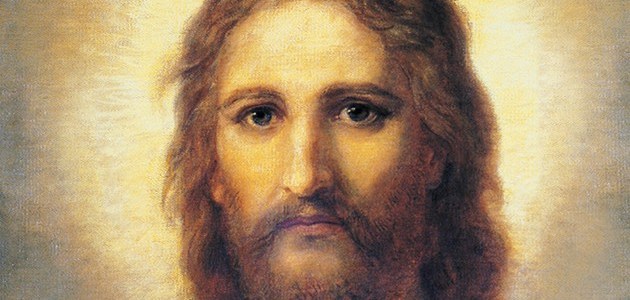
Christ’s Atonement Satisfieth the Demands of God’s Justice upon All Those Who Have Not the Law Given to Them

Jacob teaches that, because of Christ’s merciful Atonement, those who do not have God’s law will not be condemned by it.

“…He has given a law; and where there is no law given there is no punishment; and where there is no punishment there is no condemnation; and where there is no condemnation the mercies of the Holy One of Israel have claim upon them, because of the atonement; for they are delivered by the power of him. For the atonement satisfieth the demands of his justice upon all those who have not the law given to them, that they are delivered from that awful monster, death and hell, and the devil, and the lake of fire and brimstone, which is endless torment; and they are restored to that God who gave them breath, which is the Holy One of Israel.” (2 Nephi 9:25-26)

Those who do have God’s law, on the other hand, will be held accountable for their actions in relation to it (unless they continually draw on the power of Christ’s Atonement and repent towards doing better in relation to it):

“But wo unto him that has the law given, yea, that has all the commandments of God…and that transgresseth them, and wasteth the days of his probation, for awful is his state!” (2 Nephi 9:27)

Questions:

-Who on the earth currently is without God’s law? Are there whole nations and people that are largely free from the demands of this law because they have had little or none of it given to them?

-Is the light of Christ that touches the hearts of all living people part of the law? Does this innate sense of conscience and right and wrong bring all to the law to some degree?

-What do these truths Jacob teaches about the law say about the mercy God extends to those that have severe mental disabilities to the point where they cannot comprehend the law clearly?

-What are the benefits of having God’s law if it has the potential to condemn us once we understand it?

-Is the combination of having God’s law, and having an understanding of the redeeming power of Christ’s Atonement for those who repent, a way to obtain greater opportunities to serve others? Through that increased opportunity to serve and bless, are some given the precious opportunity to grow closer to Christ during mortality?


He Suffereth the Pains of All Men, Women, and Children

Jacob testifies that Christ descended below all in His suffering and death so He could then lift all toward Him through the Resurrection and be a perfect judge at the Day of Judgment.

“O how great the holiness of our God! For he knoweth all things and there is not anything save he knows it. And he cometh into the world that he may save all men if they will hearken unto his voice; for behold, he suffereth the pains of all men, yea, the pains of every living creature, both men, women, and children, who belong to the family of Adam. And he suffereth this that the resurrection might pass upon all men, that all might stand before him at the great and judgment day.” (2 Nephi 9:20-22)

Questions:

-How do you feel about this testimony from Jacob that Christ knows your pain and has actually felt your pain?

-What does it say about the depth of God’s love that He was willing to suffer so deeply to bring about the Resurrection for all mankind and be as merciful a judge as possible.

-How can a person hearken to the voice of God? Is God’s voice found in the scriptures? Is God’s voice found in the promptings of the Holy Ghost? Can God’s voice be heard from the mouths of those who have received authority to speak in His name?

Teachings of Latter-day Prophets, Seers, and Revelators:

“Christ’s agony in the garden is unfathomable by the finite mind, both as to intensity and cause. … He struggled and groaned under a burden such as no other being who has lived on earth might even conceive as possible. It was not physical pain, nor mental anguish alone, that caused Him to suffer such torture as to produce an extrusion of blood from every pore; but a spiritual agony of soul such as only God was capable of experiencing. No other man, however great his powers of physical or mental endurance, could have suffered so” (James E. Talmage, Jesus the Christ, 3rd ed. [1916], 613).

“By His Atonement and Resurrection, Jesus Christ has overcome all aspects of the Fall. Physical death will be temporary, and even spiritual death has an end, in that all come back into the presence of God, at least temporarily, to be judged” (D. Todd Christofferson, “The Resurrection of Jesus Christ,” Ensign or Liahona, May 2014, 112).

Blessed Are the Merciful, For They Shall Obtain Mercy

Jesus Christ taught the descendants of Lehi in the Americas (who were of the house of Israel) many of the same gospel principles He taught to His Jewish disciples in the Old World. The teachings as recorded in the book of Matthew, found in the New Testament, known as the Beatitudes (Matthew 5:1-12) were again taught by the Savior when he visited Lehi’s descendants.

Below is the fifth of the Beatitudes, as recorded in the King James version of Matthew, and the comparable teaching as found in 3 Nephi of the Book of Mormon.

Blessed are the merciful: for they shall obtain mercy.” (Matthew 5:7)

And blessed are the merciful, for they shall obtain mercy.” (3 Nephi 12:7)

Questions:

-Is it possible for a person to be both merciful and just in their actions? Or, does insisting on justice always downplay mercy and vice versa?

The Lord is Merciful unto All Who Will, in the Sincerity of Their Hearts, Call upon His Holy Name

The historian-prophet, Mormon, teaches of the Lord’s readiness to eternally bless all who will believe in Him and lay hold of His word.

“…The Lord is merciful unto all who will, in the sincerity of their hearts, call upon his holy name. Yea, thus we may see that the gate of heaven is open unto all, even to those who will believe on the name of Jesus Christ, who is the Son of God. Yea, we see that whosoever will may lay hold upon the word of God, which is quick and powerful, which shall divide asunder all the cunning and snares and wiles of the devil, and lead the man of Christ in a strait and narrow course across that everlasting gulf of misery which is prepared to engulf the wicked—And land their souls, yea, their immortal souls, at the right hand of God in the kingdom of heaven, to sit down with Abraham, and Isaac, and with Jacob, and with all our holy fathers, to go no more out.” (Helaman 3:28-30)

Questions:

– How valuable is the strait and narrow course mapped out in God’s scriptures?

-Have the majority of Americans rebelled against this narrow course? Or, do most still have a strong connection with it?

-Is it possible to sincerely call upon the name of Lord without also laying hold upon His word?

Mercy Cannot Rob Justice

Alma teaches his son that true repentance prevents one’s evil deeds from coming full circle to condemn him or her at the Last Judgment. Through His Atonement, Christ took upon Himself our punishments on condition of repentance, but without sincere repentance such mercy has no claim and the punishments will be fully applied.

“…Justice exerciseth all his demands, and also mercy claimeth all which is her own; and thus, none but the truly penitent are saved. What, do you suppose that mercy can rob justice? I say unto, Nay; not one whit. If so, God would cease to be God. And thus God bringeth about his great and eternal purposes, which were prepared from the foundation of the world. And thus cometh about the salvation and the redemption of men, and also their destruction and misery. Therefore, O my son, whosoever will come may come and partake of the waters of life freely; and whosoever will not come the same is not compelled to come; but in the last day it shall be restored unto him according to his deeds. If he has desired to do evil, and has not repented in his days, behold, evil shall be done unto him, according to the restoration of God.” (Alma 42:24-28)

Questions:

-How many chances does God give a person to repent?

-Will those who did not have a knowledge of Jesus Christ in mortality have an opportunity to repent once that knowledge is given to them in the spirit world?

Mercy Claimeth the Penitent

Alma teaches that transgressing God’s law, in the absence of repentance, demands punishment. But sincere repentance allows such sins to be forgiven through the Atonement of Jesus Christ.

“…Repentance could not come unto men except there were a punishment, which also was eternal as the life of the soul should be, affixed opposite to the plan of happiness, which was as eternal also as the life of the soul. Now, how could a man repent except he should sin? How could he sin if there was no law? How could there be a law save there was a punishment? Now, there was a punishment affixed, and a just law given, which brought remorse of conscience unto man. Now, if there was no law given—if a man murdered he should die—would he be afraid he would die if he should murder? And also, if there was no law given against sin men would not be afraid to sin. And if there was no law given, if men sinned what could justice do, or mercy either, for they would have no claim upon the creature?” (Alma 42:16-21)

“But there is a law given, and a punishment affixed, and a repentance granted; which repentance, mercy claimeth; otherwise, justice claimeth the creature and executeth the law, and the law inflicteth the punishment; if not so, the works of justice would be destroyed, and God would cease to be God. But God ceaseth not to be God, and mercy claimeth the penitent, and mercy cometh because of the atonement; and the atonement bringeth to pass the resurrection of the dead; and the resurrection of the dead bringeth back men into the presence of God; and thus they are restored to his presence, to be judged according to their works, according to the law and justice.” (Alma 42:22-23)

Questions:

-Is a person inevitably in the grasp of justice when he or she knows God’s law but does not humble himself or herself before God in sincere repentance on a regular basis?

If Ye Will Repent and Harden Not Your Hearts, Then Will I Have Mercy on You, Through My Only Begotten Son

All, who have reached an age of accountability and whose mental facilities haven’t been compromised, know good from evil. And all of us, at times, will choose evil. Doing so causes spiritual death and permanently so if one continues to choose evil leading up to the Last Judgment. Those who make a sincere effort to recognize the evil they have done and turn away from it in the name of Jesus Christ will have mercy extended to them, which will overcome the effects of spiritual death. This is God’s plan to save imperfect people.

“Wherefore, he gave commandments unto men, they having first transgressed the first commandments as to things which were temporal, and becoming as gods, knowing good from evil, placing themselves in a state to act, or being placed in a state to act according to their wills and pleasures, whether to do evil or to do good—Therefore God gave unto them commandments, after having made known unto them the plan of redemption, that they should not do evil, the penalty thereof being a second death, which was an everlasting death as to things pertaining unto righteousness; for on such the plan of redemption could have no power, for the works of justice could not be destroyed, according to the supreme goodness of God.” (Alma 12:31-32)

But God did call on men in the name of his Son, (this being the plan of redemption which was laid) saying: If ye will repent and harden not your hearts, then will I have mercy on you, through my Only Begotten Son. Therefore, whosoever repenteth, and hardenth not his heart, he shall have claim on mercy through mine Only Begotten Son, unto a remission of his sins; and these shall enter into my rest.” (Alma 12:33-34)

Questions:

-How valuable to you is the ability to repent through Christ’s Atonement?

-How valuable is it to know about Christ’s Atonement now in terms of having a meaningful life and spiritual strength to help others?

The Lord Will Be Merciful unto All Who Call on His Name

Alma teaches of the Lord’s unwavering commitment to assist when sought after.

“…The Lord will be merciful unto all who call on his name.” (Alma 9:17)

Questions:

-In how many ways can the Lord’s mercy be expressed in a life?

-Knowing all things from the beginning, is it possible He will express His mercy in unexpected ways? Or, in ways not requested?

-Does the truth expressed above help explain why missionary work is so important? Is it possible to call on the Lord for mercy if a person doesn’t know there is a loving God from whom help can be received?

The Lord Extends the Arm of Mercy Towards Them That Put Their Trust in Him

King Mosiah refers back to a (then) recent event in Nephite history to help teach an essential principle about how God works with his children.

“Yea, remember king Noah, his wickedness and his abominations, and also the wickedness and abominations of his people. Behold what great destruction did come upon them; and also because of their iniquities they were brought into bondage. And were it not for the interposition of their all-wise Creator, and this because of their sincere repentance, they must unavoidably remain in bondage until now. But behold, he did deliver them because they did humble themselves before him; and because they cried mightily unto him he did deliver them out of bondage; and thus doth the Lord work with his power in all cases among the children of men, extending the arm of mercy towards them that put their trust in him.” (Mosiah 29:18-20)

Questions:

-Are you in bondage to a situation or an addiction?

-Do you believe the above verses describe the only way to obtain true freedom?

-What does it mean to repent? (click the “repentance” link above)

-What does it mean to humble oneself before the Lord? (click the “humble” link above)

-What does it mean to trust in God? (click the “trust” link above)

For a Free Copy of the Book of Mormon go to: https://www.comeuntochrist.org/beliefs/book-of-mormon-request