
Let Your Light So Shine before This People, That They May See Your Good Works and Glorify Your Father Who is in Heaven

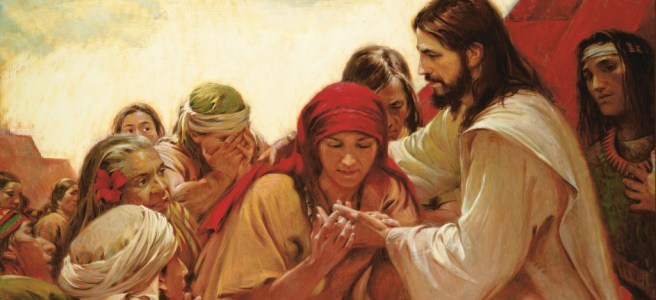
Jesus Christ taught the descendants of Lehi in the Americas (who were of the house of Israel) many of the same gospel principles He taught to His Jewish disciples in the Old World. The teachings as recorded in the book of Matthew, found in the New Testament, known as the Sermon on the Mount (Matthew 5) were again taught by the Savior when he visited Lehi’s descendants.

The passages below show the words from verses fourteen through sixteen of the King James version of Matthew and the comparable verses from 3 Nephi in the Book of Mormon.

“Ye are the light of the world. A city that is set on an hill cannot be hid. Neither do men light a candle and put it under a bushel, but on a candlestick; and it giveth light unto all that are in the house. Let your light so shine before men, that they may see your good works, and glorify your Father which is in heaven.” (Matthew 5:14-16)

Verily, verily, I say unto you, I give unto you to be the light of this people. A city that is set on a hill cannot be hid. Behold, do men light a candle and put it under a bushel? Nay, but on a candlestick, and it giveth light to all that are in the house; Therefore, let your light so shine before this people, that they may see your good works and glorify your Father who is in heaven.” (3 Nephi 12:14-16)

Questions:

-Is there a light in some peoples’ countenances which testifies they have received the Holy Ghost (and Jesus Christ of whom the Holy Ghost testifies)?

-Are these the same people whose good works glorify the Father?

-Why does Christ refer to glorifying His Father rather than himself?

Blessed Are All They Who Are Persecuted for My Name’s Sake

Jesus Christ taught the descendants of Lehi in the Americas (who were of the house of Israel) many of the same gospel principles He taught to His Jewish disciples in the Old World. The teachings as recorded in the book of Matthew, found in the New Testament, known as the Beatitudes (Matthew 5:1-12) were again taught by the Savior when he visited Lehi’s descendants.

Below is the final portion of the Beatitudes, as recorded in the King James version of Matthew, and the comparable teaching as found in 3 Nephi of the Book of Mormon.

Blessed are they which are persecuted for righteousness’ sake: for theirs is the kingdom of heaven. Blessed are ye, when men shall revile you, and persecute you, and shall say all manner of evil against you falsely, for my sake. Rejoice, and be exceedingly glad: for great is your reward in heaven: for so persecuted they the prophets which were before you.” (Matthew 5:10-12)

And blessed are all they who are persecuted for my name’s sake, for theirs is the kingdom of heaven. And blessed are ye when men shall revile you and persecute, and shall say all manner of evil against you falsely, for my sake; for ye shall have great joy and be exceedingly glad, for great shall be your reward in heaven; for so persecuted they the prophets who were before you.” (3 Nephi 12:10-12)

Questions:

-Is a true and faithful follower of Jesus Christ prone to suffer persecution, regardless of the country or culture he or she lives in?

-Is Christ preparing His most faithful followers for the inevitable in these verses?

Blessed Are the Peacemakers, For They Shall Be Called the Children of God

Jesus Christ taught the descendants of Lehi in the Americas (who were of the house of Israel) many of the same gospel principles He taught to His Jewish disciples in the Old World. The teachings as recorded in the book of Matthew, found in the New Testament, known as the Beatitudes (Matthew 5:1-12) were again taught by the Savior when he visited Lehi’s descendants.

Below is the seventh of the Beatitudes, as recorded in the King James version of Matthew, and the comparable teaching as found in 3 Nephi of the Book of Mormon.

Blessed are the peacemakers: for they shall be called the children of God. (Matthew 5:9)

And blessed are all the peacemakers, for they shall be called the children of God. (3 Nephi 12:9)

Questions:

  • Is peace one of the main results created in the world by those who Christ calls His children?

Blessed Are the Poor in Spirit Who Come unto Me

Jesus Christ taught the descendants of Lehi in the Americas (who were of the house of Israel) many of the same principles He taught to His Jewish disciples in the Old World. The teachings as recorded in the book of Matthew, found in the New Testament, known as the Beatitudes (Matthew 5:1-12) were again taught by the Savior when he visited Lehi’s descendants.

Below is the first of the Beatitudes, as recorded in the King James version of Matthew, and the comparable teaching as found in 3 Nephi of the Book of Mormon.  

“Blessed are the poor in spirit: for theirs is the kingdom of heaven” (Matthew 5:3)

Yea, blessed are the poor in spirit who come unto me, for theirs is the kingdom of heaven.” (3 Nephi 12:3)

Questions:

-Why would God inspire Joseph Smith to interpret the Beatitudes – as taught by Christ to Lehi’s descendants in the Americas — in language very similar to the King James version of the Bible?

-Do you feel the phrase, “who come unto me,” is an inspired addition to what is found in Matthew.

-What does it mean to be poor in spirit?

-Is it possible to truly come unto Christ if one is not poor in spirit?

After Ye Are Baptized with Water, I Will Baptize You with Fire and with the Holy Ghost

Below are some of the words spoken by the resurrected Savior to a group of Lehi’s descendants. They had congregated at one of their temples, after a massive natural upheaval, when the Lord descended from heaven to bless and teach them.

“…Blessed are ye if ye shall give heed unto the words of these twelve whom I have chosen from among you to minister unto you, and to be your servants; and unto them I have given power that they may baptize you with water; and after that ye are baptized with water, behold, I will baptize you with fire and with the Holy Ghost; therefore blessed are ye if ye shall believe in me and be baptized, after that ye have seen me and know that I am. And again, more blessed are they who shall believe in your words because that ye shall testify that ye have seen me, and that ye know that I am. Yea, blessed are they who shall believe in your words, and come down in the depths of humility and be baptized, for they shall be visited with fire and with the Holy Ghost, and shall receive a remission of their sins.” (3 Nephi 12:1-2)

Questions:

-Are there twelve who have been chosen to minister to the world in our time?

-Did they receive their authority from a line of priesthood directly instituted by Jesus Christ himself?

-Why does Christ speak of those who did not see him in person, but believed the words of those who did see Him in person, as being more blessed? -What are the depths of humility?

This Is My Doctrine

Jesus Christ declares the core of His doctrine:

“…This is my doctrine, and it is the doctrine which the Father hath given unto me; and I bear record of the Father, and the Father beareth record of me, and the Holy Ghost beareth record of the Father and me; and I bear record that the Father commandeth all men, everywhere, to repent and believe in me. And whoso believeth in me, and is baptized, the same shall be saved; and they are they who shall inherit the kingdom of God. And whoso believeth not in me, and is not baptized, shall be damned. Verily, verily I say unto you, that this is my doctrine, and I bear record of it from the Father; and whoso believeth in me believeth in the Father also; and unto him will the Father bear record of me, for he will visit him with fire and with the Holy Ghost. And thus will the Father bear record of me, and the Holy Ghost will bear record unto him of the Father and me; for the Father, and I, and the Holy Ghost are one.” (3 Nephi 11:32-36)

“And again, I say unto you, ye must repent, and become as a little child, and be baptized in my name, or ye can in nowise receive these things. And again I say unto you, ye must repent, and be baptized in my name, and become as a little child, or ye can in nowise inherit the kingdom of God. Verily, verily I say unto you, that this is my doctrine, and whoso buildeth upon this buildeth upon my rock, and the gates of hell shall not prevail against them. And whoso shall declare more or less than this, and establish it for my doctrine, the same cometh of evil, and is not built upon my rock; but buildeth upon a sandy foundation, and the gates of hell stand open to receive such when the floods come and the winds beat upon them. Therefore, go forth unto this people, and declare the words which I have spoken, unto the ends of the earth.” (3 Nephi 11:37-41)

Questions:

-What is the significance of Christ using the word “verily” twice to emphasize the truth of what He was teaching?

I Have Glorified the Father in Taking upon Me the Sins of the World

After descending from heaven to visit a group of Lehi’s descendants gathered at one of their temples, Christ reminds them of who He is and the relationship He has with God the Father.

“…I am the light and the life of the world; and I have drunk out of that bitter cup which the Father has given me, and have glorified the Father in taking upon me the sins of the world, in the which I have suffered the will of the Father in all things from the beginning…I am the God of Israel and the God of the whole earth, and have been slain for the sins of the world.” (3 Nephi 11:11,14)

Questions:

-How did Christ’s life and Atonement (won through incomprehensible and eternally meaningful suffering) glorify the Father?

-Was Christ’s unflinching loyalty to the Father closely tied to his similar loyalty to us (those for whom He worked out the Atonement)?

-What would it mean to you to strive to be as loyal to Christ as He has been to you and God our Father?

Whoso Repenteth and Cometh unto Me as a Little Child, Him Will I Receive

Christ continues to teach the descendants of Lehi (living in the Americas shortly after His death and Resurrection) about His purposes and redemptive power.

“Behold, I have come unto the world to bring redemption unto the world, to save the world from sin. Therefore, whoso repenteth and cometh unto me as a little child, him will I receive, for of such is the kingdom of God. Behold, for such I have laid down my life, and have taken it up again; therefore repent, and come unto me ye ends of the earth and be saved.” (3 Nephi 9:21-22)

Questions:

-What does it mean to come unto Christ as a little child?

-What prevents one from taking this all-import step in their lives?

I Am the Light and the Life of the World

After a massively destructive natural upheaval, Christ speaks to the surviving descendants of Lehi living in the Americas about who He is and what He has done::

“Yea, verily I say unto you, if ye will come unto me ye shall have eternal life. Behold, mine arm of mercy is extended towards you, and whosoever will come, him will I receive; and blessed are those who come unto me. Behold, I am Jesus Christ the Son of God. I created the heavens and the earth, and all things that in them are. I was with the Father from the beginning. I am in the Father, and the Father in me, and in me hath the Father glorified his name. I came unto my own, and my own received me not. And the scriptures concerning my coming are fulfilled. And as many as have received me, to them have I given to become the sons of God; and even so will I to as many as shall believe on my name, for behold, by me redemption cometh and in me is the law of Moses fulfilled. I am the light and the life of the world. I am Alpha and Omega, the beginning and the end.” (3 Nephi 9:14-18)

Questions:

-How does a person receive Christ?

Blessed Are They Who Will Repent and Turn unto Me

Repentance, through the Atonement of Jesus Christ, makes or breaks the soul of one who understands who Christ is and what He has done to prepare the way for each individual person spiritually and eternally.

“…Thus saith the Lord, blessed are they who will repent and turn unto me, but wo unto him that repenteth not.” (Helaman 13:11)  

Questions:

-Will everyone who ever lived have a chance to receive or reject Christ’s Atonement before the Last Judgment?