
Thou Shalt Not Covet

The Book of Mormon record reemphasizes the importance of the Ten Commandments given by God to the Israelite people. The Nephite prophets who taught their people and recorded scripture drew on a record called the Brass Plates (which were brought from Jerusalem) that contained most of writings of the prophets found in the Old Testament up to 600 B.C., including the book of Exodus containing the Ten Commandments.

The tenth of the Ten Commandments warns against the sin of always wanting more than one has (and envying those who seem to have more).

Thou shalt not covet thy neighbor’s house, thou shalt not covet thy neighbor’s wife, nor his manservant, nor his maid-servant, nor his ox, nor his ass, nor anything that is thy neighbor’s. (Mosiah 13:24 – Compare Exodus 20:17)

Questions:

-Is runaway materialism more or less inevitable when this commandment is not kept?

-What does the Ten Commandments being repeated in the Book of Mormon say about God’s view of their importance (and their timeless application for His children as a baseline for righteous living)?
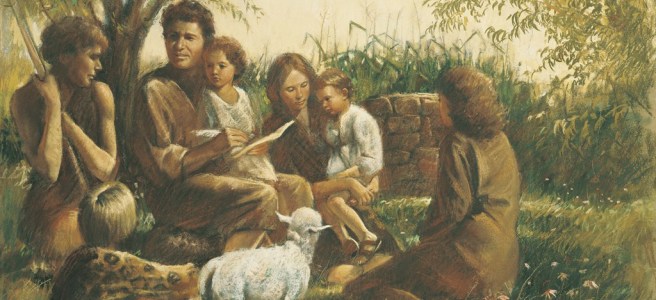

Thou Shalt Not Bear False Witness Against Thy Neighbor

The ninth of the Ten Commandments focuses on being truthful with, and about, others.

“Thou shalt not bear false witness against thy neighbor.” (Mosiah 13:23 – Compare Exodus 20:16)

Questions:

-How does one’s dishonesty negatively affect those around him or her?

-What would lead someone to bear a false witness against another?

-How often do people say negative things about others that aren’t true (or that distort the truth)?

Remember the Sabbath Day, to Keep it Holy

The fourth of the Ten Commandments relates to the Lord’s will that His people treat one day out of seven as holy.

“Remember the sabbath day, to keep it holy. Six days shalt thou labor, and do all thy work; But the seventh day, the sabbath of the Lord thy God, thou shalt not do any work, thou, nor thy son, nor thy daughter, thy manservant, nor thy maidservant, nor thy cattle, nor thy stranger that is within thy gates; For in six days the Lord made heaven and earth, and the sea, and all that in them is; wherefore the Lord blessed the sabbath day, and hallowed it.” (Mosiah 13:16-19 – Compare with Exodus 20:8-11)

Questions:

-How likely is it that a person will draw near to God, if he or she doesn’t stop to worship Him on a regular basis.

-Are there actually two commandments found in these verses? One to labor for six days and another to rest and keep the seventh day holy?

What happens to a nation that does not keep the Sabbath Day holy?